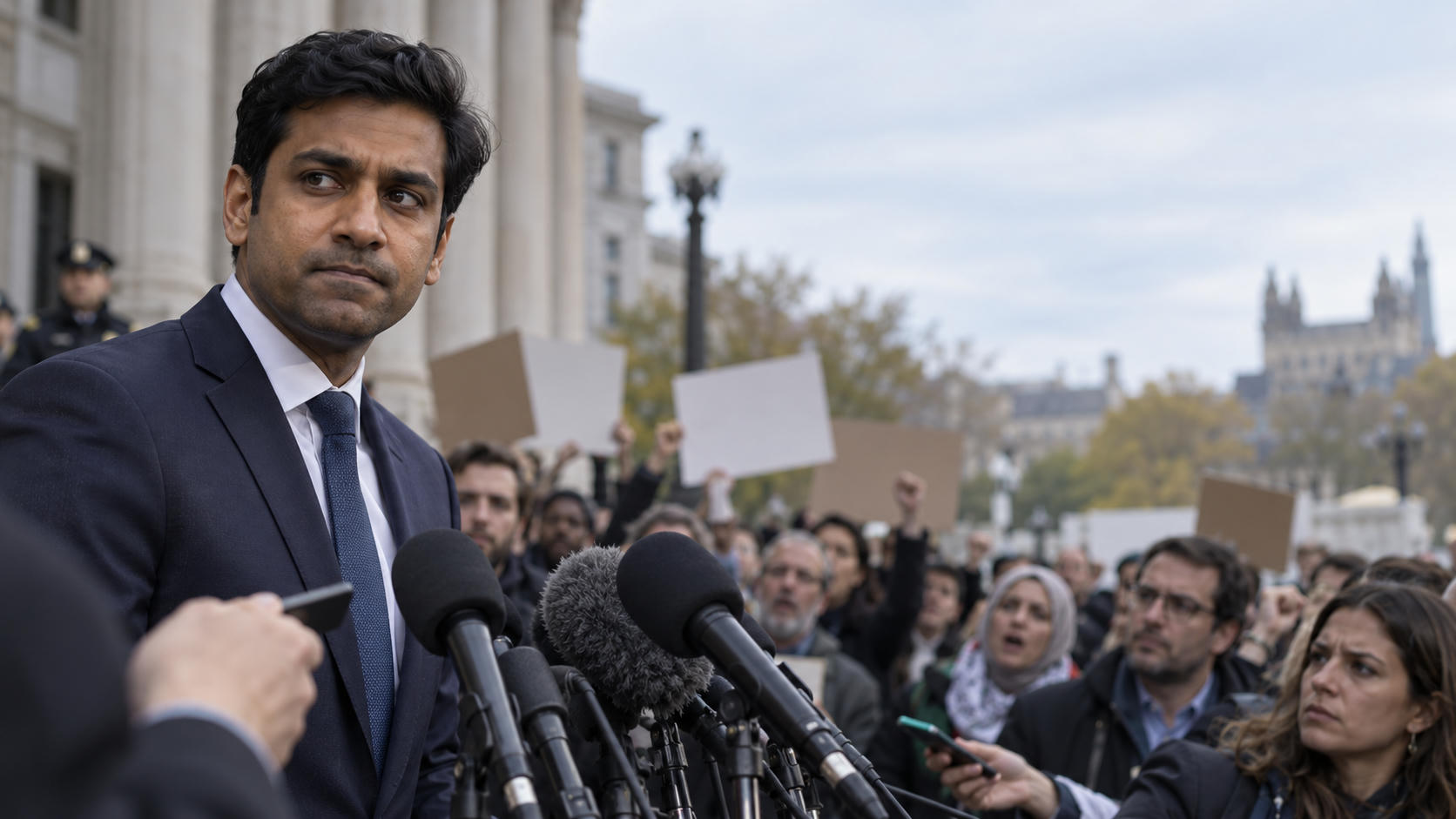
Trump’s Supreme Court Succession Dilemma
Trump’s Supreme Court Succession Dilemma
Donald Trump’s influence on the Supreme Court extends beyond the justices he appointed during his first presidency. His broader judicial strategy depends on preserving a conservative majority and shaping the Court’s future through younger, ideologically reliable nominees.
That creates a potential succession dilemma. Some of the justices most closely associated with the Court’s conservative direction are also among its oldest members. Their age may increase the possibility of future vacancies, but it does not indicate when a justice might retire—or whether a vacancy will occur during Trump’s presidency.
Trump may want to preserve the influence of justices aligned with his preferred legal philosophy. At the same time, a vacancy involving one of those justices could give him an opportunity to appoint a younger successor who might shape constitutional law for decades.
The central questions are whether Trump would prioritize continuity or a more aggressive ideological shift, whether the Senate would confirm his nominee, and how a new justice could change the Court’s internal alliances.
Why Supreme Court Succession Matters to Trump’s Legacy
Trump Already Shaped the Court’s Conservative Majority
A Supreme Court appointment differs from an ordinary presidential appointment because justices serve through major political and legal changes. Their decisions can influence national policy across multiple administrations, long after the president who nominated them leaves office.
Trump’s first presidency transformed the Court’s composition through three appointments. Those nominations helped establish a conservative majority with significant implications for abortion, executive power, administrative regulation, religious liberty, voting rights, federalism, and the relationship between federal and state authority.
The significance of those appointments does not depend solely on individual case outcomes. A justice’s methodology—such as originalism or textualism—can influence how the Court interprets constitutional provisions, evaluates precedent, and limits government agencies.
Any future Trump-era vacancy would therefore be assessed against the Court’s existing balance. Replacing a conservative justice with another conservative nominee might preserve the Court’s broad direction, but it could still change its approach to precedent, executive authority, or regulatory disputes.
The central issue is not simply whether Trump could appoint another conservative justice. It is whether he could appoint someone younger, more dependable, or more ideologically ambitious than the justice being replaced.
A Later Vacancy Would Carry Different Political Stakes
A vacancy during a later Trump administration would carry different political significance from one during his first term. Trump would already have established a judicial record, and any new nomination could be interpreted as an effort to consolidate or expand that legacy.
A nominee could determine whether the Court remains relatively stable or moves further right. The outcome would depend on which justice left, the nominee’s legal philosophy, the Senate’s composition, and the political environment surrounding the confirmation.
Timing would also matter. A vacancy before a presidential election could produce a national dispute over whether the sitting president should proceed. A vacancy after a Senate shift could change the nominee’s prospects. A vacancy during consideration of major cases could intensify public attention and political pressure.
The available source material describes a conflict between Trump’s preferred judicial direction and the age of the justices associated with it. It does not verify a specific retirement plan or imminent vacancy. Source 1
The Core Dilemma: Ideological Alignment and Age
Ideological Alignment Does Not Eliminate Succession Risk
The apparent contradiction is straightforward: Trump may prefer justices whose decisions support conservative legal outcomes, but some of those justices are also among the Court’s oldest members.
Age can make future succession more relevant, but it cannot establish that a justice intends to retire. A justice may remain on the bench for many years, regardless of political speculation. Retirement decisions can depend on personal health, professional satisfaction, institutional concerns, and confidence in a potential successor.
Several factors must be separated:
- Chronological age: The justice’s age based on the date of birth.
- Health and capacity: The justice’s ability to continue performing judicial duties.
- Retirement preference: Whether the justice wants to leave the Court.
- Political conditions: The president and Senate in office.
- Institutional strategy: The justice’s view of the Court’s future.
The Supreme Court’s official biographies provide the appropriate basis for identifying its oldest members, but those biographies do not predict retirement decisions. Supreme Court of the United States
A justice’s age can create succession risk without producing a predictable timetable. That uncertainty complicates presidential planning.
Why Age Creates Strategic Uncertainty
The president cannot choose when a justice retires, resigns, or dies. A vacancy may occur during a favorable political moment, under a different president, or with the Senate controlled by the opposing party.
For Trump, an older conservative justice’s departure could produce two competing outcomes.
First, a younger conservative replacement could preserve the Court’s existing ideological direction for decades. The replacement might serve longer than the departing justice and influence constitutional doctrine through multiple administrations.
Second, the vacancy could become an opportunity for a more ambitious ideological choice. Trump might seek a nominee who is not merely conservative but especially reliable on executive power, administrative law, election disputes, and social-policy issues.
An older justice’s continued service also limits Trump’s ability to make another appointment. As long as the justice remains on the Court, there is no vacancy for the president to fill.
This creates a paradox: Trump may value a conservative justice’s continued presence while also recognizing that the justice’s eventual replacement could extend his influence over the Court.
Which Justices Matter Most to Trump’s Judicial Strategy?
The Court’s Conservative Coalition
A justice’s importance cannot be measured by age alone. Trump’s strategy would likely focus on the role each justice plays within the Court’s conservative coalition.
Some justices may consistently support conservative outcomes. Others may be especially important because they determine whether the Court issues a narrow ruling or a sweeping one. A justice’s influence may come from the ability to build a majority rather than from occupying the Court’s ideological edge.
Relevant characteristics may include:
- Reliability on executive-power questions.
- Support for limits on administrative agencies.
- Views on federalism and state authority.
- Positions on religious-liberty disputes.
- Approaches to abortion and other social-policy cases.
- Commitment to originalist or textualist interpretation.
- Willingness to join broad or narrow opinions.
- Ability to attract votes from colleagues with different priorities.
A justice who votes conservatively in most cases may still differ from other conservatives on precedent, remedies, procedural rules, or the scope of judicial review. A replacement would not necessarily vote exactly like the justice who leaves.
That is why a future vacancy could alter the Court even if its ideological label remains unchanged.
Continuity Versus Escalation
Trump would face two broad choices in replacing a conservative justice.
A continuity strategy would seek a nominee whose legal philosophy broadly matches the departing justice’s views. This approach could reassure Republican voters, reduce disruption within the conservative coalition, and make the nominee easier to defend as a predictable choice.
An escalation strategy would select a younger or more ideologically ambitious nominee. That justice might support a more expansive interpretation of presidential authority, stronger limits on agencies, or a faster reconsideration of precedent.
Continuity could reduce internal conflict, but it might appear less transformative to Trump’s political base. Escalation could energize conservative voters, but it could also increase confirmation resistance and expose divisions among Republican senators.
The nominee’s age would be part of this calculation. A younger nominee could shape the Court for a longer period, but the nominee’s record might also provide opponents with more material for criticism.
The Age Question and Judicial Retirement Politics
Justices May Consider Their Institutional Legacy
A justice deciding whether to retire may consider more than personal circumstances. General factors could include the president’s ideology, Senate control, confidence in a possible successor, and concern about the Court’s long-term direction.
These considerations do not demonstrate that any particular justice has made a retirement decision. They explain why retirement speculation often increases during political transitions.
A justice may prefer to leave when a president and Senate are likely to nominate and confirm a successor with a similar legal philosophy. Another justice may view continued service as more important than preserving a particular ideological balance.
The Constitution gives justices substantial independence over their tenure. They may serve during good behavior and are not required to retire at a set age. Constitution Annotated, Article III
That structure prevents presidents from treating vacancies as scheduled events. It also makes every succession discussion inherently uncertain.
Retirement Timing Can Become a Political Flashpoint
A vacancy near an election could trigger familiar constitutional and political arguments.
Supporters of immediate action would emphasize the president’s authority to nominate and the Senate’s responsibility to consider the nominee. Opponents might argue that voters should determine which administration makes the appointment, particularly if the vacancy occurs close to an election.
The Senate has previously treated vacancy timing as a matter of political judgment, and the arguments can change depending on which party controls the presidency and the chamber. That makes future confirmation disputes especially partisan.
The central questions would include:
- Does the president have enough time to nominate a candidate?
- Will the Senate Judiciary Committee hold hearings?
- Does the Senate leadership support a vote?
- Can the nominee secure enough votes?
- Will moderate senators accept the nominee’s legal record?
Without verified reporting, age-based speculation should not be presented as evidence that a vacancy is imminent.
How a Future Vacancy Could Reshape the Court
Replacing a Conservative Justice With a Conservative Nominee
Replacing a conservative justice with another conservative nominee could preserve the Court’s overall ideological balance while changing its internal dynamics.
A younger justice could serve for several decades and influence disputes involving:
- Presidential authority.
- Federal agency power.
- Administrative regulation.
- State and federal jurisdiction.
- Election administration.
- Religious liberty.
- Civil-rights litigation.
- The interpretation of constitutional precedent.
The effects would not be automatic. They would depend on the cases the Court accepts, the arguments presented, the votes of the other justices, and the specific legal questions involved.
A new justice might also approach precedent differently. One conservative justice may favor incremental change, while another may support more direct reconsideration of earlier decisions. Those differences can determine whether rulings are narrow, broad, unanimous, or sharply divided.
A replacement could therefore alter the pace of legal change without changing the Court’s basic ideological identity.
Replacing a Pivotal Justice Could Alter Majority-Building
The most important replacement would not necessarily be the most conservative one. A justice who frequently determines outcomes in closely divided cases can have significant influence over the Court’s agenda and reasoning.
That justice may help decide:
- Whether the Court accepts a major case.
- Whether the final ruling is narrow or sweeping.
- Which opinion becomes the controlling judgment.
- Whether the Court overrules or limits precedent.
- Whether a majority can form around a compromise.
A new justice could change those bargaining patterns. The Court might issue more expansive opinions, or it might produce narrower rulings designed to retain institutional legitimacy and attract broader support.
For Trump, the nomination question would involve more than preserving a conservative vote count. It would involve selecting a justice who could influence how the conservative majority operates.
The Senate’s Role in Trump’s Succession Strategy
Confirmation Requires More Than a Presidential Choice
The president selects a nominee, but the Senate determines whether that nominee reaches the Court.
The process generally includes:
- Candidate selection and vetting.
- Public nomination.
- Senate Judiciary Committee review.
- Written questions and disclosure of the nominee’s record.
- Public hearings.
- Committee action.
- Full Senate consideration and a vote.
The Senate’s composition could determine how ambitious Trump can be. A unified Republican majority might support a nominee with a strong conservative record. A narrow majority could require negotiation with moderate or politically vulnerable senators.
Democratic senators would likely focus on the nominee’s judicial philosophy, qualifications, prior writings, views on precedent, and potential effects on executive power, regulation, voting rights, and civil liberties.
The nominee’s confirmation prospects could matter as much as ideological compatibility. A candidate who closely matches Trump’s preferences but cannot secure enough Senate votes would not advance the strategy.
Republican Unity Could Become Decisive
Republican senators would need to balance several priorities:
- Loyalty to Trump.
- Support for conservative legal goals.
- Concern about election-year politics.
- Institutional views about the Court.
- The nominee’s public record.
- Pressure from conservative legal groups and voters.
A controversial nominee could expose disagreements within the Republican coalition. Some senators might prefer a technically accomplished candidate with a restrained public profile. Others might demand a nominee who promises a stronger break with liberal precedent.
Democratic opposition would likely argue that the nomination could politicize the Court or produce major changes in constitutional law. Republican supporters would frame the appointment as an exercise of presidential authority and a continuation of the electoral mandate.
Potential Criteria for a Trump Nominee
Ideological Reliability
Trump and conservative allies may prioritize a nominee with a record showing support for:
- Originalist or textualist interpretation.
- Strong presidential authority.
- Limits on administrative agencies.
- Conservative positions on social-policy disputes.
- Restrictions on expansive federal power.
- A cautious or skeptical approach to certain precedents.
No legal philosophy guarantees identical results in every case. Even judges who share an interpretive method may disagree about history, text, remedies, standing, or the relationship between state and federal authority.
Age and Long-Term Influence
A younger nominee could appeal to Trump because the justice might serve for decades and shape future doctrine long after Trump leaves office.
Longer potential tenure can offer three strategic advantages:
- Greater opportunity to influence future cases.
- Reduced likelihood of another vacancy during the same administration.
- A stronger chance to affect the Court’s direction across multiple presidencies.
The counterargument is that younger nominees may face more intense scrutiny. Their professional writings, speeches, decisions, and affiliations can provide opponents with extensive material.
Long tenure also carries uncertainty. Justices are independent once confirmed, and a nominee may develop views that diverge from the president’s expectations.
Professional and Political Manageability
Trump would also need to consider whether a nominee could survive the confirmation process. Relevant factors could include:
- Prior judicial decisions.
- Academic writings.
- Public statements.
- Confirmation history.
- Relationships with conservative legal organizations.
- Media experience.
- Ability to respond under pressure.
- Vulnerability to opposition research.
A nominee’s qualifications and temperament could affect whether Republican senators remain united. Confirmation strategy would therefore involve both legal ideology and political manageability.
Broader Consequences for the Supreme Court
A Younger Conservative Court Could Shape Policy for Decades
Replacing an older justice with a younger conservative could affect national policy across a broad range of disputes. The Court’s decisions may shape the balance between presidential power and congressional oversight, the authority of federal agencies, the administration of elections, and the scope of state autonomy.
The effects would not be automatic. They would depend on the cases the Court accepts, the arguments presented, the votes of other justices, and the specific legal questions involved.
Still, the appointment of a younger justice could influence constitutional law across several decades. That possibility explains why succession receives attention even when no vacancy has been announced.
Court Legitimacy and Perceptions of Political Influence
Repeated focus on retirement timing can affect public confidence in the Court.
Supporters may view succession planning as a legitimate part of constitutional politics. Presidents campaign on judicial appointments, and senators often treat confirmation as a central responsibility.
Critics may see strategic retirement speculation as evidence that the Court has become too closely tied to partisan power. The concern is especially strong when political actors appear to treat justices as instruments for achieving policy goals.
Judicial independence remains central to the Court’s legitimacy. Justices are nominated by political officials, but they are expected to decide cases independently. Public trust depends partly on the perceived distance between political strategy and judicial decision-making.
What to Watch Next
Signs of a Developing Succession Debate
Readers should distinguish verified developments from political speculation. Important indicators include:
- Public comments from a justice.
- Confirmed retirement announcements.
- Credible reporting about private discussions.
- Changes in Senate control.
- Trump’s public statements about judicial appointments.
- Conservative legal-network shortlists.
- Formal White House vetting activity.
- Senate leadership statements.
Anonymous claims should be treated cautiously unless multiple credible outlets independently verify them.
The provided October 7, 2026, source reference describes an article about Trump’s Supreme Court succession dilemma but supplies no article text for independent verification. Source 3
The Importance of Timing
Timing could determine the entire succession process.
A vacancy before an election could create a confirmation confrontation. A vacancy after a Senate shift could eliminate or expand Trump’s options. A vacancy during a major Supreme Court term could increase public pressure and make the nominee’s views more politically significant.
Coverage should use exact dates and verified statements. The distinction between a confirmed vacancy, a reported possibility, and age-based commentary is essential.
Conclusion: A Court Trump Can Influence, But Not Fully Control
Trump’s Supreme Court succession dilemma rests on a conflict between ideological preference and demographic reality. He may value the justices most closely associated with his legal direction, but some of those justices are also among the Court’s oldest members.
Their age may make future vacancies more plausible, but it cannot predict when they will occur. Trump cannot control when a justice retires, which Senate controls the confirmation process, or how a replacement ultimately votes.
Any future succession decision would involve three competing goals:
- Preserve the Court’s conservative direction.
- Maximize the nominee’s long-term influence.
- Secure confirmation without destabilizing the Court or the Republican coalition.
The question is therefore larger than whether Trump can replace a justice. It is whether he can define the Supreme Court’s direction for a generation while managing the uncertainty created by age, timing, judicial independence, and Senate politics.
Frequently Asked Questions
Who are the oldest justices on the Supreme Court?
The oldest justices are identified by their dates of birth, which should be confirmed through current official Supreme Court biographies. Age alone does not indicate that a justice plans to retire. Supreme Court of the United States
Why does the age of Trump’s preferred justices create a succession dilemma?
Trump may want to preserve the influence of justices who support his preferred legal direction. If those justices are among the Court’s oldest, future vacancies may become more likely, but their timing remains unpredictable. A vacancy would give Trump an opportunity to appoint a younger successor only if it occurred during his presidency and the Senate could confirm the nominee.
Can Trump choose when a Supreme Court justice retires?
No. A justice independently decides whether to retire or remain on the Court. Political conditions may influence a justice’s considerations, but the president cannot compel a retirement.
How could replacing one conservative justice change the Court?
A replacement could preserve the Court’s broad ideological balance while changing its internal dynamics. A younger justice could serve longer and hold different views on precedent, executive power, regulation, voting rights, and social-policy disputes.
What role does the Senate play in Supreme Court succession?
The Senate must provide advice and consent through the confirmation process. Senate control, party unity, committee procedures, and the nominee’s record can determine whether Trump’s choice reaches the bench.
Why should readers be cautious about reports of an imminent vacancy?
The available sources do not verify a specific retirement plan or imminent vacancy. Age-based speculation can become misleading when presented as confirmed information. Coverage should distinguish documented statements from anonymous claims, political forecasts, and commentary.