Perseid Meteor Shower 2025: When and Where to Watch
Perseid Meteor Shower 2025: When and Where to Watch
The Perseid meteor shower 2025 is active from approximately July 17 through August 24, giving skywatchers several weeks to look for bright streaks across the summer night sky. The shower is one of the most reliable annual meteor displays and is especially popular because it arrives during warm weather.
The Perseids are expected to reach their peak during the night of August 12–13, 2025. The best viewing time depends on location, cloud cover, moonlight and the height of the radiant above the horizon. In most places, viewing should improve after midnight and before dawn.
You do not need a telescope. A dark location, a reclining chair and patience provide the best chance of seeing meteors. For viewers in North Carolina, including the Raleigh area, moving away from urban lights can significantly improve visibility.
What Is the Perseid Meteor Shower?
The Perseids Come From Comet Swift-Tuttle
The Perseid meteor shower occurs when Earth passes through dust and debris left along the orbit of Comet 109P/Swift-Tuttle. Each year, Earth crosses this stream of particles as it travels around the Sun.
The particles are usually tiny, often no larger than grains of sand or small stones. They enter Earth’s atmosphere at high speed, compressing and heating the air around them. The resulting glow creates the streak commonly called a shooting star.
These objects are not stars falling from space. They are meteoroids that become visible as meteors while passing through the atmosphere. Most burn up completely. A fragment that survives and lands on Earth is called a meteorite.
The meteors appear to come from a point near the constellation Perseus. This apparent source is called the radiant, and it gives the shower its name. Meteors can travel across many parts of the sky.
Why the Perseids Are One of the Best Meteor Showers
The Perseids combine dependable annual activity with a high number of bright meteors. Under excellent conditions, the shower can produce many meteors per hour, along with occasional fireballs—especially bright meteors that can briefly outshine nearby stars.
The American Meteor Society lists the Perseids among the major annual meteor showers and notes that their activity is usually strongest in August.
Your personal viewing rate can be much lower than the shower’s theoretical maximum. Results depend on:
- Light pollution.
- Moon brightness.
- Cloud cover and haze.
- The radiant’s position.
- Your field of view.
- The length of the observing session.
- Your ability to remain dark-adapted.
A published meteor rate is not a guarantee. The official peak describes overall shower activity, while local conditions determine what you see.
When Is the Perseid Meteor Shower Visible?
The Active Period
In 2025, the Perseids are active approximately from July 17 through August 24. Activity gradually increases toward the peak and declines afterward. The International Meteor Organization identifies the Perseids as a recurring annual shower with a broad active period rather than a one-night event.
This extended period gives observers multiple opportunities. If clouds obscure the peak, nearby nights may still produce worthwhile activity. Rates are usually lower before and after the peak, but bright meteors can appear throughout the active period.
When Is the Peak?
The 2025 Perseid peak occurs around August 12–13. For observers in North Carolina and much of the eastern United States, the most practical viewing window is after midnight on August 12 and into the early morning of August 13.
The calculated maximum may occur during daylight for some locations. Even when the exact peak is not visible locally, surrounding nights can offer similar opportunities.
The peak does not guarantee a specific number of meteors. A cloudy or brightly lit peak night can be worse for viewing than a clear night before or after it.
Best Viewing Hours
The best time to watch is generally after midnight and before dawn. The radiant rises higher during the night, placing more of the debris stream above the horizon. Earth’s motion also means that, during the early morning hours, your location faces more directly into incoming particles.
Some meteors appear during the evening, including occasional bright Earth-grazing meteors. However, viewing odds usually improve later at night.
Plan to stay outside for at least 30 minutes. A longer session is better because meteor activity is uneven.
Where to Watch the Perseids
Choose a Dark Location
Dark skies reveal far more meteors than city skies. Streetlights, buildings, parking lots, stadiums and traffic can overwhelm faint trails.
Good locations may include:
- Rural fields.
- State or national parks with legal nighttime access.
- Beaches with open horizons.
- Designated dark-sky areas.
- Open land outside major city centers.
- Safe, permitted overlooks away from artificial lighting.
Check access rules before traveling. Some parks close at night, and some locations prohibit parking or overnight use. Choose a site that is legal, safe and easy to leave if weather changes.
A dark location does not need to be completely remote. Moving away from concentrated artificial light can substantially improve the view. Nearby headlights can still damage night vision.
Where to Look
The radiant lies near Perseus, but do not stare directly at the constellation. Meteors can appear anywhere overhead.
Look toward the darkest, clearest section of the sky, preferably away from the Moon and nearby lights. A point about 45 degrees above the horizon offers a useful balance between sky coverage and meteor length.
Meteors near the radiant can appear short because they travel almost toward your line of sight. Meteors farther from the radiant often leave longer trails.
A telescope is not useful for general meteor watching because its narrow field of view can cause you to miss meteors elsewhere. Unaided eyes provide the widest view.
Viewing From North Carolina and Raleigh
North Carolina observers should seek darker areas outside Raleigh, Charlotte, Greensboro, Durham and other urban centers. Rural roads, open fields and permitted parks may provide better conditions, but access and safety come first.
Conditions can vary across the state. Coastal humidity, inland clouds, mountain weather and urban light pollution may produce different results on the same night. Before leaving, check:
- Hourly cloud cover.
- Visibility and humidity.
- Local light-pollution maps.
- Moonrise and moonset.
- Park hours and road access.
- Severe-weather alerts.
No city guarantees a better view. Clear skies and darkness matter more than a specific town.
How to Watch the Perseids
Equipment
You need no special equipment. Bring:
- A reclining lawn chair, cot or sleeping bag.
- Water and light snacks.
- Warm layers, even during summer.
- Insect repellent.
- A red-light flashlight.
- A blanket or ground cover.
- A phone for emergencies or optional photography.
Avoid ordinary white flashlights. Bright light erases dark adaptation. Cover bright phone screens or reduce their brightness to the lowest practical level.
Let Your Eyes Adjust
Dark adaptation usually takes about 20 to 30 minutes. Avoid white light during that time and let your eyes become more sensitive to faint stars and meteors.
Repeatedly checking a phone can reduce visibility. Use a red filter or red-light flashlight when necessary, and keep the phone face down or covered when it is not needed.
Arrive before dark when possible. Setting up in daylight reduces the need to walk around with a flashlight later.
Factors That Affect Visibility
Moonlight
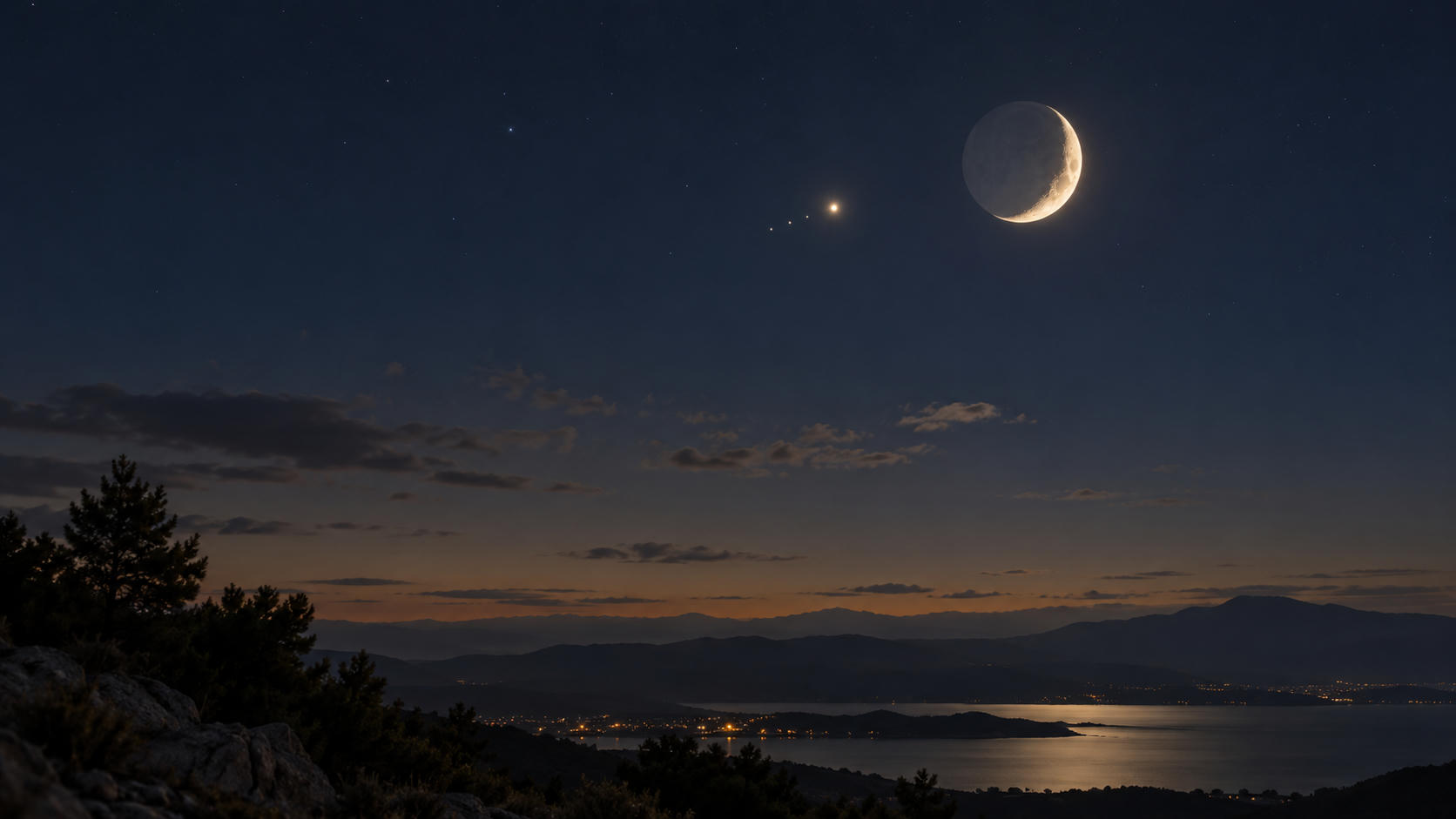
A bright Moon washes out faint meteors. In 2025, the Perseid peak occurs shortly after the August 9 full Moon, so moonlight will limit visibility, particularly during the late evening and early morning hours.
The Moon does not stop the shower. Bright Perseids can still be visible, but many fainter trails will disappear against the illuminated sky. Position yourself so the Moon is behind you or outside your main field of view. Check local moonrise and moonset times because they vary by location.
Light Pollution
Urban skies hide faint meteors, while rural skies reveal more of the shower. If travel is not possible, face away from the brightest lights and choose the most open view available.
A darker site usually improves results more than binoculars, telescopes or expensive camera equipment.
Weather and Cloud Cover
Clouds are the most direct obstacle. Haze, humidity, smoke and wildfire conditions can also reduce transparency.
Check the hourly forecast shortly before leaving. Keep a backup night in mind because the Perseids remain active before and after the peak. Never travel into severe weather for a meteor shower.
How Many Perseid Meteors Can You See?
The Zenithal Hourly Rate, or ZHR, is a theoretical estimate of how many meteors a perfect observer could see under ideal conditions with the radiant overhead and a completely dark sky.
Most people see fewer meteors because:
- The radiant is not directly overhead.
- Buildings, trees or terrain block part of the sky.
- Moonlight brightens the background.
- Light pollution hides faint trails.
- Clouds or haze interfere.
- The observer cannot watch the entire sky at once.
- Meteor activity changes from minute to minute.
A short session from a city may produce only a few visible meteors. A longer session under dark, clear skies can produce many more. Staying outside for an hour or longer gives a better sample than watching for five minutes.
Photographing the Perseids
A camera with manual controls, a wide-angle lens and a sturdy tripod offers the best starting point. Try:
- The widest practical aperture.
- A high but manageable ISO.
- A shutter speed of several seconds.
- Manual focus near infinity.
- A composition that includes substantial sky.
Exact settings depend on the camera, lens, sky brightness and desired image quality. Take test exposures and adjust focus before beginning a sequence.
Set the camera to take consecutive images with minimal gaps. More exposures increase the chance of capturing a meteor and can later be combined into a time-lapse or composite image. Bring spare batteries or an external power source, and cover bright camera displays.
Modern smartphones can capture bright stars and some meteors when placed on a stable tripod or surface. Use night mode, the widest available lens and the lowest practical screen brightness. Do not expect a phone to record every meteor visible to the eye.
Common Mistakes to Avoid
Watching From a Bright or Obstructed Location
City lights, trees, buildings and headlights reduce the visible sky. Choose an open area with a broad view.
Looking Only at Perseus
The radiant is the apparent source, not the only place where meteors appear. Scan a broad section of sky.
Leaving Too Soon
Meteor activity is unpredictable. Stay at least 30 minutes, and longer when conditions are comfortable.
Using Bright Lights
White flashlights and phone screens disrupt dark adaptation. Use red light and keep screens dim.
Safety and Comfort
Confirm that the site is open and legal to access at night. Avoid private property, unstable ground, isolated traffic areas and locations near moving vehicles.
Tell someone where you are going, particularly when traveling alone. Keep a charged phone available for emergencies.
Bring water, insect repellent and suitable clothing. Set up away from roads, follow park rules and observe fire restrictions and local advisories. Use a red light when walking and keep pathways clear.
The best viewing location combines dark skies with safe access, shelter options and a clear route home.
What Makes the 2025 Perseids Notable?
The 2025 Perseids have several important viewing factors:
- The peak occurs on August 12–13.
- The active period extends roughly from July 17 through August 24.
- The peak follows the August 9 full Moon.
- Moonlight may hide many faint meteors.
- Dark rural skies remain valuable.
- Clear weather will determine the best local opportunity.
- The radiant becomes more favorable after midnight.
The Moon means 2025 may not deliver the darkest possible Perseid peak. However, bright meteors can still produce memorable sights, especially from locations away from artificial light. Nights surrounding the peak may also be worthwhile if clouds disrupt the predicted maximum.
Final Viewing Checklist
Before heading outside:
- Confirm the active dates and August 12–13 peak.
- Check the local hourly cloud forecast.
- Find a dark, open location.
- Check moonrise and moonset.
- Confirm park access and road conditions.
- Arrive before full darkness.
- Bring a chair, sleeping bag or blanket.
- Allow 20 to 30 minutes for dark adaptation.
- Watch a broad area of sky.
- Stay outside for at least 30 minutes.
- Keep white lights and bright screens to a minimum.
- Follow local safety rules and weather advisories.
FAQ: Perseid Meteor Shower
When is the best time to see the Perseids?
The 2025 peak occurs around August 12–13. The best viewing is generally after midnight and before dawn, when the radiant is higher. Nearby nights can also provide good activity.
Where should I watch the Perseids?
Choose a dark location away from city lights with a wide, unobstructed view. Rural areas, permitted parks and designated dark-sky sites are good options. Around Raleigh and elsewhere in North Carolina, check cloud cover, moonlight and nighttime access before traveling.
Do I need a telescope?
No. Unaided eyes are better because they provide a wider field of view. Use a reclining chair, warm clothing and patience instead of specialized optical equipment.
How many meteors can I expect to see?
The official hourly rate assumes ideal conditions. Personal rates vary with darkness, moonlight, weather, radiant position and observing time. No fixed number is guaranteed.
Can I see the Perseids from a city?
Yes, but urban light pollution hides many faint meteors. Bright Perseids may remain visible. If possible, travel outside the city or watch toward the darkest available part of the sky.
What if the peak night is cloudy?
Check the surrounding nights. The Perseids remain active before and after the peak. Choose a backup night and avoid traveling during severe weather.
Look Up Before the Perseids Fade
The Perseids offer one of the strongest annual opportunities for casual skywatchers. Watch after midnight, choose the darkest safe location available, check the Moon and weather, and give your eyes time to adjust.
For North Carolina observers, including those near Raleigh, the next clear night during the shower’s active period may be enough to produce bright meteors overhead. Find a safe viewing spot, leave the bright lights behind and look up before the Perseids fade.