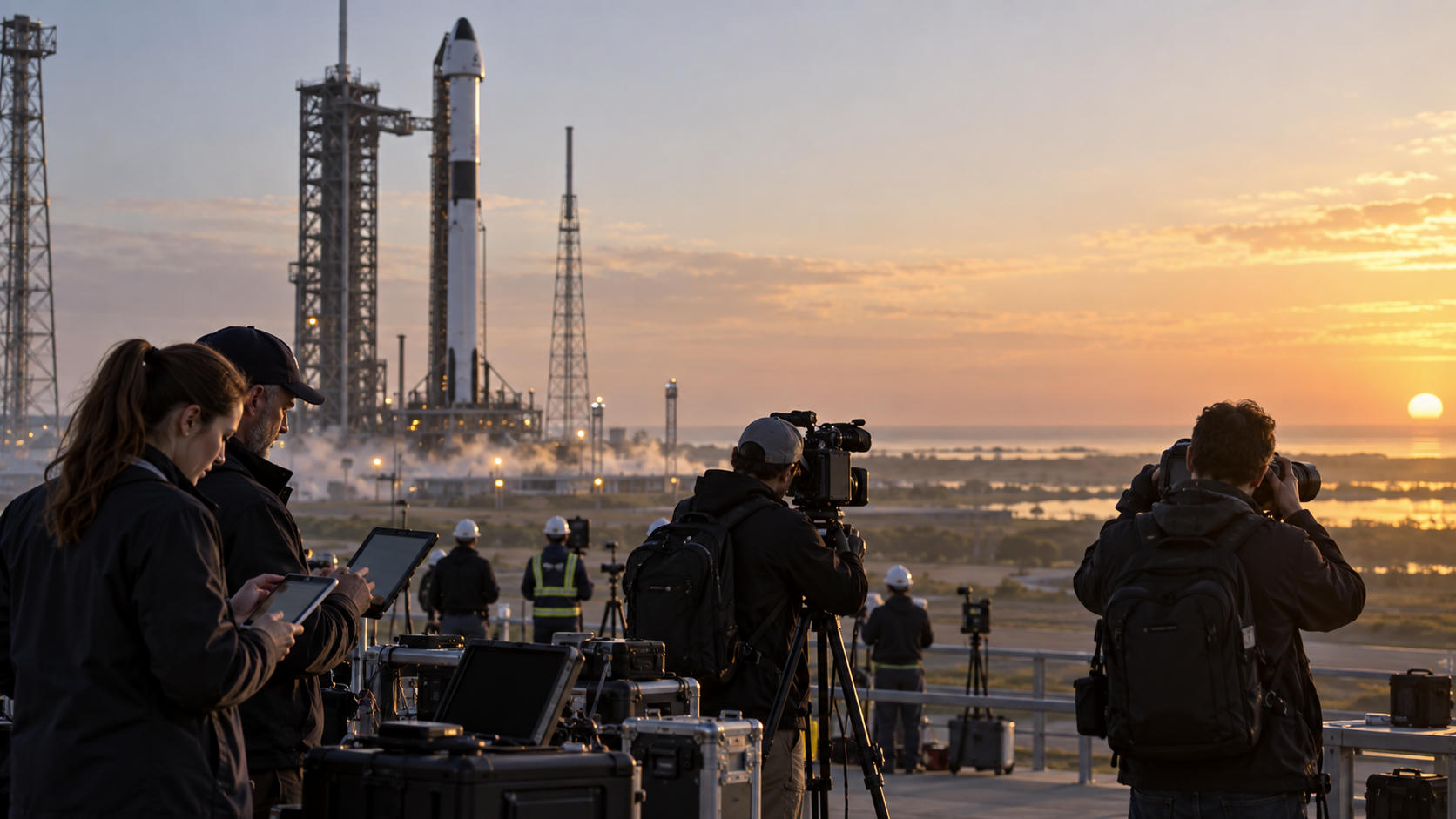
NASA Weighs Bulk Rocket Buy for Future Moon Base
NASA Weighs Bulk Rocket Buy for Future Moon Base
NASA may be considering a bulk rocket purchase to support a future lunar base, according to a Bloomberg report summarized in the available source material Source 1.
The report also describes SpaceX as being phased out of the relevant program. However, the available summary does not identify the affected contract, provide a transition date, name replacement providers, or establish that SpaceX is leaving NASA’s broader lunar effort.
That distinction matters. A long-term NASA Moon base would require many launches, not one successful mission. NASA would need a dependable transportation network for habitats, power systems, communications equipment, landers, rovers, scientific payloads, crew supplies, and replacement hardware.
A bulk purchase could give planners greater certainty, but it could also create financial, technical, and scheduling risks if NASA commits to the wrong launch system or depends on a supplier that cannot maintain the required cadence.
Why NASA May Need a Bulk Rocket Purchase
A Moon Base Requires More Than a Single Landing
A one-time lunar landing and a sustained lunar presence have different transportation requirements. An initial mission might deliver a lander, crew vehicle, or scientific instrument. A base would require repeated deliveries over several years.
Early cargo could include:
- Habitat modules
- Solar arrays and power systems
- Communications equipment
- Navigation hardware
- Scientific instruments
- Rovers and surface vehicles
- Construction tools
- Fuel and consumable supplies
- Spare parts and maintenance equipment
NASA’s Artemis program supports a broader human-return strategy involving lunar science, technology demonstrations, and infrastructure development Source 2. A future base could build on that architecture while requiring a more regular supply chain.
Launch frequency would become as important as launch power. A vehicle that carries a large payload but flies rarely may not meet the needs of a continuously operating lunar outpost. Conversely, a smaller vehicle with frequent availability could support routine cargo deliveries if its landers and mission designs are compatible.
Bulk Buying Could Create Predictable Launch Capacity
A multi-launch agreement could allow NASA to reserve capacity years in advance. That would help mission planners coordinate rocket production, payload development, lander readiness, and launch-site operations.
Potential advantages include:
- More predictable mission planning
- Greater supplier commitment
- Lower administrative costs per launch
- Improved production and integration scheduling
- Reduced competition for launch availability
- Better coordination between cargo and surface operations
Savings would not be automatic. A bulk contract could reduce unit costs by giving a supplier a stable production schedule. It could also increase costs if NASA pays for reserved capacity that missions cannot use.
The outcome would depend on contract terms, vehicle production rates, payload requirements, launch-site availability, and supplier performance. NASA would also need provisions for delays, failures, technology changes, and mission cancellations.
NASA Could Be Building a Lunar Supply Chain
A bulk rocket purchase would be more than a simple order for launch vehicles. It could represent an attempt to build a lunar supply chain connecting launch providers, spacecraft manufacturers, lunar lander companies, payload developers, ground infrastructure operators, communications networks, surface systems suppliers, and international and commercial partners.
Rockets would carry payloads from Earth, but they would not complete the entire mission. NASA would need spacecraft and landers capable of sending cargo through translunar space, entering lunar orbit, descending to the surface, and surviving the landing environment.
A rocket that reaches Earth orbit is not automatically suitable for a lunar cargo mission. The complete architecture must account for translunar injection, deep-space communications, navigation, lunar orbit insertion, and surface delivery.
What a Reported SpaceX Phaseout Could Mean
SpaceX Has Been Central to NASA’s Commercial Space Strategy
SpaceX is one of NASA’s major commercial launch partners. NASA has increasingly used commercial providers to expand transportation options, encourage competition, and reduce reliance on government-owned systems.
The agency’s commercial approach has covered launch services, crew transportation, cargo delivery, and lunar services. NASA’s Commercial Lunar Payload Services initiative, for example, uses commercial companies to deliver science and technology payloads to the lunar surface Source 3.
The available report summary says SpaceX is being phased out of the relevant program. It does not clarify whether that means:
- The end of a specific contract
- Fewer future mission assignments
- Replacement of one launch vehicle
- A change in lunar cargo procurement
- Removal from a broader program
These possibilities have different consequences. A change affecting one vehicle or contract would not necessarily end SpaceX’s other NASA work.
A Changing SpaceX Role Could Force NASA to Diversify
NASA may seek multiple launch providers to reduce exposure to a single company or vehicle. A diversified portfolio could provide protection against launch delays, reduce dependence on one supplier, improve pricing, provide backup capacity if a vehicle is grounded, and offer access to different payload capabilities.
However, launch systems are not interchangeable. Moving a payload from one rocket to another may require changes to payload dimensions, weight limits, mission trajectory, separation systems, integration procedures, ground equipment, launch-site operations, and safety documentation.
A replacement provider would need to meet NASA’s technical and operational requirements, not merely offer available launch capacity.
Phaseout Does Not Necessarily Mean an Immediate End to SpaceX Launches
The term “phaseout” can describe several procurement actions. NASA could reduce future assignments while allowing existing missions to continue. It could replace one vehicle but retain SpaceX for other services, or shift work gradually as new providers qualify.
The available source summary does not establish the scope or timeline of the reported transition. Readers should therefore separate the reported strategy from confirmed NASA decisions.
An official procurement notice, budget document, contract announcement, or NASA statement would be needed to verify which missions and agreements are affected.
How a Bulk Rocket Strategy Could Support a Moon Base
Early Missions Could Deliver Infrastructure
Before astronauts live on the Moon, uncrewed cargo missions could prepare a landing site. Potential early payloads could include communications relays, navigation instruments, landing-site sensors, power-generation hardware, surface mobility systems, scientific instruments, radiation-monitoring equipment, and resource-use demonstration systems.
Pre-positioning equipment could reduce the amount of hardware astronauts must deploy during early crewed missions. It could also test landing zones, communications links, power systems, and surface vehicles.
Landing accuracy would be critical. A payload that reaches the Moon but lands far from its intended location may be difficult or impossible to use. Surface survivability would also matter because lunar dust, extreme temperature changes, radiation, and long periods of darkness can damage equipment.
Later Missions Could Support Crew and Cargo Rotation
A lunar base would need recurring deliveries after initial construction. Cargo missions could transport food, water, medical supplies, spare parts, research equipment, protective clothing, replacement power components, tools, maintenance systems, and communications hardware.
Cargo transportation would differ from crew transportation. A heavy-lift rocket may be ideal for habitat modules or power equipment but unsuitable for crew missions without the necessary spacecraft, life-support systems, abort capabilities, and human-rating requirements.
NASA would therefore need to define separate transportation categories. A bulk purchase might cover cargo launches, crew launches, or both. The contract structure would determine how much flexibility NASA retains as mission requirements evolve.
Bulk Launches Could Support a Consistent Mission Cadence
Reserved launch slots could help NASA coordinate surface work with Earth-based manufacturing and testing. A regular cadence could support better workforce planning, more efficient payload production, longer-term supplier agreements, predictable scientific schedules, coordinated lander and rover operations, and faster replacement of failed equipment.
A higher launch rate would also increase exposure to disruption. Weather, technical failures, regulatory restrictions, supply shortages, and launch-site problems could affect multiple missions.
NASA would need contingency plans, including spare hardware, alternative launch windows, and backup providers. A launch schedule is useful only when the entire transportation chain can sustain it.
Potential Supplier and Rocket Options
NASA’s Existing Government Launch Systems
NASA-developed or government-backed launch systems could remain part of lunar exploration plans. Their potential advantages include government oversight, compatibility with existing mission architecture, large-payload capability, integration with crewed exploration plans, and established relationships with NASA facilities and contractors.
The Space Launch System is NASA’s heavy-lift rocket for Artemis missions and is intended to send the Orion spacecraft and crew toward the Moon Source 4.
Government launch systems also face constraints. They may have high operating costs, complex infrastructure requirements, limited production cadence, and long procurement timelines. A system designed primarily for crewed missions may not be the most economical option for frequent cargo flights.
Commercial Launch Providers
Commercial launch providers could contribute to a diversified lunar launch portfolio. NASA would need to compare providers using objective criteria, including payload capacity, launch frequency, lunar trajectory capability, vehicle maturity, reliability, human-rating status where applicable, contract flexibility, integration requirements, recovery and reuse procedures, and cost transparency.
Commercial providers may offer faster production or more flexible contracting. They may also introduce new risks if their vehicles have limited lunar-flight experience or if their schedules depend on a narrow industrial supply chain.
The available reporting does not identify confirmed replacement providers for the reported SpaceX transition. No company should be described as NASA’s selected replacement without formal documentation.
Rocket Purchases Versus Launch-Service Contracts
NASA could pursue several procurement models. A rocket purchase might involve buying complete launch vehicles or reserving dedicated production capacity. NASA could assume more responsibility for scheduling, integration, maintenance, or vehicle ownership.
A launch-service contract would generally pay a provider to perform a mission, with the provider retaining responsibility for the vehicle and launch operations. NASA could also reserve future launch slots without purchasing complete rockets, or establish a broader commercial partnership involving milestone-based payments.
The contract structure would affect ownership, cost, maintenance, liability, scheduling, and failure risk. A final announcement would need to clarify:
- How many launches are included
- Which vehicles are selected
- The contract value
- When launches must occur
- Which missions receive priority
- Who pays for delays or failures
- What happens if requirements change
- Whether NASA can transfer missions between providers
Benefits and Risks
Advance procurement could improve mission-planning stability. Habitat construction, science operations, crew scheduling, and surface logistics all depend on transportation availability.
A multi-provider strategy could improve pricing and performance, but competition works only when NASA has credible alternatives and can shift work if a supplier misses technical or schedule requirements. If one supplier remains dominant, a bulk purchase could instead deepen dependency.
Repeated launch opportunities could allow NASA to deploy infrastructure in stages. A communications system might precede a power system, which could precede a habitat or rover fleet. Launch capacity alone, however, would not solve every problem. NASA would still need reliable landers, surface power, communications, navigation, spacesuits, habitats, and operating procedures.
A large contract could also lock NASA into a vehicle before lunar requirements are final. Changes to habitats, landers, payload sizes, or mission architecture could make reserved capacity less useful. Flexible contract options, milestone payments, multiple vehicle classes, adjustable launch quantities, and termination or reallocation provisions could reduce that risk.
Reliability would remain critical. A single failure could damage hardware, delay later missions, and reduce public confidence. Repeated launches multiply both opportunities and exposure. NASA would need proven performance, independent safety reviews, contingency plans, and backup providers.
Lunar missions are also more complex than Earth-orbit launches. The complete journey may require:
- Launch from Earth
- Translunar injection
- Deep-space communications
- Precise navigation
- Lunar orbit insertion
- Descent and landing
- Surface deployment
- Long-term operations
Each stage introduces technical and scheduling risks. A rocket supplier may handle the initial launch while other contractors manage the spacecraft, lander, communications, and surface systems.
NASA must also balance launch purchases against spacecraft development, lunar landers, spacesuits, surface power systems, science missions, communications networks, ground infrastructure, and mission operations. A large bulk contract could provide certainty while reducing funding flexibility elsewhere.
Replacing SpaceX with one dominant supplier would not fully solve dependency risk. The strongest strategy may combine different vehicle classes, multiple providers, reserve capacity, and common integration standards.
What to Watch for in NASA’s Next Announcements
The clearest evidence would come from a NASA request for proposals, budget document, contract award, or formal acquisition notice. Important details would include the number of launches, vehicle types, contract value, launch locations, mission deadlines, and performance requirements.
NASA may link its launch strategy to specific Artemis missions or lunar-base milestones. Readers should distinguish broad exploration goals from funded and scheduled missions. A stated goal to establish a sustained lunar presence does not automatically mean that a base design, launch cadence, or construction schedule has been finalized.
Future announcements should also clarify:
- Which SpaceX contract is changing
- When the transition begins
- Whether existing missions remain unaffected
- Which provider assumes the work
- Whether NASA is reducing or ending future assignments
- How the transition affects Artemis and lunar logistics
Until those details appear in formal documentation, the reported SpaceX phaseout should be treated as a developing procurement story rather than a completed program decision.
Conclusion
NASA may be considering a bulk rocket purchase to support future lunar-base operations as SpaceX’s role in the relevant program reportedly changes Source 1.
The potential benefits include greater launch availability, more stable mission planning, stronger competition, and improved resilience. The risks include cost overruns, supplier lock-in, technical incompatibility, launch failures, and uncertain timelines.
The strategy’s significance will depend on the final procurement structure, selected providers, contract protections, and NASA’s ability to maintain a reliable lunar launch cadence. A Moon base cannot operate on occasional missions. It requires transportation that is repeatable, adaptable, and dependable.
Frequently Asked Questions
Why is NASA considering buying rockets in bulk?
NASA may need repeated launches to deliver cargo, infrastructure, equipment, and supplies for a future Moon base. A bulk purchase could provide more predictable launch capacity, although no final procurement details are established in the available reporting Source 1.
Is SpaceX being removed from NASA’s entire lunar program?
No. The available source summary does not establish that conclusion. It describes SpaceX as being phased out of a relevant program but does not identify the full scope, affected contracts, or transition timeline.
Would a bulk rocket purchase reduce NASA’s launch costs?
It could create volume-based savings and improve production planning. Savings are not guaranteed because costs also depend on vehicle design, mission complexity, integration, infrastructure, scheduling, and contract terms.
What would NASA use the rockets for?
Potential uses include launching lunar landers, habitat components, power systems, communications equipment, scientific instruments, rovers, and other cargo. Specific missions would depend on NASA’s final lunar-base architecture.
Could commercial companies replace SpaceX?
Commercial providers could compete for future launch work if their systems meet NASA’s requirements. NASA would need to evaluate payload capacity, reliability, launch cadence, lunar capability, safety, cost, and integration needs.
When could the bulk rocket purchase become official?
The available source summary provides no confirmed decision date. Reliable indicators would include a NASA procurement notice, budget document, contract announcement, or formal statement identifying the launch strategy and selected providers.