NASA Prepares Astronauts to Live and Work on the Moon
NASA Prepares Astronauts to Live and Work on the Moon
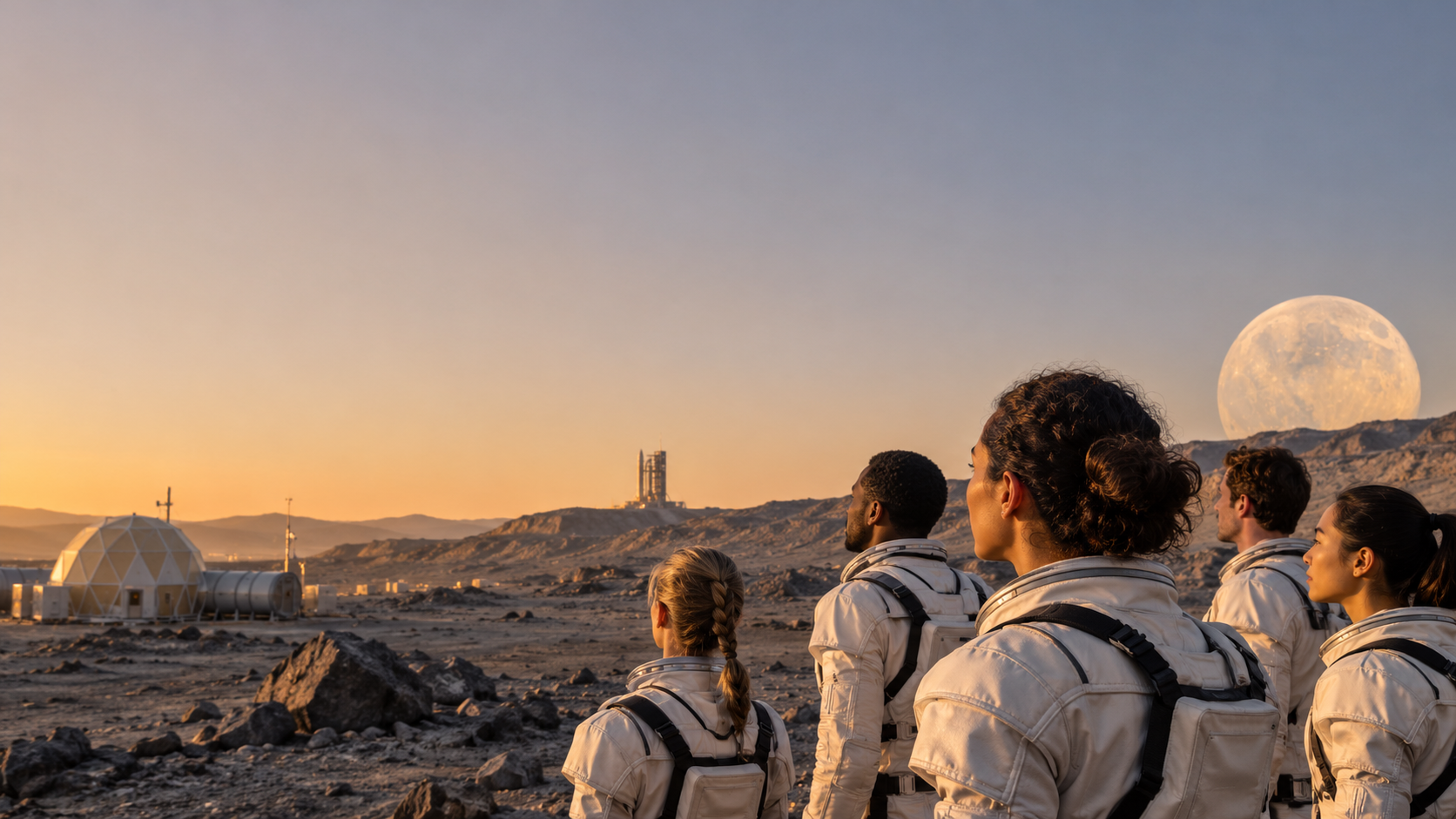
NASA is preparing a new generation of astronauts to support the Artemis program and advance human exploration of the Moon. Future astronauts may do more than visit the lunar surface. They could conduct research, operate vehicles, maintain equipment, test life-support systems, and help build infrastructure for longer missions.
The long-term objective is not an immediate permanent settlement. NASA’s lunar strategy is expected to develop through stages, beginning with orbital flights and crewed lunar flybys before progressing to landings, surface operations, and sustained exploration. Source 1
This plan raises a central question: how can astronauts live and work safely in an environment with radiation, extreme temperatures, lunar dust, limited resources, and no immediate access to emergency assistance from Earth?
Why NASA Is Recruiting a New Generation of Astronauts
NASA is recruiting astronauts to strengthen the corps supporting Artemis missions. The program is designed to return humans to the Moon while developing experience for later missions farther into space. Source 7
A larger astronaut corps can support several needs:
- Training for different mission profiles.
- Preparing crews for orbital and surface operations.
- Conducting scientific and engineering research.
- Supporting long-duration mission planning.
- Developing leadership and operational experience.
- Maintaining backup crews for complex missions.
Future lunar exploration will require more than pilots. Astronauts may need expertise in geology, medicine, robotics, engineering, computer systems, vehicle operations, and field science. Crews must also be able to repair hardware, manage limited supplies, make decisions under pressure, and work effectively with teams on Earth.
The supplied sources confirm the recruitment effort but do not provide a final number of positions, a complete list of application requirements, or a confirmed selection schedule.
From Lunar Flybys to Surface Operations
Lunar exploration will develop in stages:
- Orbital test flights.
- Crewed flights around the Moon.
- Crewed lunar landings.
- Surface science and technology demonstrations.
- Longer stays supported by additional infrastructure.
- Sustained lunar operations.
Astronauts selected or trained today may support missions years into the future. Their preparation could include spacecraft operations, lunar geology, emergency response, habitat systems, spacesuit use, robotics, and surface navigation.
The Moon can also serve as a proving ground for Mars missions. It is close enough to Earth to allow shorter communication delays and more accessible launch and rescue options than Mars. Lunar crews may gain experience operating habitats and surface vehicles, managing oxygen and water, conducting field science, responding to equipment failures, and using local resources.
Artemis is connected to NASA’s longer-term ambition to send humans to Mars. Artemis II is intended to test crewed deep-space operations before more complex lunar and planetary missions. Source 5
What Living and Working on the Moon Could Mean
Early crews would probably spend limited periods on the surface while testing systems and collecting scientific data. Their work could include:
- Studying lunar rocks and soil.
- Deploying scientific instruments.
- Operating rovers.
- Testing habitats and life-support systems.
- Maintaining power and communications equipment.
- Evaluating construction technologies.
- Investigating lunar resources.
- Preparing landing sites and logistics systems.
A sustained presence would require repeated equipment deliveries, reliable power, protected living areas, spare parts, and systems capable of operating with minimal support from Earth.
A future lunar base would likely be an infrastructure network rather than a single large building. It could include pressurized living modules, power systems, communications equipment, landing and cargo areas, laboratories, rovers, storage facilities, radiation shelters, and maintenance equipment.
The design, location, size, and schedule of such a base remain subject to technical development and mission planning. NASA’s recruitment effort should therefore be understood as preparation for a long-term exploration architecture, not evidence that permanent habitation will begin immediately.
Student Innovation and the Lunar-Base Challenge
NASA has reportedly offered a $1 million prize for student concepts related to a future lunar base. The challenge reflects the scale of the problem: sustainable lunar exploration will require advances in architecture, robotics, energy, materials, food production, and human health. Source 3
Potential areas for proposals include:
- Habitats built from local materials.
- Modular construction systems.
- Efficient energy storage.
- Food production and plant growth.
- Water recovery and waste recycling.
- Robotic construction.
- Dust control.
- Transportation systems.
- Radiation protection.
- Low-maintenance manufacturing.
The supplied source does not specify eligibility rules, submission requirements, judging criteria, or the deadline. Applicants should confirm those details through NASA’s official channels or the competition administrator.
Artemis II and Crewed Lunar Exploration
Artemis II is a crewed mission around the Moon, not a lunar-surface landing. Its purpose is to test spacecraft systems, crew procedures, navigation, communications, life-support performance, and mission operations in deep space.
A lunar flyby provides important experience before astronauts attempt a landing. The crew and mission controllers must operate far beyond low Earth orbit, manage spacecraft systems during a long mission, and complete a high-speed return through Earth’s atmosphere. Source 5
The mission can provide experience in:
- Deep-space navigation.
- Crew health monitoring.
- Life-support operations.
- Communication with Earth.
- Mission-control procedures.
- Emergency response.
- Reentry and recovery.
- Coordinated operations among astronauts, engineers, and international partners.
Artemis II will not create a lunar settlement by itself. It supports the sequence of missions needed for more ambitious exploration.
The timing of the next crewed lunar landing depends on spacecraft readiness, human-rated lander development, spacesuit availability, safety testing, launch infrastructure, mission reviews, budgets, and the results of earlier flights. Source 9 Landing dates should be checked against current NASA announcements.
The Main Challenges of Lunar Living
Radiation
The Moon lacks Earth’s thick atmosphere and global magnetic field. Astronauts on the surface would face solar radiation and cosmic rays, including increased risk during solar storms.
Potential protections include shielded habitats, regolith placed over structures, underground or partially buried facilities, storm shelters, radiation monitors, and exposure-limiting procedures.
Extreme temperatures and lunar dust
Severe temperature changes can affect electronics, batteries, spacesuits, vehicles, habitats, and scientific instruments. Lunar dust can cling to spacesuits, enter habitats, damage seals, interfere with mechanical systems, and create health risks if carried indoors.
Life support and resources
Longer missions require careful management of oxygen, water, food, power, spare parts, waste, and pressurized living space. Recycling becomes increasingly important as resupply becomes more difficult and expensive.
NASA and its partners are also studying possible uses of local resources, such as extracting oxygen from lunar materials and investigating water ice in permanently shadowed regions. These remain development goals rather than guaranteed capabilities of an operational lunar base.
Communication and emergencies
Reliable communication with mission control, surface teams, orbiting spacecraft, and other vehicles is essential. Lunar crews may need to respond to equipment failures, medical incidents, power loss, communications outages, solar storms, vehicle breakdowns, habitat leaks, and spacesuit malfunctions.
Unlike crews in low Earth orbit, lunar astronauts cannot depend on immediate physical assistance. Training must prepare them to diagnose and solve problems with limited resources.
Skills Future Lunar Astronauts May Need
Relevant backgrounds may include aerospace, mechanical, electrical, and systems engineering; robotics; computer science; materials science; geology; planetary science; biology; physics; medicine; and human physiology.
Astronauts may operate, repair, troubleshoot, and improve complex surface systems. Scientific expertise can help crews select samples and adapt experiments when conditions change. Medical knowledge can support crew health when professional care is far away.
Teamwork, leadership, adaptability, psychological resilience, and disciplined decision-making will also be essential. As missions become longer, astronauts may need stronger abilities in maintenance, scheduling, resource conservation, conflict management, autonomous decision-making, field science, physical conditioning, and emergency repair.
Specific NASA eligibility requirements should not be assumed without checking an official astronaut recruitment announcement.
What NASA’s Lunar Strategy Could Mean
Sustained exploration depends on repeatable missions rather than isolated achievements. NASA and its partners will need reliable launches, cargo delivery, power systems, habitats, vehicles, communications, and maintenance processes.
International and commercial partnerships may help distribute costs, capabilities, and operational responsibilities. Standardized equipment could allow different crews and providers to use shared surface infrastructure.
Lunar operations could advance research in planetary geology, human physiology, robotics, closed-loop life support, construction, energy storage, resource utilization, and autonomous systems. Lessons from the Moon could influence habitat design, crew training, logistics, and emergency planning for missions to Mars.
NASA’s astronaut recruitment does not mean astronauts will move permanently to the Moon soon. The following milestones must be distinguished:
- Astronaut selection.
- Artemis mission training.
- Crewed lunar flybys.
- Lunar landing plans.
- Base development.
- Sustained surface operations.
- Permanent habitation.
The timetable for lunar settlement depends on safety, technology, funding, infrastructure, and mission performance.
Conclusion
NASA’s recruitment effort reflects a shift from occasional lunar visits toward sustained exploration. Future Artemis astronauts may serve as scientists, engineers, operators, maintenance specialists, medical officers, and explorers.
Artemis II is an important step because it tests crewed operations around the Moon. Later missions will determine how quickly astronauts can land, conduct surface work, and support a more durable lunar presence.
Living and working on the Moon will require more than a powerful rocket. It will require protected habitats, reliable power, efficient life support, capable robots, resilient crews, and innovative ideas from students and researchers. The Moon could become humanity’s next major training ground for exploration beyond Earth and, eventually, missions to Mars.
Frequently Asked Questions
How many new astronauts is NASA seeking?
The supplied sources confirm that NASA is recruiting astronauts for Artemis but do not provide a confirmed number. The final intake should be checked against NASA’s official recruitment announcement.
Will NASA astronauts live permanently on the Moon soon?
NASA’s long-term plans involve sustained lunar exploration and possible habitation, but the supplied sources do not establish that permanent residence will begin soon. Early missions are expected to focus on testing technology, conducting science, and building operational experience.
What is the purpose of Artemis II?
Artemis II is a crewed mission around the Moon. It will test spacecraft and crew systems, support future lunar missions, and advance NASA’s broader plans for human exploration beyond Earth.
What will astronauts do on the Moon?
Future lunar astronauts may conduct research, operate rovers, test life-support systems, maintain equipment, deploy instruments, study lunar resources, and help develop infrastructure for longer missions.
What is NASA’s $1 million lunar-base prize?
The reported prize supports student concepts related to a future lunar base. The supplied source does not include the eligibility rules, submission requirements, or deadline. Applicants should consult official NASA information.
Why is the Moon important for Mars missions?
The Moon provides a nearby environment for testing habitats, surface operations, resource-use systems, crew procedures, and technologies needed for longer missions, including potential human missions to Mars.
Artikel Terkait
-
 NASA’s Swift Observatory Captured a Remarkable Andromeda Image
-
 Strange Deep-Space Objects Challenge Astronomical Models
-
 Northern Lights May Reach New York and Idaho This Weekend
-
 Camp Century Discovery and Greenland’s Climate History
-
 NASA Seeks Astronauts for the Artemis Moon Program
-
 Spitzer’s Infrared View of Andromeda Galaxy