NASA’s Swift Observatory Captured a Remarkable Andromeda Image
NASA’s Swift Observatory Captured a Remarkable Andromeda Image
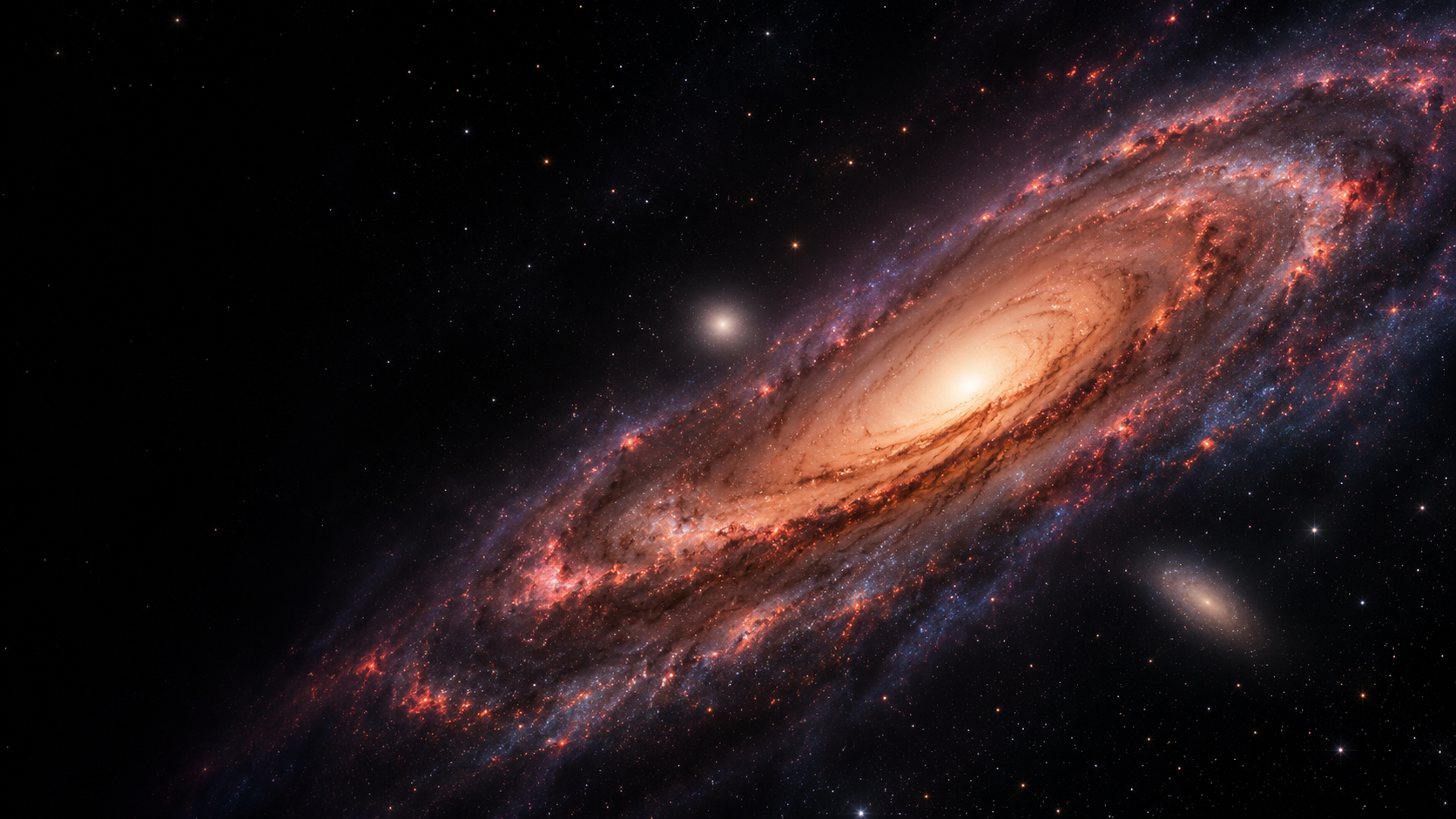
NASA’s Swift Observatory is gone, but one of its most striking astronomical portraits remains: a detailed view of the bright Andromeda Galaxy, also known as Messier 31 or M31. Created during Swift’s operational lifetime, the image was later highlighted by Live Science as a space photo of the week.
The image is significant beyond its visual appeal. It demonstrates how a telescope designed to study violent cosmic explosions could also provide valuable observations of one of the Milky Way’s nearest major galactic neighbors. Source 1
What Happened to NASA’s Swift Observatory?
Swift Reentered Earth’s Atmosphere
NASA’s Swift Observatory burned up during atmospheric reentry, ending the space telescope’s mission. The event caused the physical loss of the spacecraft, not the loss of its scientific record. Swift’s observations, images and measurements remain available for analysis even though the observatory no longer operates in space. Source 3
Spacecraft in low Earth orbit eventually experience orbital decay when their missions end. The thin upper atmosphere creates drag, gradually lowering an object’s orbit. Once a spacecraft descends far enough, it encounters denser air and heats rapidly during reentry. Swift was not designed to survive that process intact.
The phrase “destroyed Swift Observatory” therefore refers to the spacecraft’s physical destruction in the atmosphere. It does not mean that its data disappeared. Researchers can reprocess astronomical observations, compare them with newer data and apply improved scientific models long after an instrument stops operating.
The End of the Swift Mission
Swift’s reentry closed the operational chapter of a productive mission. Space observatories can reach the end of their working lives because of aging systems, limited propellant, reduced control capability or the completion of major scientific objectives.
Maintaining a telescope in orbit requires power, communications, attitude control and accurate pointing. When those systems become difficult to operate, reentry may become the mission’s final stage. Swift’s physical platform is gone, but the information it collected remains part of the astronomical record.
What Was NASA’s Swift Observatory?
A Telescope Built to Study Cosmic Explosions
NASA’s Swift Observatory was designed primarily to detect and study gamma-ray bursts. These extremely powerful flashes of gamma radiation can occur across immense cosmic distances. Some are associated with the deaths of massive stars, while others result from compact-object mergers.
Gamma-ray bursts are brief but can release enormous amounts of energy. Their afterglows may remain visible at other wavelengths after the initial burst fades. Studying those afterglows helps astronomers investigate stellar deaths, black holes, powerful jets and conditions in the distant universe.
Swift’s major advantage was speed. After detecting a transient event, the observatory could rapidly change its pointing direction and observe the source with multiple instruments. This rapid response enabled scientists to study events before they disappeared.
A transient event is an astronomical phenomenon that changes over a short period. Supernovae, gamma-ray bursts and sudden flares from compact objects can all require fast observations. Swift was built to follow this changing universe rather than observe only fixed, long-lived targets.
Swift’s Multiwavelength View
Swift observed several parts of the electromagnetic spectrum, including gamma rays, X-rays, ultraviolet light and visible light.
Different wavelengths reveal different physical conditions. Gamma rays identify some of the universe’s most energetic events. X-rays expose hot gas, energetic particles and compact stellar systems. Ultraviolet light is useful for detecting hot young stars and regions of recent star formation. Visible light reveals stars, dust and galactic structures familiar from conventional astronomical images.
This multiwavelength capability makes the Swift Observatory’s Andromeda image more than a conventional portrait. The colors and patterns in a processed space image may represent data from wavelengths that human eyes cannot see.
Why Andromeda Is an Important Target
The Milky Way’s Closest Major Galactic Neighbor
Andromeda, or M31, is a large spiral galaxy and the nearest major galactic neighbor of the Milky Way. It is still millions of light-years away, so “nearby” has a cosmic meaning. Compared with most galaxies, however, Andromeda is close enough for astronomers to study individual regions, stellar populations and sources of high-energy emission.
The Milky Way is difficult to study from inside its disk because dust and intervening stars obscure parts of the galaxy. Andromeda provides an external view of another large spiral galaxy. Astronomers can examine its overall structure, compare its star-forming regions with those in the Milky Way and investigate how large galaxies evolve.
Andromeda also covers a broad area of the sky. This creates opportunities for detailed studies but makes imaging challenging. A telescope must capture both the bright central region and the fainter outer disk without losing important information.
A Bright Galaxy With Complex Structure
A conventional Andromeda photograph shows a bright central concentration surrounded by broad spiral structure. Dust lanes cross parts of the disk, while star-forming regions and clusters appear throughout the galaxy. Older stellar populations contribute to the diffuse glow of the bulge and disk.
The galaxy’s brightness is both an advantage and a complication. A bright target provides abundant data, but excessive brightness can reduce contrast or overwhelm parts of a detector. The central region may dominate the image while faint outer structures become difficult to distinguish.
Observations at different wavelengths help separate these components. Visible light emphasizes stars and dust. Ultraviolet observations can make hot, young stars and active star-forming regions more prominent. X-ray data can identify energetic sources that are not obvious in visible images.
What Makes Swift’s Andromeda Image Exceptional?
More Than a Traditional Visible-Light Photograph
The image’s scientific value comes from the data behind it, not only from its appearance. Ultraviolet and high-energy observations can reveal structures that are less obvious in visible light.
Ultraviolet emission is associated with hot stars, especially young massive stars. A map of ultraviolet light can therefore show where recent star formation is occurring. High-energy observations can reveal X-ray binaries, compact stellar remnants, supernova remnants and other energetic objects.
The phrase “one of the best-ever” should be understood as a description of the image’s detail, coverage or public presentation rather than an absolute scientific ranking. Different telescopes are designed for different wavelengths and purposes. An optical, ultraviolet, X-ray or infrared telescope may produce the best view of a particular aspect of Andromeda.
The exact Swift instrument and wavelength combination used for the featured image should be confirmed through the official image caption. Available source summaries identify it as a major Andromeda portrait but do not provide enough detail to establish the precise bands or processing method. Source 1
A Wide Field of View
Andromeda is difficult to photograph because it appears large across the sky. Its central bulge is bright, while its outer disk is diffuse. A narrow field of view may capture only part of the galaxy, requiring astronomers to combine multiple observations.
A wide-field observation can place more of M31 in one frame or help researchers map a larger portion of its structure. Space-based imaging also avoids atmospheric blurring and absorption. This advantage is especially important for ultraviolet observations because Earth’s atmosphere blocks much of the ultraviolet light arriving from space.
The final image may use processing to balance bright and faint regions. It may also combine observations or assign colors to different bands. Without the official caption, it should not be described definitively as a single exposure, composite or mosaic.
Making Invisible Light Visible
Most astronomical images are processed before publication. A natural-color image approximates the colors visible to human eyes. A false-color image assigns visible colors to wavelengths that people cannot see. A composite combines data from multiple bands or instruments.
False color does not mean false information. It is a visual translation. Processing can improve contrast, reduce detector limitations and make faint structures easier to compare with bright ones. The official caption remains essential because it identifies what the colors represent.
What Can Scientists Learn From Swift’s Data?
Mapping Star Formation
Ultraviolet light can trace hot, young stars. Because massive stars live for relatively short periods, their concentration often indicates recent or ongoing star formation. An ultraviolet view of Andromeda can help astronomers map active regions across the galaxy.
Researchers can compare bright star-forming areas with quieter regions dominated by older stars. They can also examine whether star formation follows the spiral arms, occurs in separate clusters or extends into other parts of the disk.
The image alone cannot provide a complete history of Andromeda’s star formation. Astronomers must combine ultraviolet observations with visible, infrared and other data. Even so, ultraviolet emission offers an important way to identify where the galaxy is producing new stars.
Studying Energetic Objects
High-energy observations can identify unusual sources inside Andromeda, including X-ray binaries, supernova remnants, compact stellar remnants and energetic regions surrounding massive stars.
Swift’s broader mission made it especially valuable for studying transient and energetic phenomena. A changing source can provide clues about its physical nature. In a binary system, matter transferred between stars may produce high-energy radiation. A compact remnant can also generate powerful emission as it interacts with nearby material.
Identifying these sources requires additional observations and analysis. A point of light is not automatically a specific type of object. Astronomers compare its brightness, spectrum, variability and position with other datasets before drawing conclusions.
Understanding a Galaxy Similar to Our Own
Andromeda is a natural laboratory: a large spiral galaxy close enough for detailed observation that can also be viewed from outside. Researchers can compare its disk, bulge, dust lanes, star-forming regions and energetic sources with corresponding structures in the Milky Way.
Andromeda and the Milky Way are not identical. They differ in mass, structure, star-formation activity and history. Their similarities make comparison useful, while their differences reveal how varied galactic evolution can be. Swift’s image contributes one part of that long-term investigation.
How Swift’s Image Compares With Other Space Telescope Images
Swift Versus Visible-Light Observatories
Visible-light observatories emphasize Andromeda’s familiar appearance: its spiral structure, bright central bulge and dark dust lanes. Swift’s ultraviolet and high-energy capabilities can highlight hot stars, active regions and energetic sources that are less prominent in ordinary optical images.
These views are complementary rather than competitive. A visible-light image shows one physical layer of the galaxy, while Swift reveals others. Combining them produces a more complete picture of M31’s stars, dust and activity.
Swift Versus the James Webb Space Telescope
The James Webb Space Telescope is optimized primarily for infrared observations, while Swift was designed for rapid high-energy and ultraviolet studies. Their images answer different questions.
Infrared data can reveal cooler objects, penetrate some dusty regions and provide information about older stellar populations. Ultraviolet observations are more sensitive to hot young stars and recent star formation. X-ray data can expose energetic sources and high-temperature environments.
Webb does not replace Swift’s observations, and Swift does not replace Webb’s. Multi-observatory astronomy works because different instruments observe different parts of the electromagnetic spectrum.
Why Swift’s Destruction Does Not End Its Scientific Impact
The Data Archive Supports Future Research
Swift’s observations remain scientifically useful after the spacecraft’s reentry. Researchers can revisit archival data using improved calibration, updated processing methods and new models. They can also compare older Swift observations with data from newer observatories.
Archival research can reveal patterns that were not obvious when the original observations were collected. A source may later be identified as part of a long-term change, or a new telescope may provide context that gives older measurements greater value.
The Andromeda image is therefore more than a final display piece. It is part of a record that can support future studies of stellar populations, star formation and energetic objects in M31.
A Mission Can End While Its Discoveries Continue
Swift leaves a dual legacy. It was a rapid-response observatory for transient cosmic explosions, but it also produced valuable views of galaxies and other long-lived astronomical targets.
Its atmospheric reentry ended the spacecraft’s operations, not the research made possible by its instruments. Scientists can continue using Swift’s archive while newer telescopes add infrared, optical and high-energy observations to the same scientific picture.
Conclusion: A Final Portrait From a Lost Observatory
NASA’s Swift Observatory captured a striking view of the Andromeda Galaxy before burning up during atmospheric reentry. The image combines visual appeal with scientific information about hot stars, star formation and energetic activity.
Its importance does not depend on calling it the single best image of M31. It represents a distinctive wavelength-based view from a mission built to study some of the universe’s most violent events. Swift’s spacecraft has disappeared, but its images and data remain available for research. Future astronomers can combine that archive with observations from newer telescopes to build an increasingly complete portrait of Andromeda.
Frequently Asked Questions
What happened to NASA’s Swift Observatory?
NASA’s Swift Observatory burned up during reentry into Earth’s atmosphere, ending the spacecraft’s mission. Its scientific data and previously captured images remain available for research. Source 3
Did Swift take a visible-light picture of Andromeda?
Swift observed the universe across multiple wavelengths, including ultraviolet, X-ray and visible-light bands. The exact bands used for the featured image should be confirmed through its official image caption. Its scientific importance comes partly from showing information beyond a standard visible-light photograph.
Why is Swift’s Andromeda image important?
Andromeda is close enough for detailed study but large and bright enough to challenge imaging systems. Swift’s observations can reveal hot young stars, active star-forming regions and energetic sources that are less obvious in ordinary visible-light images.
Is Andromeda the same size as the Milky Way?
Andromeda and the Milky Way are both large spiral galaxies, but they are not identical. Their structures, masses, star-formation rates and evolutionary histories differ. Astronomers compare them to understand how large galaxies develop.
Can scientists still use Swift’s observations?
Yes. Data collected during Swift’s mission can support new analysis, improved processing and comparisons with newer telescopes. The spacecraft’s destruction does not erase its scientific archive.
What is the difference between a natural-color and a false-color space image?
A natural-color image approximates how a scene might appear to human vision. A false-color image assigns visible colors to invisible wavelengths or combines multiple data bands. False-color processing helps viewers and scientists identify structures that human eyes cannot see directly.
Artikel Terkait
-
 Strange Deep-Space Objects Challenge Astronomical Models
-
 Northern Lights May Reach New York and Idaho This Weekend
-
 Camp Century Discovery and Greenland’s Climate History
-
 NASA Seeks Astronauts for the Artemis Moon Program
-
 Spitzer’s Infrared View of Andromeda Galaxy
-
 Southern Taurid Meteor Shower May Bring Fireballs Tonight