UK Police: Letter on Thomas Markle Not Shared
UK Police Confirm Letter About Thomas Markle Was Not Shared
The Metropolitan Police confirmed that it received a 2019 letter containing several claims about Thomas Markle, Meghan Markle’s father. Police also said the letter was not shared with other law enforcement agencies, according to reports.
The confirmation establishes only that the letter reached the Metropolitan Police. It does not establish that the claims were true, that officers opened a criminal investigation, or that wrongdoing was proven.
What Police Confirmed
According to BBC reporting, the Metropolitan Police received a letter in 2019 containing “a number of claims” about Thomas Markle. The report does not identify the author, provide the exact date, or describe how the letter reached police. Source 3
Associated Press reporting likewise described the document as a letter containing claims about Meghan’s father and said it was not shared with other law enforcement agencies. Source 1
The wording is significant. A letter may record information supplied by an individual without proving that the information is accurate. The available reports do not state that police verified or accepted the claims.
The distinction between receipt and verification governs how the story should be read. A police force can receive correspondence, log it, and take no further visible action; none of those steps implies the claims were examined on the merits. The phrase “a number of claims” describes the contents of the letter, not a finding by officers. Readers should treat the confirmation as a statement about the existence and handling of a document, not about the truth of what it contained.
The Letter Was Not Shared With Other Agencies
The Metropolitan Police said the letter was not shared with other law enforcement agencies. The reports therefore do not show that it was circulated to other police forces or law enforcement bodies. Source 1
The available reporting does not explain what happened inside the Metropolitan Police after the letter arrived. It does not say whether officers recorded the information, assessed the claims, referred the matter internally, contacted Thomas Markle, opened an investigation, or closed the matter without further action.
The absence of those details does not establish that police ignored, suppressed, or concealed the letter.
Why the Wording Is Narrow
Two separate questions are often merged in coverage of this kind. The first is internal: what the force did with the letter after receiving it. The second is external: whether the document travelled to other forces or agencies. The confirmed statement addresses only the second.
That limit matters. A letter can be retained by one force, recorded in its own systems, and still never leave that force. “Not shared” does not mean “not received,” “not read,” or “not recorded.” Equally, it does not mean the reverse. The point is that the confirmed statement says nothing either way about internal handling.
Withholding from other agencies may reflect routine handling, a judgment about relevance, a jurisdictional question, or another reason entirely. The reports do not supply a reason, and none should be assumed. Source 5
What Reports Say About Meghan Markle
A Reuters summary refers to an allegations letter sent by the Metropolitan Police to Meghan Markle, while other reports describe police receiving a letter concerning claims about Thomas Markle. Source 9
The supplied summaries do not establish whether these accounts concern the same document, separate letters, or related correspondence at different stages. The original articles and direct statements from the Metropolitan Police would be needed to confirm the sequence.
The source material also does not establish whether Meghan requested, wrote, submitted, received, or responded to the letter. Police correspondence involving her does not, by itself, prove authorship or endorsement of its contents.
Authorship and Receipt Are Separate Questions
The verbs in the reports differ, and each describes a different role. One account says police received a letter containing claims about Thomas Markle. Another says police sent an allegations letter to Meghan. Receiving, sending, and forwarding are distinct actions.
A person can be the recipient of correspondence without having written it, and a document can concern a named individual without that individual having any part in creating it. Reports that use different verbs are not necessarily contradictory, but they cannot be combined into a single narrative without the underlying documents.
What Would Resolve the Ambiguity
Three things would settle the open questions: a direct, on-the-record statement from the Metropolitan Police describing the letter and its handling; publication or verified description of the letter itself; or a court filing or formal finding that addresses the correspondence. None of these appears in the supplied material.
Until then, the safest description is the narrowest one the reporting supports: police received a letter containing claims, and police said it was not shared with other law enforcement agencies.
What Remains Unknown
The reports do not disclose:
- The nature of the claims.
- The identity of the author.
- Why the letter was not shared.
- Whether police assessed or investigated the claims.
- Whether officers contacted Thomas Markle.
- Whether Meghan Markle requested, wrote, received, or responded to the correspondence.
- Whether the reports describe the same document.
- What outcome, if any, followed.
The available material does not provide evidence of a conspiracy, official misconduct, or a cover-up. It also does not cite a court ruling, formal complaint finding, or confirmed criminal investigation related to the letter.
Timeline
2019: Police Receive the Letter
The Metropolitan Police reportedly received a letter containing claims about Thomas Markle. The exact date, sender, and circumstances of delivery are not available. Source 3
Later Reporting: Questions About Sharing
Later reports examined whether the letter was shared with other law enforcement agencies. The police position, as summarized by AP and other outlets, was that it was not shared. [Source 5](https://news.google.com/rss/articles/CBM iowFBVV95cUxQQ2IwX3ExZFpZMk1tS0V5V0doWHBjV0FMX0Nhcm01WGdlMllDWEdqWWhoOThaTjFDbWdIWDRjNklaamVzNUZVZ2xuNHZSZXpiRGxvMzFCNmFLaDY4bUY0ZEhSWkhlNXU5b1ZFc0dKdjU2MDJZOEE4am9RU0FCTzZRYk1oeVM0TEdGUXRzdWx1Y2FqcGJVVDZXa3RrM2xzM0VaZjB3?oc=5)
The summaries do not provide a precise date for that reporting or establish whether all accounts concern one document.
How to Report the Story Responsibly
The letter should be described as containing claims, not established facts. Suitable wording includes:
- “Police said the letter contained claims.”
- “The reports describe correspondence concerning Thomas Markle.”
- “The available reporting does not specify the nature of the claims.”
- “The Metropolitan Police said the letter was not shared with other law enforcement agencies.”
Terms such as “cover-up,” “secret dossier,” and “bombshell” are not supported by the available evidence. Details from social media or unrelated online discussions should not be added without reliable sourcing.
A Verification Checklist
Before publishing or sharing a version of this story, check four things.
First, locate the primary statement rather than a summary of a summary. Reports here are attributed to BBC and AP reporting, and the wording differs between them.
Second, keep the verbs exact. Received, sent, shared, assessed, and investigated describe different actions, and substituting one for another changes the claim.
Third, separate what is confirmed from what is unknown, and say so explicitly. The confirmed facts are narrow; the unknowns are extensive.
Fourth, date the reporting. The 2019 date refers to the letter, not to the reporting about it, and the summaries do not fix a publication date for the later coverage.
Conclusion
The Metropolitan Police confirmed receiving a 2019 letter containing claims about Thomas Markle and said it was not shared with other law enforcement agencies.
The available reports do not disclose the claims, identify the sender, explain why the letter was not shared, or establish whether police investigated the matter. They also do not establish Meghan Markle’s role in writing, submitting, receiving, or responding to the correspondence.
The letter’s existence confirms only that information was communicated to police. It does not confirm the accuracy of that information or prove wrongdoing by Thomas Markle. Further conclusions require direct police statements and verified reporting from established news organizations.
FAQ
What did UK police say about the letter?
The Metropolitan Police confirmed receiving a 2019 letter containing claims about Thomas Markle and said it was not shared with other law enforcement agencies. Source 1
What were the claims?
The supplied reports do not specify their contents or establish whether they were true or false.
Was the letter shared with other police forces?
According to the available reporting, the Metropolitan Police said it was not shared with other law enforcement agencies.
Did police investigate the claims?
The sources do not confirm whether police opened an investigation, contacted Thomas Markle, or took further action.
Did Meghan Markle write the letter?
The available summaries do not identify the author or establish Meghan’s role in the correspondence.
Can the letter be described as a police investigation?
No. The reports confirm receipt of a letter, not the opening of an investigation or any finding.
Why was the letter not shared?
The reports do not provide a reason. Any explanation remains unconfirmed unless provided by the Metropolitan Police or another authoritative source.
Does the letter prove wrongdoing by Thomas Markle?
No. The existence of a letter containing claims does not prove that those claims were accurate or that Thomas Markle committed wrongdoing.
Artikel Terkait
-
 Clayface Tops Friday Box Office With $10.4 Million
-
 DWTS Feud Claim: What We Know About Carson and Ballas
-
 The James Bond Casting Test Beyond Acting Ability
-
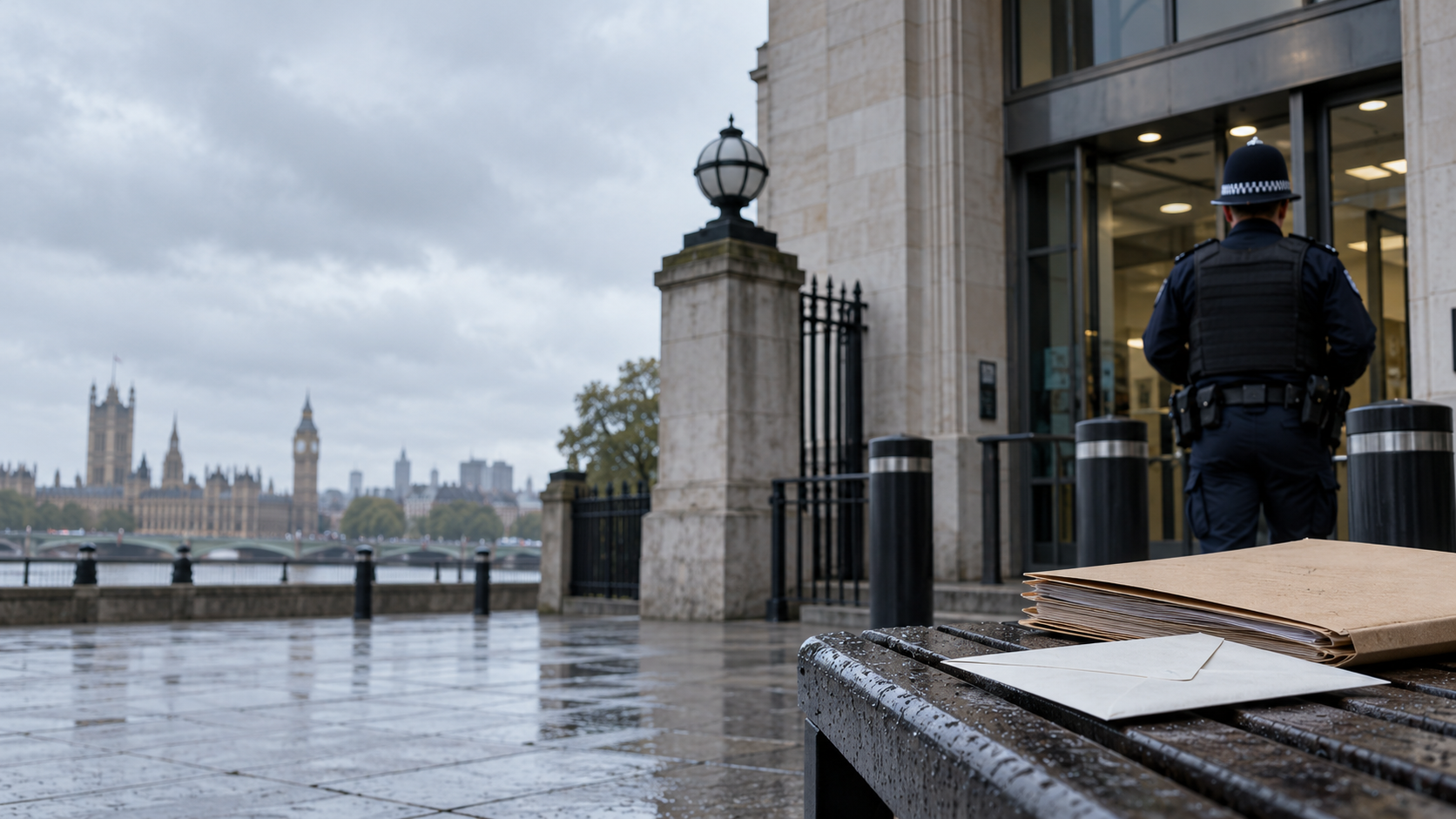 British Police and the Disputed 2019 Thomas Markle Letter
-
 How Laika Built *Wildwood* Over Two Decades
-
 Ali G: Who Iz I? Release, Style, and Reviews