Tesla Flying Car: Why Consumer Rollout May Take Years
Tesla Flying Car: Why Consumer Rollout May Take Years
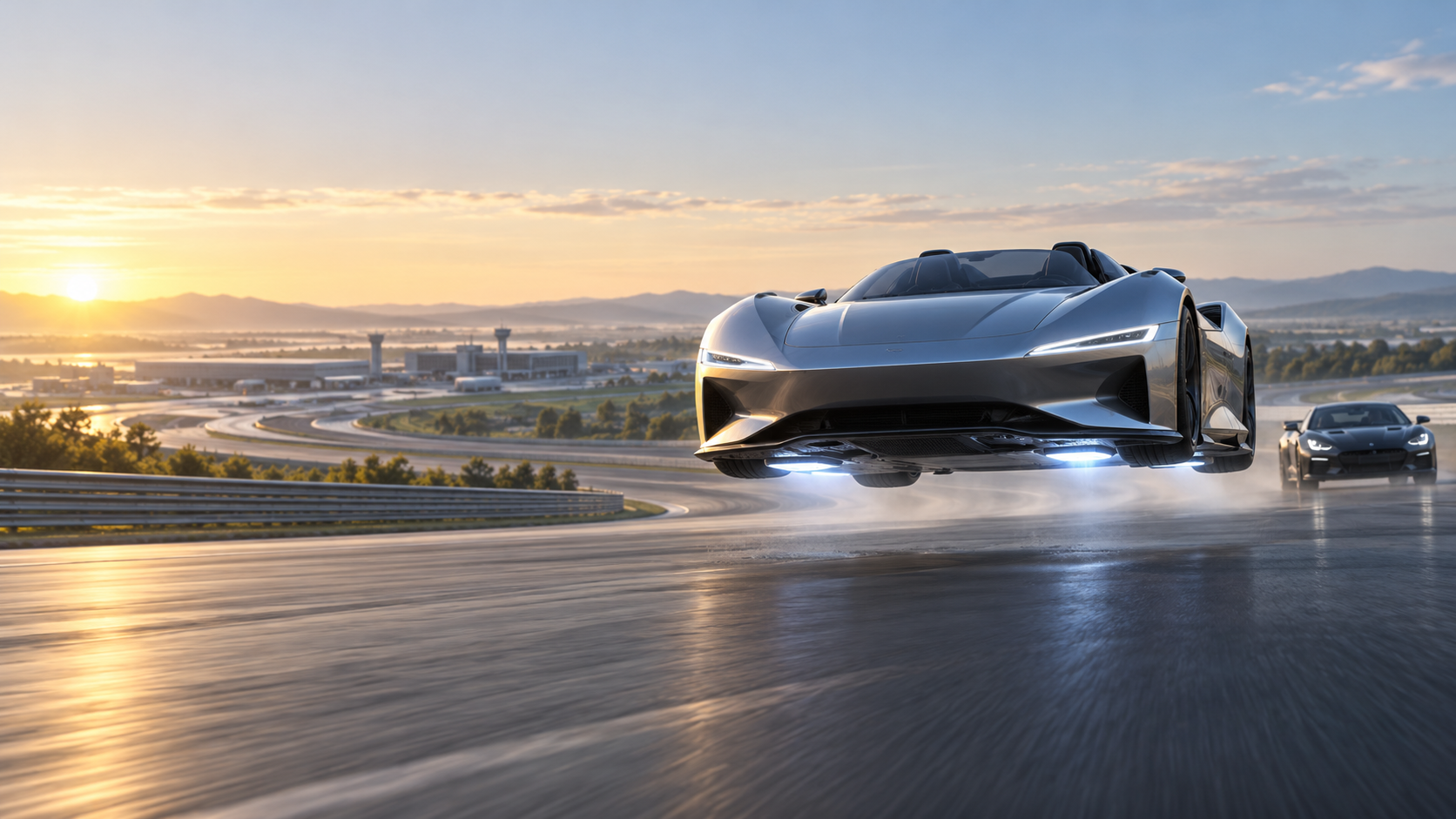
Tesla’s reported flying Roadster has revived a longstanding automotive ambition: a road vehicle that can also leave the ground. The concept has attracted attention because it combines Tesla’s electric-vehicle brand with aerospace technology reportedly associated with SpaceX.
An unveiling, however, is not a production launch. Available reporting does not confirm a final design, regulatory approval, mass-production plan, consumer delivery date, or independently verified flight performance. Tesla may have shown or discussed a flying Roadster concept, but consumer availability is likely still years away Source 1.
The key questions are what Tesla has demonstrated, how the proposed system might work, and whether the technology can become a safe, certified consumer product.
What Tesla Reportedly Unveiled
The Flying Roadster Concept
A flying Roadster could describe several different capabilities. A road-legal car might make a brief assisted jump, hover for a short time under controlled conditions, or perform repeated takeoffs, flight, and landings. Only the final category would resemble a practical flying car.
Available source summaries do not establish which category Tesla has reached. They do not provide verified flight duration, payload, range, independent test results, production photographs, or a confirmed consumer release date. The vehicle should therefore be treated as a developing concept or prototype, not an available Tesla model.
A practical flying car must operate repeatedly, carry passengers safely, respond to failures, and comply with road and aviation regulations. A promotional demonstration may show only a narrow capability under ideal conditions.
Technology Associated With SpaceX
The Globe and Mail has reported that the concept uses technology associated with SpaceX, prompting speculation about whether aerospace engineering could help Tesla create a new vehicle category Source 9.
That connection does not prove that SpaceX rocket hardware has been installed in a production Tesla. It could refer to engineering expertise, a design concept, technical inspiration, or collaboration. These are materially different possibilities.
SpaceX has experience with propulsion, aerospace structures, guidance, and extreme operating environments. Those capabilities do not automatically produce a safe, affordable road vehicle. A system designed for short-duration aerospace operations faces different requirements from one that carries consumers above roads and returns repeatedly for everyday use.
How the Proposed Flying System Could Work
Cold-Gas Propulsion Claims
Electrek has discussed reports that the flying Roadster could use a cold-gas propulsion system and questioned whether the proposed technology can deliver the advertised performance Source 5.
Cold-gas propulsion stores pressurized gas in a tank and releases it through nozzles to generate thrust. It does not require combustion, which can simplify some mechanical components and provide rapid response.
The system would still face major limitations. Cold gas has lower energy density than many combustion-based propulsion systems. The vehicle would need to carry enough pressurized gas to generate lift while also carrying batteries, passengers, safety equipment, structural reinforcement, and conventional driving hardware.
The technology might suit a concept vehicle because it could provide fast thrust response and a dramatic demonstration. Propulsion, however, is only one part of flight. The vehicle would also need to manage:
- Lift and weight
- Balance during takeoff
- Steering while airborne
- Passenger restraint and comfort
- Safe landing
- Emergency shutdown
- Noise and pressure hazards
- Weather exposure
- Control-system reliability
Brief Lift Versus Sustained Flight
A vehicle that briefly leaves the ground is not necessarily a practical flying car. A short jump, a controlled hover, and sustained flight require progressively greater levels of energy, stability, and control.
Important unanswered questions include:
- How long can the vehicle remain airborne?
- How much thrust can the system generate?
- How much gas or propellant can it carry?
- How does passenger weight affect performance?
- Can it hover in wind?
- Can it land safely on a road or approved landing area?
- Can an ordinary driver control it without extensive pilot training?
- What happens if a nozzle, sensor, battery, or control computer fails?
Until Tesla or independent testers answer these questions, the advertised performance remains unverified. The difference between a technical demonstration and useful transportation is substantial.
Why Consumer Availability Could Still Be Years Away
An Unveiling Is Not a Production Launch
A vehicle typically passes through these stages before customers receive it:
- Concept presentation
- Engineering prototype
- Ground testing
- Controlled flight testing
- Safety validation
- Regulatory certification
- Manufacturing development
- Limited production
- Customer deliveries
The supplied reporting does not confirm which stage Tesla has reached. Even a successful public demonstration would not prove that the company has completed structural testing, emergency procedures, manufacturing validation, or regulatory approval.
A flying Roadster would require both automotive and aviation development. Tesla would need to validate road performance while proving that the vehicle can operate safely above ground. That creates a longer and more complicated path than developing a conventional electric car.
Safety and Reliability Requirements
An airborne passenger vehicle must meet a higher safety burden than an ordinary road car. It must remain stable in changing conditions and recover safely from system failures.
Testing would likely need to address propulsion reliability, structural integrity, battery and pressure-system safety, emergency shutdown procedures, takeoff and landing stability, passenger and bystander protection, operation in varied weather, software and sensor failures, and component wear over repeated flight cycles.
One successful flight cannot establish reliability. A consumer product would need to perform consistently across many vehicles and thousands of operating cycles. Engineers would also need to show that failures produce manageable outcomes rather than uncontrolled descent or hazardous thrust.
Regulatory and Infrastructure Barriers
A flying Roadster could face multiple regulatory systems, including:
- Vehicle safety certification
- Aviation certification
- Pilot or driver licensing
- Airspace permissions
- Takeoff and landing restrictions
- Noise standards
- Insurance rules
- Maintenance and inspection requirements
Requirements would vary by country. A vehicle can be technically functional and still remain unavailable if regulators lack a clear approval pathway. Authorities may need to determine whether the Roadster is an automobile, an aircraft, or a hybrid category requiring new rules.
Infrastructure presents another obstacle. Owners might need approved landing areas, specialized charging or propellant facilities, maintenance networks, air-traffic coordination, and emergency-response procedures. A flying car limited to restricted zones would have little practical value for ordinary daily travel.
What Tesla Has Not Yet Demonstrated
Missing Evidence Behind Performance Claims
The most important evidence would include:
- Independent flight footage
- Published technical specifications
- Verified flight duration
- Payload and range data
- Repeated test flights
- Third-party engineering validation
- Regulatory filings
- Production commitments
Available sources do not establish a confirmed production schedule, final design, consumer price, delivery date, or complete propulsion specification. Promotional language should not be treated as equivalent to independently measured performance.
Why Independent Testing Matters
A controlled demonstration may not reveal how a vehicle behaves under normal ownership conditions. Independent testing should cover multiple vehicles, different weather conditions, repeated takeoffs and landings, emergency recovery, software faults, and long-term component wear. It should also examine the effects of passenger weight, battery charge, temperature, and wind.
A flying vehicle is not ready for consumers because it can fly once. It is ready when it can fly repeatedly, safely, legally, and predictably.
Could the Flying Roadster Increase Tesla Sales?
Yahoo Finance UK has examined whether a Tesla flying car could increase vehicle sales and support the company’s share price Source 3.
A flying Roadster could create commercial benefits even if production volumes remained low. It could give Tesla access to a luxury technology market, strengthen brand differentiation, attract wealthy buyers, and generate demand for a limited-edition halo product.
A halo vehicle can generate publicity, increase showroom interest, and reinforce a company’s identity as an engineering leader. Tesla could also pursue revenue from software, maintenance, training, infrastructure, and specialized services.
Near-term sales would probably remain limited by:
- High development costs
- Restricted production capacity
- Expensive ownership
- Regulatory constraints
- Specialized maintenance
- Limited legal operating areas
- Training requirements
Customer interest would not equal completed sales. Reservations, media coverage, and investor enthusiasm would not prove that Tesla had created a profitable market.
Could the Project Affect Tesla’s Share Price?
A flying car could attract investors because it would suggest expansion beyond conventional electric vehicles. It could support the idea that Tesla is building a broader technology platform involving transportation, software, autonomy, and aerospace-related systems.
Market enthusiasm could increase if Tesla demonstrates repeatable flights, publishes credible specifications, receives regulatory support, and secures financially meaningful orders. The project could also reinforce Tesla’s technology-focused identity.
Stock-price effects would ultimately depend on execution and financial results. Investors would need to assess development spending, production costs, order volume, delivery targets, regulatory progress, profit margins, and recurring service revenue.
An announcement alone cannot establish future earnings. A project that misses deadlines or fails to meet performance claims could damage investor confidence. Attention is not the same as revenue.
The Potential Tesla Flying Car Price
Could It Cost $250,000?
One report claims that the Tesla Roadster’s price could reach $250,000, potentially placing it above the Rimac Nevera in price Source 7.
That figure is not confirmed in the supplied material. The report is dated October 16, 2026, making it future-dated relative to the present context. It should therefore be treated as price speculation, not official Tesla pricing.
A $250,000 price would place the vehicle in the ultra-luxury performance segment. A flying capability could add costs through propulsion hardware, structural reinforcement, safety systems, testing, certification, and specialized manufacturing. Final pricing would also depend on production volume, battery capacity, included services, and infrastructure requirements.
How the Flying Roadster Could Differ From an Ordinary Tesla
A flying version would likely require major design changes, including advanced software controls, reinforced structures, specialized propulsion hardware, and automated safety monitoring. These are analytical possibilities, not confirmed production specifications.
Potential trade-offs include:
- More weight from propulsion and safety equipment
- Less cargo or passenger capacity
- Higher maintenance requirements
- More complex controls
- Reduced driving range
- Greater operating costs
- Additional storage requirements
Ownership would raise practical questions. Where could the vehicle legally fly? Would owners need aviation training? Could it be stored in a standard garage? How would insurance work? Would Tesla provide specialized service centers? What would a single flight cost?
These restrictions could make early flying Roadsters more suitable for collectors, demonstration programs, or designated operating locations than ordinary commuting.
A Realistic Tesla Flying Car Release Timeline
Near Term: Demonstrations and Validation
The next credible milestone would be repeated, controlled flight testing. Tesla would need to publish technical details, clarify the propulsion system, and show that the vehicle can operate safely beyond a single promotional event.
Independent verification would strengthen the project’s credibility. Important evidence would include flight duration, payload, range, control limitations, emergency procedures, and performance under different conditions.
Medium Term: Certification and Limited Production
If testing succeeds, Tesla would still need to work with regulators and develop specialized manufacturing processes. An initial launch could involve a small number of vehicles, preselected customers, restricted operating locations, limited flight functions, and extensive owner training.
Limited production would not equal mass-market availability. It would show only that Tesla can build and support the vehicle under controlled conditions.
Longer Term: Broader Consumer Access
A wider rollout would require lower costs, reliable infrastructure, simplified controls, clear regulations, and a strong safety record. Those conditions explain why consumer availability is likely still years away Source 1.
No specific delivery year should be presented unless Tesla confirms one.
What Consumers and Investors Should Watch Next
Progress would become more credible if Tesla provides:
- Official technical documentation
- Verified flight demonstrations
- Regulatory filings and approvals
- Production-ready design images
- Confirmed pricing and reservation terms
- Manufacturing announcements
- Independent safety testing
- A clear delivery timeline
Warning signs would include repeated missed deadlines, unsupported performance claims, vague propulsion descriptions, a lack of independent testing, no regulatory pathway, reservation campaigns without production details, and reductions in promised capabilities.
Conclusion: A Technological Showcase, Not Yet a Mainstream Vehicle
Tesla’s reported flying Roadster has attracted attention because it combines an iconic electric-vehicle brand with aerospace-style technology. The concept could become a powerful halo product and create a new luxury market if Tesla proves that it can fly safely, repeatedly, and legally.
The project remains separated from consumer reality by technical, safety, regulatory, manufacturing, and financial obstacles. Source 1 places consumer availability years away. Electrek questions whether the proposed cold-gas propulsion system can deliver the advertised performance. Yahoo Finance UK and The Globe and Mail discuss possible effects on vehicle sales and Tesla’s share price. The reported $250,000 price remains unconfirmed speculation.
The next decisive milestone is not the unveiling. It is independently verified, repeatable, legally certifiable flight testing.
Frequently Asked Questions
Is Tesla releasing a flying car?
Tesla has reportedly unveiled a flying version of the Roadster, but available sources do not confirm a production launch or consumer delivery schedule. Until Tesla provides verified specifications and a confirmed release plan, the vehicle should be treated as a developing concept or prototype.
When will Tesla’s flying car be available to consumers?
Consumer availability is likely still years away. The vehicle would need to pass technical testing, safety validation, regulatory approval, and manufacturing development before broad deliveries could begin.
How would the Tesla flying Roadster fly?
Reports have discussed a proposed cold-gas propulsion system. It could generate thrust by releasing pressurized gas through nozzles, but available sources do not verify flight duration, payload, stability, range, or production readiness.
How much could Tesla’s flying car cost?
One report claims that the Roadster could cost as much as $250,000, but Tesla has not been shown to have confirmed that price. Final pricing would depend on propulsion hardware, production volume, certification costs, safety systems, and included services.
Could the flying Roadster increase Tesla’s stock price?
It could increase investor attention and reinforce Tesla’s technology-company image. A lasting stock-price effect would depend on credible development progress, orders, deliveries, margins, and future financial results. An announcement alone does not establish sales or profits.
Will Tesla’s flying car be available to ordinary drivers?
Not initially, if it reaches production. High costs, specialized training, airspace restrictions, infrastructure requirements, and regulatory limits could make early versions more suitable for collectors, demonstration programs, or restricted operating environments.