Spain Housing Crisis Sparks Nationwide Protests
Spain Housing Crisis Sparks Nationwide Protests
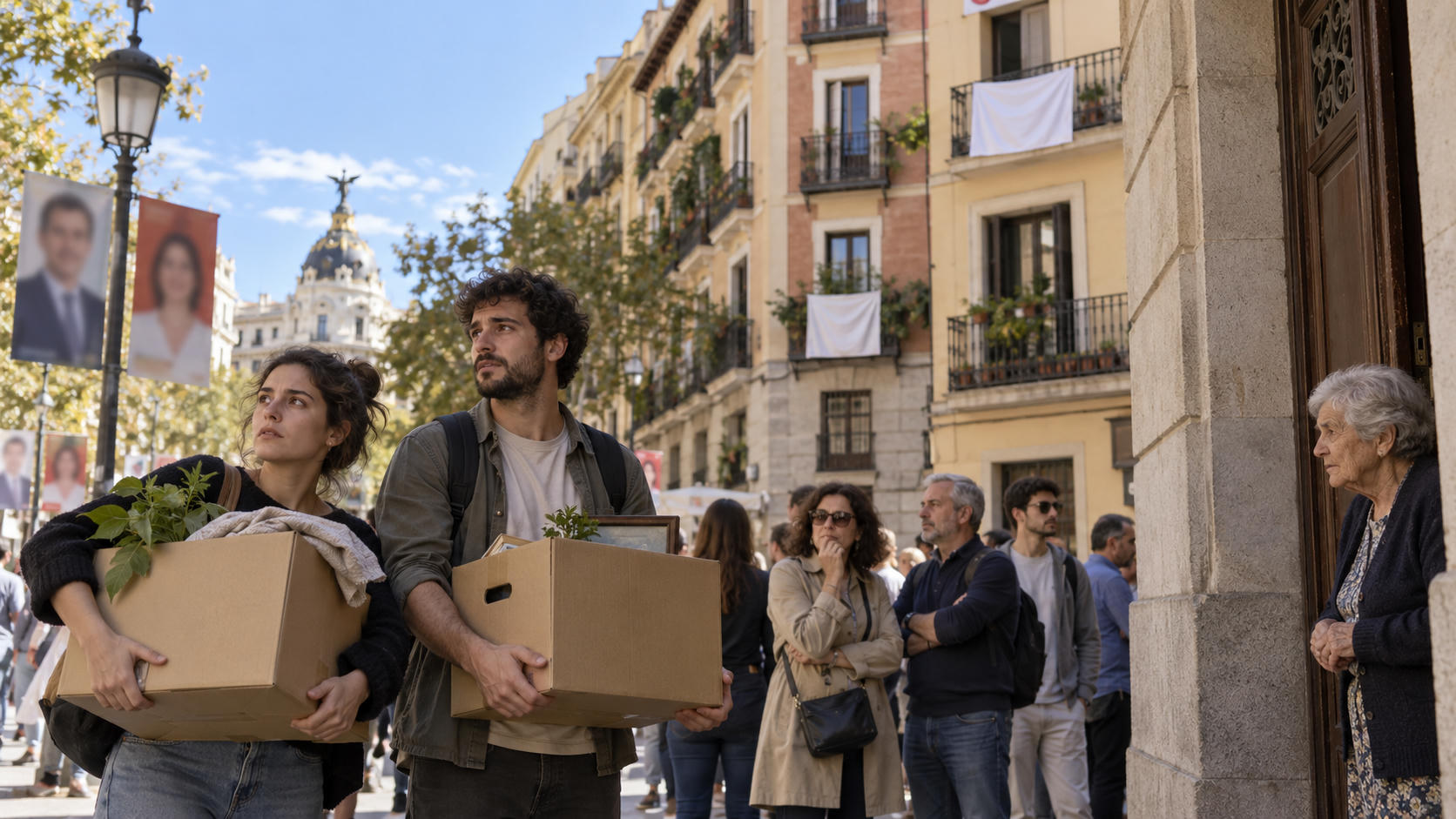
Tens of thousands of people have protested across Spain over the country’s housing crisis, expressing anger about unaffordable homes, limited access to housing and worsening living conditions. The demonstrations show that housing has become a national political flashpoint rather than only a private financial concern.
Reuters reported protests across Spain as residents raised concerns about housing affordability and availability. Source 1
The Guardian likewise described nationwide demonstrations involving tens of thousands of people who argued that current housing conditions were unsustainable. Source 3
The protests reflect pressure on renters, families, young adults, local workers and prospective buyers. They also raise a broader question: can ordinary residents continue living in the communities where they work and have built their lives?
What Happened During the Protests?
Demonstrations Spread Across Spain
The protests were not limited to one local housing dispute. Demonstrations took place in multiple parts of Spain, giving the movement a national character.
Housing pressure varies by region. Large cities face intense competition for rental homes and rising purchase prices. Tourist destinations face additional pressure from short-term accommodation and seasonal demand. Smaller communities may struggle with limited supply, low wages and the departure of younger residents.
The available reports confirm protests across Spain but do not provide a complete, independently verified list of participating cities or city-by-city attendance figures. Those details should be confirmed through original reports from Reuters, The Guardian, France 24, protest organizers or local authorities.
Affordability and Access Were Central Complaints
The demonstrations focused on two connected problems: the cost of housing and the difficulty of finding it.
A home can be unaffordable even when it is available. Rent may consume too much of a household’s income, leaving little for food, transport, health care, education or savings. Buying may be out of reach because mortgage payments and deposit requirements exceed what a household can manage.
Access presents a separate challenge. People may be willing to pay the market price but still struggle to secure a property because too few homes are available, landlords require strict financial guarantees or competition is overwhelming.
The reports describe anger over unaffordable homes and housing conditions but do not establish a single platform shared by every protester. Participants may support different combinations of rent protection, public housing, construction, regulation and financial assistance.
Rejected Relief Measures Increased Frustration
France 24 reported that protests intensified after proposed housing relief measures were rejected. The available summary does not specify the measures, the institutions that rejected them or the reasons for the decision. Source 9
That distinction matters because housing policy can involve immediate financial assistance, rent protections, public-housing investment, planning reform and controls on short-term accommodation. Each measure addresses a different part of the crisis.
The rejection of proposed support may deepen frustration if residents view it as evidence that authorities are moving too slowly. Temporary assistance may also appear inadequate when housing supply remains limited. The central question is whether policymakers will return with revised proposals or pursue a different strategy.
Why Housing Has Become a National Flashpoint
Rising Costs Are Squeezing Household Budgets
High housing costs affect more than rent or mortgage payments. They influence whether people can save, form independent households, move for work or remain near family.
Renters facing repeated increases may reduce spending elsewhere or move into less suitable accommodation. Prospective buyers may be unable to save for a deposit while paying high rent. Families may postpone plans because housing costs leave little room for unexpected expenses.
Housing insecurity can create a cycle of instability. A household that loses a lease or cannot absorb a rent increase may need to move quickly, accept a longer commute or share space with relatives and other tenants.
The available protest reports do not provide current national figures for rent growth, house prices, household incomes or housing-cost burdens. Those indicators are needed to measure the crisis precisely, but the demonstrations show that many residents consider current conditions unsustainable. Source 5
Housing Supply Has Not Matched Demand
When more people need homes than are available, competition increases. Demand can rise in major employment centers, university cities and tourist areas because of population changes, migration, tourism and concentrated employment.
Supply can be constrained by planning rules, land availability, construction costs, financing conditions and the time required to complete new housing. Existing properties may also be vacant, used as holiday accommodation, reserved for seasonal occupancy or held under ownership structures that limit access for local residents.
No single factor explains Spain’s entire housing crisis. Housing markets are local, and pressures in a major tourist destination may differ from those in an inland town or metropolitan area.
Tourism and Short-Term Rentals Add Local Pressure
Residents in tourist destinations often connect housing costs with the growth of short-term accommodation. A property used for visitors may not be available to a household seeking a long-term lease.
Reduced long-term supply can increase competition among residents. Local workers may live farther from their jobs, accept overcrowded accommodation or leave the area. The effects can reach hospitals, schools, restaurants, hotels and other services that depend on nearby workers.
Short-term rentals are one possible contributor, not a complete explanation. Construction levels, wages, population changes, investor demand and local planning decisions also shape affordability.
Insecurity Goes Beyond Rent Prices
Spain’s housing crisis also includes difficulty securing a stable home and maintaining an acceptable standard of living. Housing insecurity can involve:
- Unstable or short-term tenancy arrangements
- The threat of eviction
- Overcrowded homes
- Poor maintenance or inadequate conditions
- Frequent moves
- Long commutes caused by displacement
- The inability to find suitable housing within one’s community
A young worker may be unable to leave the family home. A family may find a property but lack sufficient space. An older resident may face rising costs on a fixed income. A seasonal worker may have employment but no secure accommodation nearby.
The protests brought these experiences into the same national conversation.
What Are Protesters Demanding?
The available reporting supports broad demands for more affordable and accessible housing, but it does not establish one detailed platform shared by all protesters.
Possible measures include stronger tenant protections, limits on unjustified rent increases, action against unlawful evictions, expanded public and social housing, assistance for first-time buyers, planning reform and tighter regulation of short-term rentals. These should not be presented as confirmed demands unless directly attributed to organizers or original reporting.
Financial support can help households in the short term, but assistance without additional supply may increase competition and place further upward pressure on prices. A long-term response may therefore need to combine immediate relief with new construction, public-housing investment and measures that improve housing security.
Public and social housing would require land, funding, construction capacity, administrative systems, eligibility rules and ongoing maintenance. Building homes takes time, and governments would need to determine how units are allocated and how residents are protected from displacement.
The Political Stakes for Spain
Housing responsibilities are divided among national, regional and municipal governments. National authorities may establish legislation, provide funding and set broad rules. Regional governments manage housing programmes and related policies. Municipalities control planning, permits and local development decisions.
This division can make accountability difficult. Residents may not know which government has authority over a particular problem, while political leaders may shift responsibility between institutions.
The demonstrations’ size and geographic spread make that division harder to ignore. Housing now affects elections, public trust and the credibility of governments at multiple levels.
Housing policy also involves trade-offs. Tenant protections may improve security but raise concerns about rental supply. Public housing requires sustained funding and land. Construction can increase supply but face planning, environmental and infrastructure constraints. Tourism supports employment but can increase pressure on homes for residents.
These tensions do not justify inaction. They show why a response needs clear objectives, reliable data and measurable results.
Who Is Affected?
Renters and Lower-Income Households
Renters face immediate exposure to changing housing costs. A rent increase can reduce money available for essentials, while a lost lease can force a household into an expensive or unsuitable alternative. Lower-income households have less capacity to absorb these shocks and may face greater difficulty meeting deposit or documentation requirements.
Young Adults
High housing costs can delay independence and household formation. Young adults may remain with family longer, share accommodation or move away from employment opportunities because they cannot afford homes near major job centers.
Local Workers in Tourist Areas
Workers in tourism-heavy regions may have jobs but lack stable accommodation nearby. Hospitality workers, teachers, health care staff, seasonal employees and public-sector workers can all be affected when housing costs rise faster than local wages.
Families Facing Insecure or Inadequate Housing
Families may face overcrowding, poor maintenance, unstable leases or an inability to move into more suitable housing. These conditions show why the crisis is broader than whether a household can make a monthly payment.
The supplied reports do not quantify the number of people facing each condition. Further coverage should rely on official housing surveys, eviction data and independent research.
What Happens Next?
The main questions include:
- Will new relief measures be proposed?
- Will rejected proposals return in revised form?
- Will public-housing investment increase?
- Will tenant protections become stronger?
- Will short-term rentals face tighter regulation?
- Will national, regional and municipal governments coordinate their response?
Nationwide demonstrations may lead to further rallies, petitions, local housing campaigns and pressure on elected representatives. Future events should be confirmed through organizers and local authorities.
Policy success should be measured against rent levels, home prices, household incomes, eviction figures, new construction, public-housing availability, vacancy rates and regional housing costs. Announcements alone will not resolve the crisis.
Conclusion
Tens of thousands of people have protested across Spain over housing affordability, access and living conditions. The demonstrations show that housing has become a central cost-of-living issue and a test of whether residents can remain in the communities where they live and work. Source 7
Reported anger intensified after proposed relief measures were rejected. The next phase will depend on whether authorities deliver immediate assistance, stronger protections, more affordable homes and a credible long-term plan.
Until residents can find secure homes at costs compatible with local incomes, housing will remain one of Spain’s most important political challenges.
Frequently Asked Questions
Why did people protest over housing in Spain?
People protested because housing has become increasingly difficult to afford and access. Demonstrators highlighted unaffordable homes, insecure or inadequate conditions and the lack of solutions considered sufficient for the scale of the crisis.
How many people joined the protests?
Available reports describe demonstrations involving tens of thousands of people across Spain. Exact attendance figures for individual cities require confirmation from original news reports, authorities or organizers.
Where did the protests take place?
Reports describe protests across Spain but do not provide a complete, verified list of cities in the supplied summaries. Specific locations should be confirmed before publication.
What measures did protesters want?
The available reporting supports broad demands for more affordable and accessible housing. Specific proposals, including rent controls, expanded public housing or limits on short-term rentals, require direct confirmation from organizers or original reports.
Why did the protests intensify?
France 24 reported that protests intensified after proposed housing relief measures were rejected. The supplied summary does not identify the measures or explain the reasons for their rejection.
Is Spain’s housing crisis limited to rent prices?
No. The crisis also involves limited access, insecure tenancies, inadequate conditions, displacement, overcrowding and difficulty buying property. The scale of each problem should be supported by current, verifiable data.
Artikel Terkait
-
 Why South Korea Is Unhappy With Ukraine Over Transfer of Two Captured North Korean Soldiers
-
 GOP Senator Urges ICE to Dial Back Enforcement Sweeps
-
 Spain’s Housing Crisis Takes Center Stage in Snap Election
-
 Satellite Images Show Military Activity at China-Laos Site
-
 Vietnam Police Arrest 12 in Alleged Cat-Theft Case
-
 Germany Arrests Former Spy Chief Over Espionage Claims