RTX Spark Laptops and the 284B AI Model Claim
RTX Spark Laptops and the 284B AI Model Claim
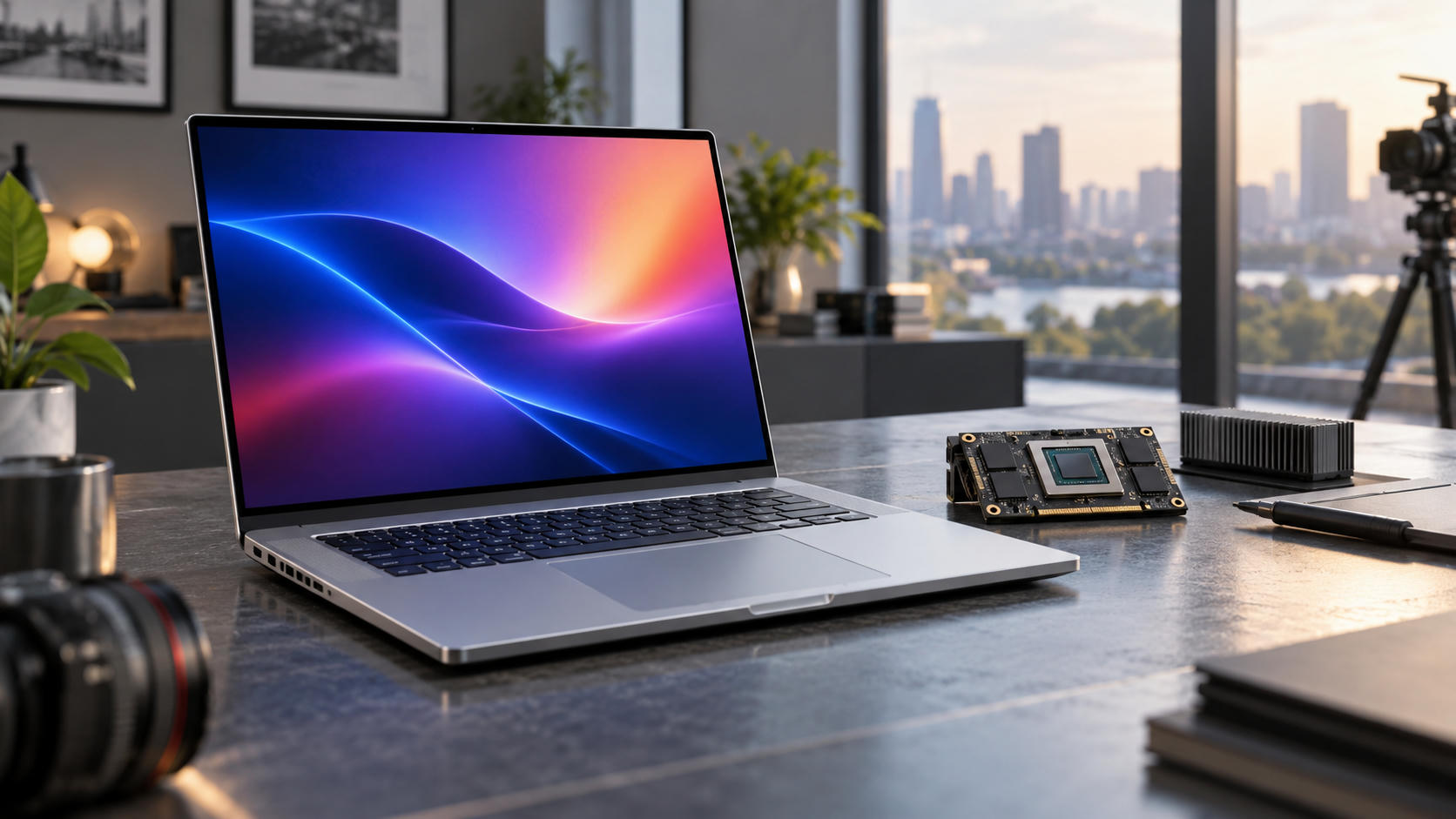
RTX Spark laptops could mark a major shift in local artificial intelligence. According to a Wccftech report, a Microsoft executive said systems based on NVIDIA’s RTX Spark platform could run models with up to 284 billion parameters locally. The report also described alleged coding and reasoning results that surpassed GPT-5 in selected benchmarks. Source 3
That claim would place RTX Spark laptops well beyond conventional local AI PCs. However, the available reporting does not include complete laptop specifications, a reproducible testing methodology, or independent confirmation. “Can run” could describe a heavily quantized model using CPU-GPU offloading rather than a 284-billion-parameter model operating at cloud-like speed.
What Are RTX Spark Laptops?
RTX Spark laptops are expected to target high-performance graphics and local AI workloads. Unlike conventional gaming laptops, these systems would emphasize large-memory configurations, accelerated inference, and support for local language models.
Gaming laptops prioritize frame rates, display refresh rates, and short periods of high graphics performance. AI-focused systems must sustain memory-intensive workloads for minutes or hours. They also require compatible drivers, inference frameworks, model formats, and tools for distributing workloads between GPU memory and system memory.
The available sources do not establish the exact RTX Spark laptop specifications. Important details include the GPU, dedicated VRAM, total system memory, power limit, cooling system, processor, battery capacity, and release configuration. Without that information, performance claims remain projections rather than confirmed capabilities.
ASUS has separately promoted RTX Spark-powered ProArt GR1X mini-PC systems as efficient gaming devices capable of running 1440p games at 100 frames per second within a 140-watt power limit. Source 1
That example demonstrates graphics efficiency, not proof that a laptop can run a 284-billion-parameter model. Gaming performance and language-model performance depend on different hardware characteristics.
Why Memory Matters
A model must load its weights into memory before generating output. Inference also requires memory for runtime buffers, temporary calculations, the operating system, and the key-value cache, commonly called the KV cache.
The KV cache stores information from previous tokens during generation. Larger context windows require more KV-cache memory. A model may fit at a short context length but become impractical when processing long documents or codebases.
The approximate raw storage requirements for a 284-billion-parameter model are:
- 16-bit weights: about 568 GB
- 8-bit weights: about 284 GB
- 4-bit weights: about 142 GB
These figures exclude runtime overhead, the KV cache, framework requirements, and system memory. They are illustrative calculations, not exact hardware requirements.
Quantization reduces the number of bits used to store model weights. Four-bit quantization can make some large models possible on consumer hardware, but it may reduce quality, affect consistency, limit compatibility, and change generation speed.
A practical 284B implementation could require:
- Aggressive weight quantization
- CPU-GPU offloading
- Shared or unified memory
- Multiple memory pools
- Sparse computation
- A mixture-of-experts architecture
- Specialized inference software
A mixture-of-experts model may contain a large total parameter count while activating only part of the model for each token. That can reduce compute requirements, although the full model still creates storage and memory-management challenges.
Local AI Does Not Mean Full-Speed AI
Four claims should be separated:
- The system can store the model.
- The system can load and initialize the model.
- The system can generate tokens.
- The system can generate tokens quickly enough for practical work.
An RTX Spark laptop could technically load a 284B model while producing only a few tokens per second. That might support some offline research tasks, but it would not match a high-end cloud service for interactive coding.
Power, cooling, memory bandwidth, and software optimization determine the experience. A laptop that performs well during a short demonstration may slow down during sustained inference because of thermal throttling or power limits.
The 284B Model Claim
The Wccftech report attributes the local-inference claim to a Microsoft executive and describes alleged advantages over GPT-5 in coding and reasoning benchmarks. Source 3
The supplied material does not independently verify the statement. It does not identify the exact model, quantization level, hardware configuration, software stack, benchmark prompts, or scoring conditions. The claim should therefore be treated as a reported prediction or statement, not an established performance result.
A practical local 284B model could offer privacy, offline operation, lower recurring API costs, fixed model versions, and lower latency for some workflows. These benefits would matter most to users handling proprietary code, confidential research, regulated documents, or restricted-network workloads.
The hardware cost would also be substantial. A system capable of running a large model may require more memory, stronger cooling, a high-capacity charger, and a premium processor platform. Local inference avoids cloud fees but does not make computation free.
Could RTX Spark Outperform GPT-5?
“Outperform” depends on the benchmark. A model can exceed GPT-5 on one test and perform worse on another. Coding accuracy, debugging, mathematical reasoning, general knowledge, long-context retrieval, tool use, and response speed measure different capabilities.
A credible comparison should specify:
- Exact model name and version
- Quantization level
- Prompt template and system instructions
- Hardware configuration
- Benchmark dataset
- Scoring method
- Number of test runs
- Temperature and sampling settings
- Whether tools or external retrieval were enabled
Without those details, “beats GPT-5” is too broad. A specialized coding model may perform better on a particular test while remaining weaker at writing, factual recall, image analysis, tool use, or conversational reasoning.
Prompt formatting, quantization, inference-time reasoning, and benchmark contamination can all affect results. Independent evaluations using hidden or newly created tasks provide stronger evidence.
RTX Spark Versus Conventional AI PCs
The ASUS ProArt GR1X example illustrates the difference between gaming and AI performance. ASUS reportedly positions the RTX Spark-powered mini-PC for 1440p gaming at 100 frames per second under a 140-watt power limit. Source 1
That figure concerns rasterization performance. Large-model inference depends more heavily on:
- VRAM capacity
- Memory bandwidth
- Tensor acceleration
- System RAM
- CPU-GPU transfer speed
- Quantization support
- Sustained thermal performance
A gaming laptop with a powerful GPU may still be unsuitable for a large language model if it has insufficient VRAM or system memory.
Large models also create sustained workloads. Potential constraints include thermal throttling, fan noise, battery drain, charger requirements, reduced performance on battery power, higher electricity consumption, and limited performance in compact chassis designs.
Buyers should examine sustained tokens per second rather than peak theoretical performance.
Memory Routing and Context Length
One reported RTX 4090 configuration involved connecting the display cable to the integrated GPU instead of the discrete GPU. The user allegedly gained 2.5 GB of usable VRAM, allowing a Qwen3.8-27B context window of 132K tokens. Source 7
This is an anecdotal configuration example, not a universal recommendation. Display routing varies by motherboard, firmware, drivers, and laptop design. Integrated-GPU output may affect compatibility, graphics performance, variable-refresh features, or external displays.
The example demonstrates an important principle: small changes in memory allocation can affect context length and model usability.
Potential Applications
A large local coding model could analyze proprietary repositories without sending source code to a cloud API. Developers could use it for code generation, debugging, refactoring, testing, and documentation.
Other potential uses include long-context document analysis, technical research, data analysis, automated testing, multi-step planning, and agentic workflows. Local execution could also support restricted-network environments where cloud access is unavailable.
Local deployment does not guarantee security or accuracy. Devices still need disk encryption, access controls, secure model files, driver updates, and protection against malicious prompts or retrieved documents. Models can produce confident errors, flawed code, fabricated citations, or unsafe recommendations.
Organizations could deploy models on-premises or at the edge, but costs would shift rather than disappear. Budgets must include hardware, electricity, cooling, model updates, monitoring, IT support, security, and replacement cycles.
RTX Spark and Copilot+
Microsoft is expanding the Copilot+ brand across Windows devices and AI features. However, the supplied reporting indicates that RTX Spark laptops may not carry the Copilot+ name. Source 5
Copilot+ identifies a Microsoft device and feature ecosystem. RTX Spark represents a hardware direction focused on high-performance graphics and local AI workloads. Buyers should evaluate specifications instead of relying on branding.
Important checks include dedicated GPU memory, system RAM, neural-processing support, CUDA and driver compatibility, local inference frameworks, operating-system support, quantized model availability, and GPU-offloading options.
Buyer Checklist
Verify the following before purchasing:
- GPU model and dedicated VRAM
- Total system memory and memory bandwidth
- Supported quantization formats
- CPU-GPU memory sharing
- Power limits and cooling design
- Sustained tokens per second
- Charger capacity and battery behavior
- Noise and temperature during long workloads
- CUDA, driver, and inference-framework support
- Model file formats and GPU-offloading options
Reliable testing should publish the exact model and quantization, tokens per second, time to first token, context length, power consumption, temperature, fan noise, benchmark scores, prompts, scoring methodology, and reproducible test scripts.
Conclusion
RTX Spark laptops could expand local AI from small and medium models toward systems approaching data-center-scale parameter counts. A 284B model running locally would create opportunities for private coding assistants, offline research, long-context analysis, and enterprise deployments.
The reported comparison with GPT-5 remains unverified. It does not establish broad superiority across AI tasks. Results will depend on the specific model, quantization, prompts, benchmark, memory configuration, software stack, and power limit.
Memory capacity matters more than marketing language. Quantization, CPU-GPU offloading, cooling, and sustained token speed will determine whether a 284B model is merely loadable or genuinely useful.
RTX Spark is a promising local AI direction, not yet a confirmed replacement for cloud AI. Confirmed specifications and reproducible benchmarks should guide purchasing decisions.
Frequently Asked Questions
Can RTX Spark laptops run 284-billion-parameter AI models locally?
According to the cited Wccftech report, a Microsoft executive claimed that RTX Spark laptops could support models with up to 284 billion parameters locally. The available sources do not provide complete specifications or independent testing. Quantization, memory sharing, and CPU-GPU offloading may be necessary.
Will RTX Spark laptops outperform GPT-5?
The report describes alleged advantages in coding and reasoning benchmarks, but that does not prove broad superiority. Results depend on the model, benchmark, prompts, quantization, hardware, sampling settings, and scoring method.
Why is VRAM important for large AI models?
VRAM stores model weights and supports runtime calculations during inference. More VRAM can reduce CPU offloading and improve speed. The KV cache also consumes memory, particularly with long contexts.
Can a gaming laptop run a 284B model?
Some systems may load a heavily quantized or partially offloaded model. Gaming performance does not guarantee practical large-model inference. Buyers must check VRAM, system RAM, memory bandwidth, software support, and sustained power performance.
What is the difference between RTX Spark and Copilot+?
RTX Spark refers to a hardware direction focused on high-performance graphics and local AI workloads. Copilot+ is Microsoft’s branding for a Windows device and feature ecosystem. The supplied reporting indicates that RTX Spark laptops may not carry the Copilot+ name.
Are local AI models better than cloud AI models?
Local models offer privacy, offline access, predictable availability, and potentially lower per-use costs. Cloud models offer elastic infrastructure, centralized updates, easier scaling, and broad service integrations. The better option depends on workload, budget, privacy requirements, and performance expectations.