Orionid Meteor Shower Peaks Tonight: Best Viewing Time
Orionid Meteor Shower Peaks Tonight: Best Viewing Time
The Orionid meteor shower peaks tonight, giving skywatchers a chance to see fast-moving meteors produced by debris from Halley’s Comet. The best general viewing usually occurs after midnight and before dawn, when Orion has risen higher and Earth’s night side faces into the meteor stream.
The exact viewing window depends on your location, local sunrise, weather, moonlight, and light pollution. Regional guidance for Rhode Island and South Florida also emphasizes adapting your plans to local conditions rather than treating the peak as one universal moment. Source 3
When is the best time to see the Orionids?
The best general viewing period is from after midnight until dawn, with the final hours before sunrise often offering the strongest opportunity. Begin watching at least 30 minutes beforehand so your eyes can adjust and you can observe through gaps in activity.
For the best chance of seeing meteors:
- Find a dark location away from streetlights.
- Choose a wide, unobstructed view of the sky.
- Check an hourly cloud forecast before leaving.
- Look broadly across the sky instead of staring only at Orion.
- Watch continuously for at least 30 minutes.
- Dim or cover phone screens and flashlights.
You do not need a telescope or binoculars. Unaided eyes provide the widest field of view, which matters because meteors can appear anywhere across the sky.
What is the Orionid meteor shower?
The Orionids come from Halley’s Comet
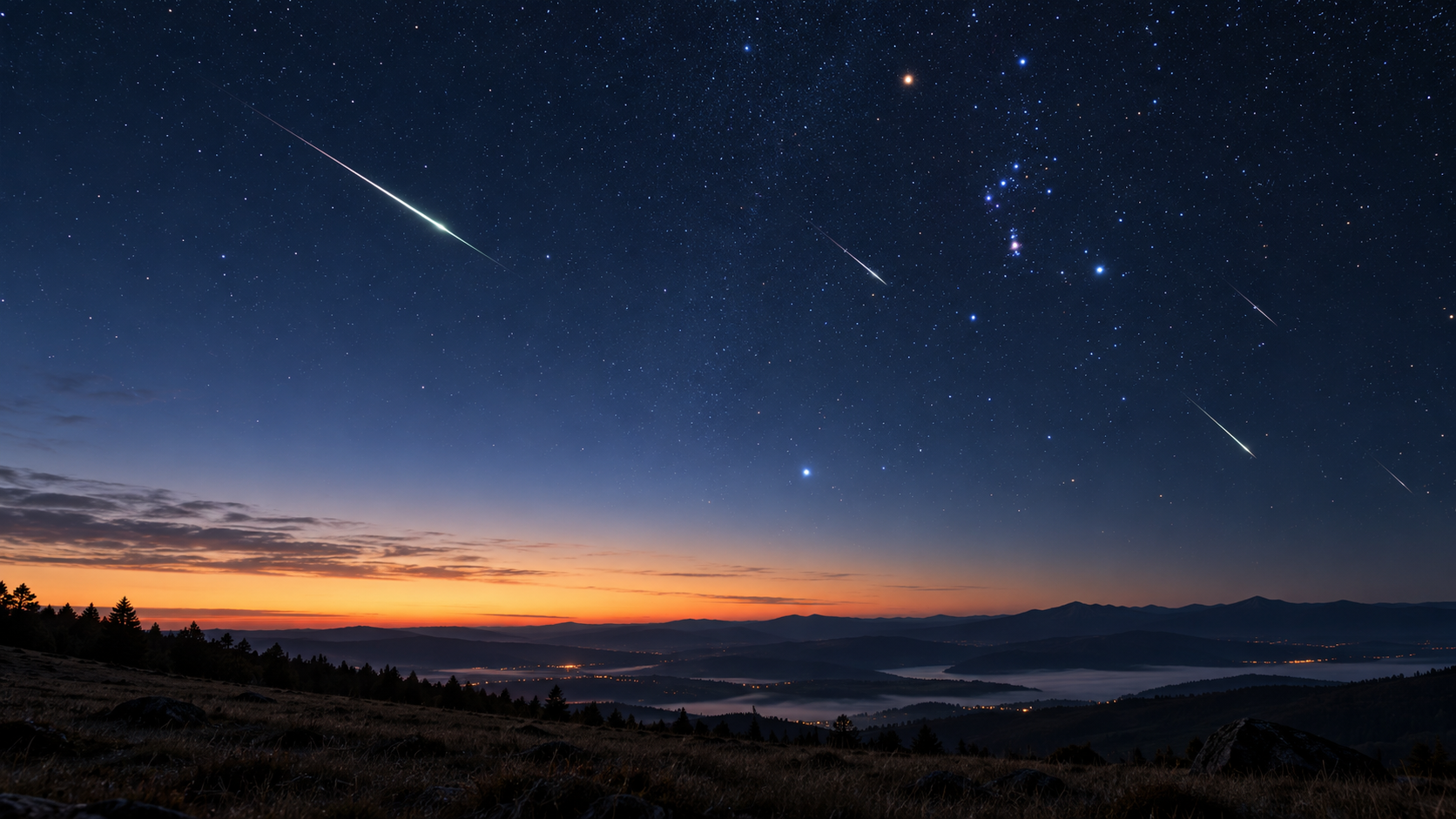
The Orionids occur when Earth passes through dust and small particles left behind by Halley’s Comet. As the particles enter the atmosphere at high speed, they heat and vaporize, creating brief streaks of light.
These streaks are meteors, not falling stars. Most particles burn up high above the ground. Their trails may last only a fraction of a second, although brighter meteors can remain visible longer.
The shower returns each year because Earth crosses the same broad stream of comet debris during its orbit around the Sun. Meteor numbers and brightness vary by year and location.
Why the Orionids are notable
The Orionids are known for fast meteors and occasional bright fireballs. A fireball is an unusually bright meteor that can briefly outshine many stars.
Activity is uneven. Several meteors may appear close together, followed by a quiet period lasting several minutes. Clouds, haze, moonlight, and urban light pollution can also hide meteors.
News coverage identifies tonight as the Orionids’ peak viewing opportunity and highlights the overnight hours as the best time to watch. Source 1
What does “peak tonight” mean?
A meteor-shower peak is not a guaranteed instant when meteors appear continuously. It is the period when activity is expected to be highest.
The Orionids remain visible on nights before and after the official peak. A clear night near the peak may provide better viewing than a cloudy night during it.
“Tonight” also depends on your time zone. Check your local date, sunrise time, moon position, and hourly forecast before planning a viewing session. Location-specific advice is available for Rhode Island and South Florida. Source 3 Source 9
Why the hours before dawn are best
Meteor activity often improves later at night for two reasons:
- Earth’s rotation turns your location toward the direction of its orbital motion, allowing the planet to sweep more directly into the debris stream.
- The Orionid radiant rises higher, placing more of the shower’s active region above the horizon.
The radiant is the point from which the meteors appear to originate. It lies near Orion, but meteors can travel across a large portion of the sky. Start after midnight if conditions are clear and continue until dawn permits.
Where should you look?
Look for Orion’s Belt, three bright stars arranged in a nearly straight line. The Orionids appear to radiate from the region around Orion, but you should not stare directly at the constellation.
For longer-looking trails, face roughly away from the radiant. Meteors near the radiant can appear short because of perspective, while those farther away often cross more of the sky. Choose the broadest, darkest view available. A reclining chair or blanket can make overhead viewing more comfortable.
How to get the best view
Choose a dark location
Light pollution can hide faint meteors even when the sky is clear. If practical and legal, use a rural area, open field, permitted beach or park, designated dark-sky site, or quiet suburban area shielded from direct lighting.
Do not trespass, park on unsafe roads, or enter areas closed at night. A slightly darker location with safe access is the better choice.
Let your eyes adjust
Allow 20 to 30 minutes for your eyes to adapt. Avoid headlights, bright phone screens, and white flashlights. Use a red-light flashlight if available, lower your phone’s brightness, and activate night mode.
Dress for a long session
Bring warm layers, a blanket, a reclining chair, and water. Plan to watch for at least 30 minutes; an hour or longer improves your chance of seeing bursts of activity.
Use your unaided eyes
Telescopes and binoculars have narrow fields of view and are usually less useful for meteor showers. A comfortable chair, warm clothing, a red-light flashlight, and patience are more valuable. A wide-angle camera is optional.
How many meteors could you see?
Published meteor rates are estimates under ideal conditions. Your personal count depends on cloud cover, moonlight, light pollution, radiant altitude, field of view, meteor brightness, viewing duration, and nearby lights.
You may see only a few meteors during a session. Activity comes in bursts and gaps, and some particles are too faint to see from your location.
Will moonlight affect the Orionids?
Moonlight can wash out faint meteors. Before leaving, check your local moonrise, moonset, illumination, position, and sunrise time. If the Moon is bright, keep it behind you or behind a safe obstruction such as a building or tree line.
Weather matters just as much. Check hourly forecasts for clouds, fog, haze, smoke, humidity, and wind. If clouds block tonight’s peak, try again on a nearby night when the sky clears.
Can you watch the Orionids from a city?
Yes, but light pollution will hide many faint meteors. Try a permitted rooftop or balcony, a dark section of a park, a location shielded from streetlights, or a suburban site away from direct lighting.
Give your eyes time to adjust before judging conditions. Choose the location with the widest overhead view, even if part of the horizon is blocked.
Viewing checklist
- Check the hourly weather and cloud forecast.
- Confirm the local date and overnight viewing window.
- Check moonrise, moonset, and illumination.
- Choose a legal, familiar, and safe location.
- Bring warm clothing, water, and a blanket or reclining chair.
- Pack a red-light flashlight.
- Dim your phone and enable night mode.
- Arrive before the main viewing period.
- Face away from the brightest nearby lights.
- Scan a broad area instead of watching only Orion.
- Watch for at least 30 minutes.
- Follow local park, beach, and nighttime access rules.
Orionid photography tips
Use a wide-angle lens, a stable tripod, manual focus, and many exposures. Focus near infinity and test the setting on a bright star. Adjust ISO, aperture, and shutter speed for your camera and local sky brightness.
Use a timer or remote shutter release to reduce camera shake. Protect equipment from dew and carry a spare battery in cold weather.
A modern phone may capture stars and bright meteors with night or astrophotography mode. Use a tripod, clean the lens, and prevent nearby lights from shining into the camera. Do not expect every image to contain a meteor; the human eye can monitor more sky than a phone frame captures.
Safety and etiquette
Choose a familiar, legal, accessible location. Bring a charged phone, suitable clothing, water, and a small first-aid kit when visiting a remote area. Tell someone where you are going and when you expect to return.
Avoid roads, cliffs, unstable ground, deep water, and unlit areas with hidden hazards. Park safely and wear reflective clothing near traffic.
For other observers:
- Point headlights away from the viewing area.
- Use red light instead of white light.
- Keep music and conversations quiet.
- Never aim lasers at aircraft or people.
- Follow access restrictions.
- Take all litter with you.
What to expect during the peak
A meteor may appear suddenly and vanish within seconds. Some will be short and faint; others may leave long, bright trails. An occasional fireball can produce a dramatic flash.
The sky may also remain quiet for several minutes. Continue watching instead of checking your phone or assuming the display has ended. Dark skies, clear weather, a comfortable position, and realistic expectations matter more than expensive equipment.
Conclusion
The Orionid meteor shower peaks tonight, with the best general chance of seeing shooting stars after midnight and before dawn. Check your local weather, sunrise time, moon information, and sky visibility before heading outside.
Find a dark and safe place, let your eyes adjust, and watch patiently. If clouds cover tonight’s peak, try a nearby night when conditions improve.
Frequently asked questions
What time is best for seeing the Orionids tonight?
The best general window is after midnight and before dawn. Exact timing depends on your location, sunrise, weather, moonlight, and Orion’s altitude.
Do I need a telescope?
No. Unaided eyes provide a wider field of view than telescopes or binoculars and are better suited to meteor watching.
Where should I look?
Look across a broad area of sky near, but not directly at, Orion. Facing away from the radiant can produce longer-looking trails.
Can I see the Orionids from a city?
Yes, but light pollution will hide many faint meteors. Look for a permitted location away from direct lighting.
What should I bring?
Bring warm layers, water, a blanket or reclining chair, a red-light flashlight, and a charged phone. A camera and tripod are optional.
What if clouds block the peak?
The Orionids remain active around the peak. Try again on a nearby night with clearer skies and check hourly forecasts before going out.
Artikel Terkait
-
 SpaceX’s Reported Starfall Launch: What We Know
-
 Spin Fluctuations May Explain High-Temperature Superconductivity
-
 Why Hybrid Crabs Suddenly Appeared in the Bering Sea
-
 North Sea Asteroid Impact and 330-Foot Tsunami Explained
-
 Orionid Meteor Shower 2026: Best Viewing Before Dawn
-
 OSIRIS-REx: NASA’s Bennu Sample Mission Legacy