October 2026 Astronomy Guide: Meteors, Planets and More
October 2026 Astronomy Guide: Meteor Showers, Planets, and the Milky Way
October 2026 offers several strong opportunities for skywatching, including the Draconid and Orionid meteor showers, a Moon–Mars conjunction, changing planetary views, and possible evening views of the Milky Way’s bright galactic core.
Your experience will depend on location, weather, light pollution, Moon brightness, and time zone. A dark site with a wide, unobstructed horizon can reveal far more than a city location. Exact event times vary by location, so confirm local details with a current astronomy app, planetarium program, or ephemeris before observing.
October 2026 Astronomy Calendar
| Event | Approximate date or period | Best viewing time | What to expect |
|---|---|---|---|
| Draconid meteor shower | Early October; peak commonly around October 8 | Evening, after nightfall | Slow, variable meteors associated with Draco |
| Orionid meteor shower | Mid-to-late October; peak commonly around October 21–22 | After midnight and before dawn | Fast meteors produced by debris from Halley’s Comet |
| Moon–Mars conjunction | October; confirm the local date | Evening or morning, depending on Mars’s position | The Moon appearing close to reddish Mars |
| Planetary viewing | Throughout October | After sunset or before sunrise | Different planets visible during changing time windows |
| Milky Way core | Early and mid-October evenings | Shortly after twilight, before the core sets | Bright star clouds and dark dust lanes near Sagittarius |
Published astronomy previews identify the Draconids, Orionids, and Moon–Mars conjunction as notable October events. Local schedules and visibility still require confirmation.
The Draconid Meteor Shower
The Draconids are associated with Comet 21P/Giacobini–Zinner. They are usually active during the first part of October, with the peak commonly occurring around October 8.
Evening viewing can be more productive than waiting until early morning. The radiant, or apparent point of origin, lies near Draco, a northern constellation that winds around the Little Dipper and lies near the North Star.
Do not stare directly at the radiant. Meteors can appear anywhere across the sky, and trails farther from the radiant often look longer. Face a broad section of open sky while keeping Draco as a general reference point.
Draconid activity varies sharply from year to year. Some years produce only a few visible meteors per hour, while occasional outbursts produce much higher rates when Earth crosses denser cometary debris. Treat the expected 2026 rate as an estimate rather than a guarantee.
Moonlight can determine whether a weak Draconid display is visible. Check the Moon’s phase and position before choosing an observing site.
The Orionid Meteor Shower
The Orionids are produced by dust associated with Halley’s Comet. The shower usually reaches its strongest activity around the third week of October, commonly near October 21 or 22.
The best viewing window is after midnight and before dawn. During these hours, the side of Earth facing into the meteor stream is better positioned for observing. Orion rises higher as the night progresses, making late-night and pre-dawn sessions particularly useful.
Use Orion as a reference point, not as the only area to watch. Orionid meteors can appear across a large portion of the sky. Looking 30 to 60 degrees away from the radiant often provides a good balance between trail length and visibility.
Orionid meteors are typically fast. Bright examples can leave persistent trains that remain visible for several seconds. Haze, humidity, artificial light, and Moon brightness can reduce the number of trails you see.
Plan to watch for at least 30 minutes. Longer sessions give your eyes time to adapt and increase the chance of catching sporadic meteors between shower members.
How to Watch the Meteor Showers
Choose a Dark, Open Location
A rural field, dark-sky park, beach, elevated area, or open countryside location can improve the view. Avoid sites surrounded by buildings, trees, hills, or direct street lighting.
A wide view of the sky matters more than a telescope. Meteors move quickly and can appear anywhere, so optical equipment may restrict your field of view. Turn away from vehicle headlights, security lamps, phones, and bright windows.
Allow Your Eyes to Adapt
Give your eyes 20 to 30 minutes to adjust to darkness. Use a dim red flashlight for reading or moving safely. White light resets dark adaptation and makes faint meteors harder to see.
Keep phone use brief, lower the screen brightness, and activate a red-screen setting if available. Check an astronomy app before the session, then place the phone away from your direct field of view.
Bring Comfortable Equipment
Meteor watching involves long periods of waiting. Bring a reclining chair, blanket, sleeping bag, warm clothing, water, and a small snack. October nights can become cold even when daytime temperatures remain mild.
Binoculars and telescopes are unnecessary for meteor showers. A star map or astronomy app can help identify Draco, Orion, and nearby bright stars, but use it only briefly.
Record Your Observation
Record the date, local time, location, cloud and haze conditions, Moon phase, approximate meteor count, direction of bright meteors, fireballs, and persistent trains. Consistent notes help show how weather and light pollution affected the result.
Moon–Mars Conjunction
A conjunction occurs when two celestial objects appear close together in the sky from Earth’s perspective. The Moon and Mars are not physically near each other; they are at very different distances from Earth but appear in the same region of the sky.
The pairing should create a strong visual contrast. The Moon appears large and bright, while Mars looks like a smaller orange or reddish point. The color may be easier to notice away from city lights.
Published October 2026 skywatching previews identify the conjunction, but a complete local schedule requires confirmation. Check the date, closest approach, separation, direction, and visibility window with a current ephemeris for your location.
Use the Moon as your starting point. On the correct date, look toward the relevant horizon after sunset or before sunrise, depending on Mars’s position. The conjunction may be visible without optical equipment. Binoculars can reveal nearby stars, although lunar glare may hide faint objects.
Because the Moon moves quickly against the background stars, its spacing from Mars can change noticeably from one evening to the next. Compare the pair across multiple nights if weather permits.
Photographing the Moon and Mars
A smartphone night mode can record a simple conjunction image. Stabilize the phone with a tripod or solid support. The Moon is much brighter than Mars, so one exposure may not preserve detail in both objects.
Try a short exposure for lunar detail, then a second exposure that reveals the surrounding sky and Mars. A camera with manual controls provides more flexibility. Use a low-power eyepiece for a wider telescope view, since high magnification may make it difficult to include both objects.
Planets Visible in October 2026
Planetary visibility changes throughout October as Earth and the planets move around the Sun. Check Mercury, Venus, Mars, Jupiter, and Saturn for each observing date, but do not assume that every planet will be visible all month.
Bright Venus and Jupiter are generally easier to identify when they are positioned far enough from the Sun. Mercury requires careful timing, a low unobstructed horizon, and a sky that is dark enough for the planet to stand out while it remains above the horizon.
Mars may be easier to locate near the Moon or bright stars. Saturn can be identified by its steady light and yellowish appearance, although its visibility depends on altitude and setting time.
Some planets may be more prominent before sunrise. Check the eastern horizon and note each planet’s altitude at the intended observing time.
Twilight and Planetary Visibility
- Civil twilight: The sky remains bright near the horizon.
- Nautical twilight: Brighter stars become visible, but the sky still has a noticeable glow.
- Astronomical twilight: The sky approaches full darkness.
A planet can be above the horizon yet difficult to see once twilight becomes too bright. Plan observations around the planet’s altitude and the start of dawn.
Planets and Stars
Planets generally shine with steadier light than stars because their apparent disks are less affected by atmospheric turbulence. Mars can show an orange or reddish tint. Jupiter often appears exceptionally bright, while Saturn tends to look less brilliant and more yellow.
Watch the same object on several nights. A planet changes position relative to the background stars, while the star pattern remains fixed.
Binoculars and Telescopes
Binoculars can reveal Jupiter’s largest moons, lunar craters, and star clusters near a planet. A small telescope may show Saturn’s rings, Jupiter’s cloud bands and moons, and Mars as a small disk under favorable conditions.
Atmospheric turbulence can limit detail, especially when a planet is low above the horizon. Never point binoculars or a telescope at the Sun without certified solar filters designed for the exact instrument. Improvised filters and ordinary sunglasses are unsafe.
Seeing the Milky Way’s Core
The Milky Way’s core is the dense central region of our galaxy, visible in the direction of Sagittarius. It contains crowded star fields, dark dust lanes, nebulae, and star clusters.
Sagittarius A*, the supermassive black hole at the center of the Milky Way, lies in this region. It cannot be seen directly with ordinary stargazing equipment, but the surrounding star clouds form an impressive unaided-eye target under dark skies.
By October, the core sits lower or becomes less convenient for many northern observers. It may still remain visible shortly after sunset, especially early in the month and from dark locations. Southern Hemisphere and lower-latitude observers generally receive a better view because the core reaches a higher altitude.
Check the core’s altitude, setting time, local twilight, and Moon brightness. A moonless or low-Moon night provides the strongest contrast. Smoke, dust, humidity, and haze can erase the core even when the sky appears cloudless.
Look toward the southern or southwestern sky, depending on latitude and time. Sagittarius’s recognizable Teapot asterism provides a useful guide. The brightest region lies near the Teapot’s spout and surrounding star fields.
Under suburban skies, the Milky Way may appear as a faint, uneven band. Under a dark sky, it can look textured and cloudy, with dark lanes crossing brighter regions.
The unaided eye is sufficient under dark skies. Binoculars reveal dense star clouds, bright clusters, and subtle structure around Sagittarius. For photography, use a tripod and a wide-angle lens. Focus manually on a bright star, disable autofocus, and choose an exposure appropriate for the camera and lens.
A Practical October Observing Plan
Early October
Prioritize the Draconids during the evening. After twilight, check the region around Draco without restricting your view to the radiant.
Look for the Milky Way core soon after darkness falls, especially from a southern or low-latitude location. Check both western and eastern horizons for bright planets.
Mid-October
Watch for the Moon–Mars conjunction during the verified local viewing window. Use the Moon as a guide and compare Mars’s position with nearby stars over several nights.
Use binoculars to inspect lunar craters and surrounding star fields. Confirm planetary positions before beginning the session.
Late October
Focus on the Orionids after midnight and before dawn. Orion will rise higher during the night, providing a useful reference point.
Observe the planets during their best evening or morning windows. Recheck the Milky Way core before it sets, particularly from dark sites in the Southern Hemisphere and lower latitudes.
Weather, Light Pollution, and Safety
Review cloud cover, humidity, wind, transparency, and haze before traveling. Clear skies do not always mean transparent skies. Smoke, dust, and heavy humidity can obscure low targets such as the Milky Way core and planets near the horizon.
Use dim red lighting and reduce screen brightness. Avoid headlights and bright flashlights near other observers. Choose a familiar, legal location, tell someone where you are going, carry warm clothing and water, and bring a charged phone.
Avoid setting up near roads, cliffs, unstable ground, or restricted areas. Do not drive while distracted by the sky. Never look at the Sun through unfiltered binoculars, a telescope, or a camera viewfinder.
October 2026 Stargazing Checklist
- Confirm local Draconid and Orionid peak dates.
- Verify the Moon–Mars conjunction for your location.
- Check which planets are visible after sunset and before sunrise.
- Find a dark site with a clear horizon.
- Check the Moon phase and weather forecast.
- Bring warm clothing, a chair, water, a red light, and a star map.
- Allow at least 30 minutes for meteor watching.
- Use binoculars or a camera only when they improve the target.
- Record dates, times, weather, meteor counts, and unusual observations.
Frequently Asked Questions
What are the main astronomical events in October 2026?
The main highlights are the Draconid and Orionid meteor showers, a Moon–Mars conjunction, changing planetary visibility, and possible views of the Milky Way’s bright galactic core. Visibility depends on location, weather, light pollution, and Moon conditions.
Which meteor showers are visible in October 2026?
The Draconids appear in early October and are usually best viewed during the evening. The Orionids arrive later and are generally strongest after midnight and before dawn. Confirm exact peak dates and local conditions before observing.
When can I see the Moon and Mars together?
A Moon–Mars conjunction is listed among October 2026’s events. Confirm the exact date, closest approach, direction, and viewing time with a current astronomical ephemeris for your location.
Can I see the Milky Way’s core in October?
Yes. The core may remain visible shortly after sunset, particularly early in the month and from dark locations at lower latitudes. A dark sky and low Moon provide the best conditions.
Do I need a telescope?
No. Meteor showers, the Moon–Mars conjunction, planets, and the Milky Way can all be observed without a telescope. Binoculars can enhance lunar and star-field views, while a telescope can reveal Saturn’s rings and Jupiter’s moons.
What is the best way to photograph October’s sky events?
Use a tripod, manual focus, low screen brightness, and a location away from artificial light. A smartphone can capture the Moon–Mars conjunction. A camera with a wide lens is better for meteor showers and the Milky Way. Photograph the Moon and surrounding sky separately when lunar brightness overwhelms nearby objects.
Artikel Terkait
-
 Francis Halzen and IceCube’s Neutrino Breakthrough
-
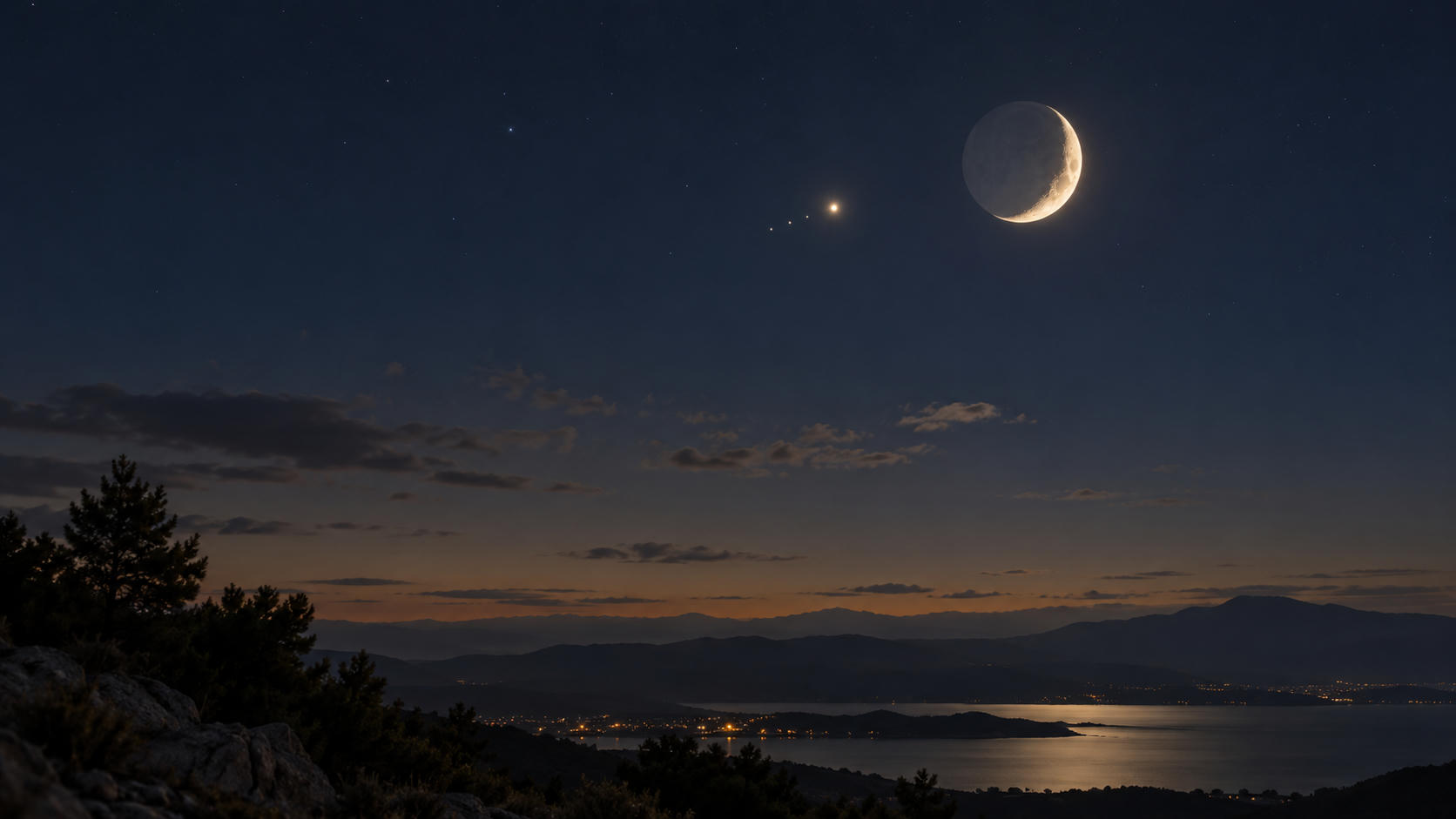 Moon and Jupiter to Align in Rare Occultation
-
 SpaceX NASA Record Claim Still Needs Verification
-
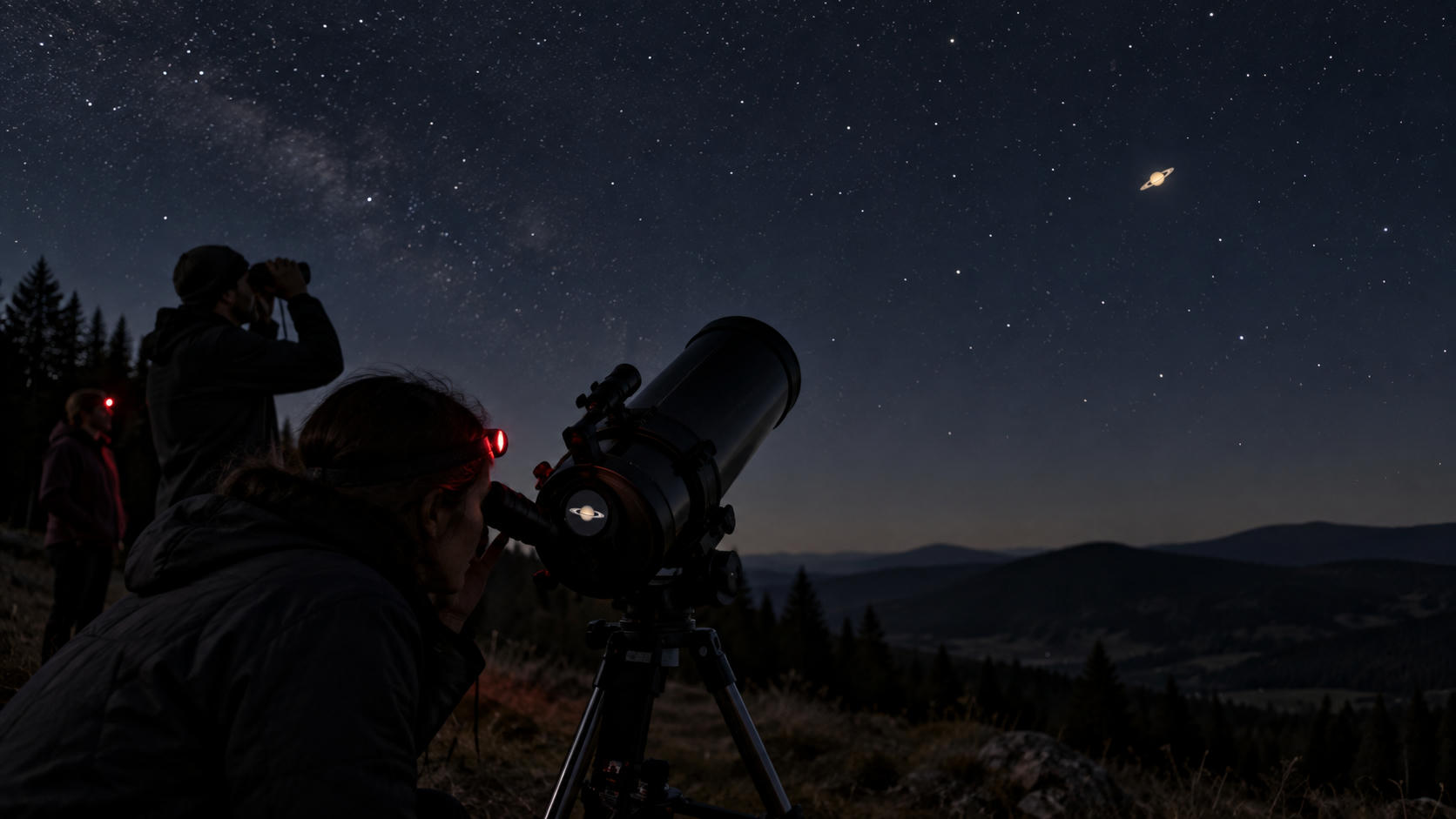 How to See Saturn at Opposition on October 4, 2026
-
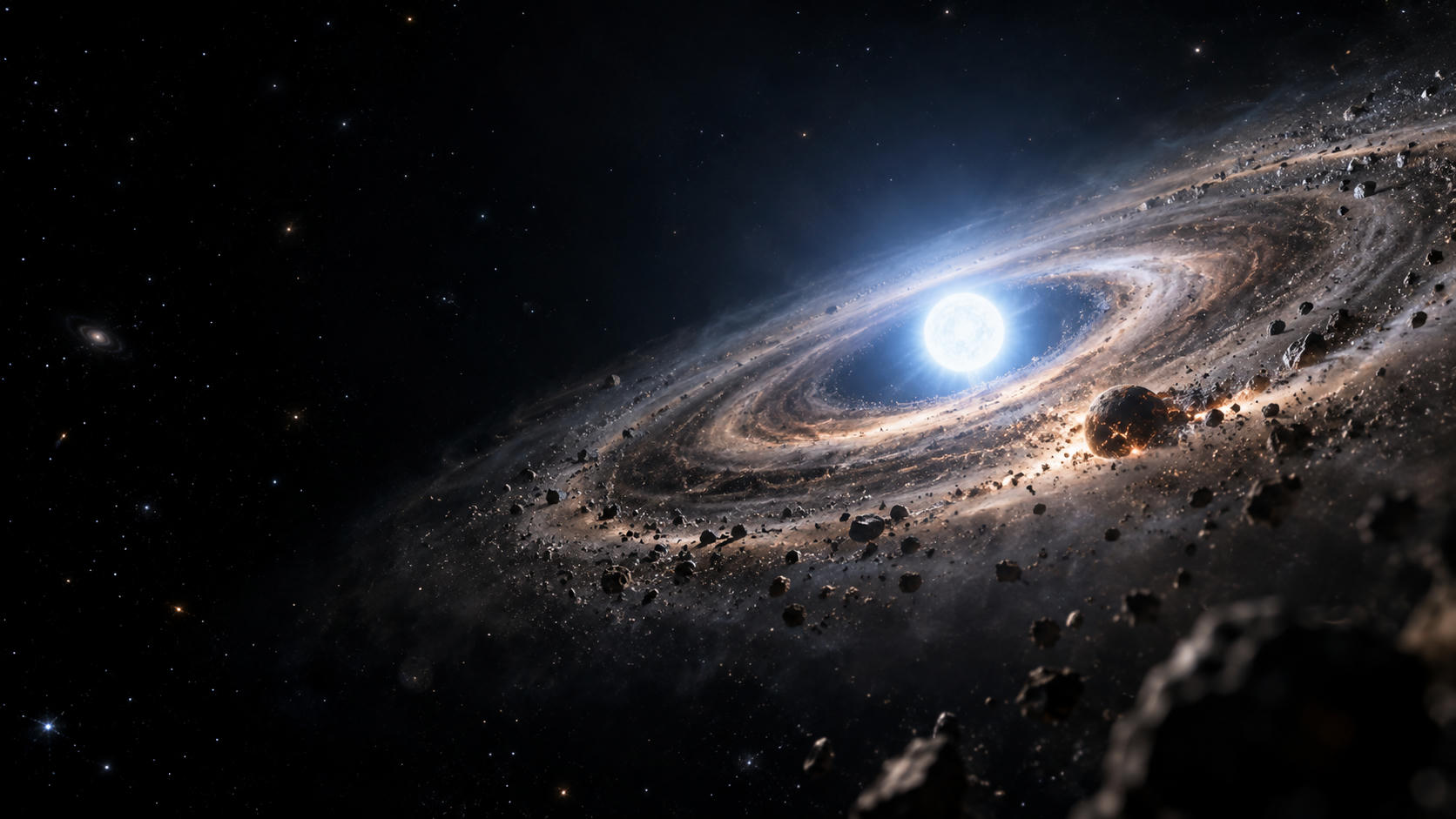 Second-Generation Planet Candidate Around a White Dwarf
-
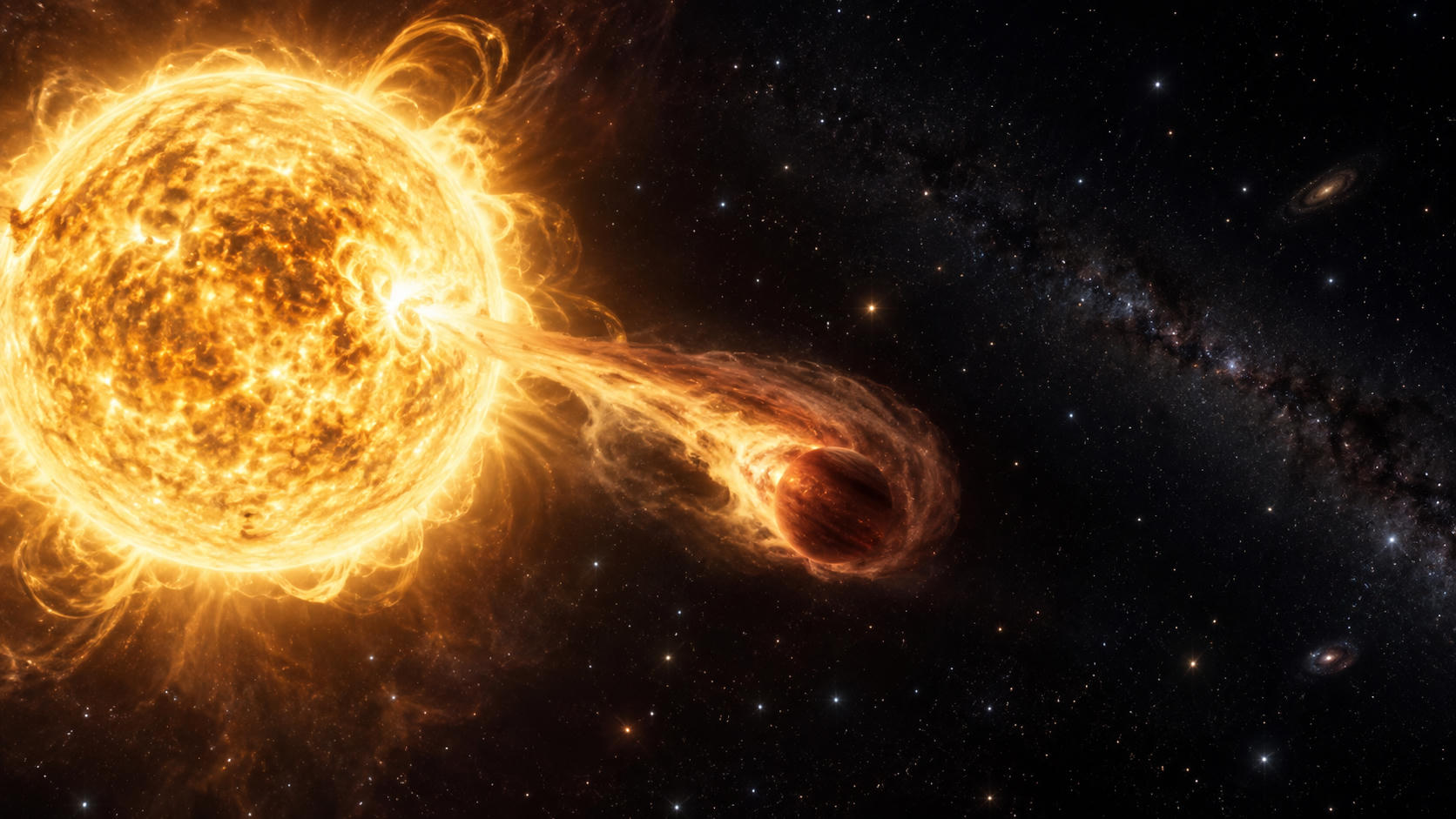 Star May Be Consuming a Brown Dwarf 300 Light-Years Away