NASA Seeks Proposals for Private Space Stations
NASA Seeks Proposals for Private Space Stations
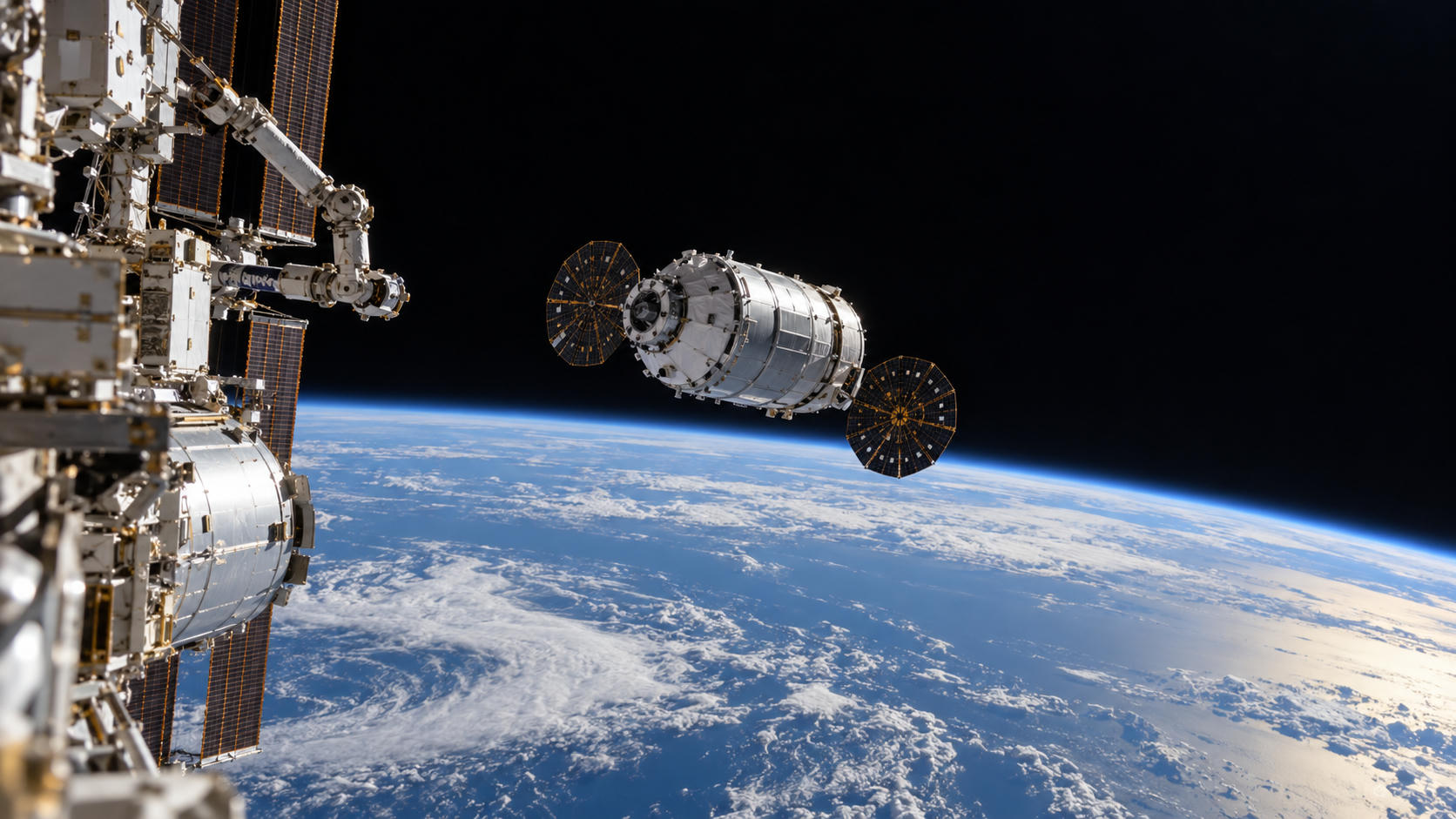
NASA has invited companies to propose private space stations that could provide research facilities, crew accommodations, transportation interfaces, and other orbital services after the International Space Station (ISS) eventually retires.
The announcement does not select, fund, or approve a specific station. It begins a longer process in which companies must submit designs, development schedules, operating plans, cost estimates, and customer strategies. NASA will then evaluate whether the proposals meet the technical, safety, financial, and operational requirements of human spaceflight.
What NASA’s Call Means
NASA is seeking commercial successors to the ISS that could operate in low Earth orbit and serve government and private customers. Under the proposed model, NASA could purchase access and services from privately owned stations rather than finance and operate an entire orbital complex.
Potential services include crew time, laboratory access, cargo delivery, station accommodations, experiment operations, and transportation support. Commercial operators could also serve foreign governments, universities, research organizations, private astronauts, and companies.
A call for proposals is an early procurement step, not a contract award or final station selection. Companies would need to address station architecture, launch and assembly, docking compatibility, life-support systems, emergency procedures, research facilities, development schedules, long-term operations, customer revenue, and end-of-life disposal.
Human-rated infrastructure must withstand hazards such as fire, depressurization, radiation, micrometeoroid impacts, orbital debris, power loss, and system failures. Companies must also secure financing, manufacture hardware, arrange launches, complete testing, and demonstrate safe operations.
Why NASA Needs Commercial Stations
The ISS has supported decades of scientific research, crewed operations, technology demonstrations, training, and international cooperation. However, it is aging infrastructure that requires ongoing maintenance, replacement hardware, resupply missions, and careful risk management.
A planned transition could prevent a gap in U.S. access to low Earth orbit. Continued access is important for research, astronaut training, technology demonstrations, international missions, and human-spaceflight expertise.
Commercial stations could also allow NASA to focus more resources on lunar and deep-space exploration. NASA’s Artemis program targets crewed lunar missions and capabilities for sustained exploration. Commercial low Earth orbit services and Artemis are separate efforts, but they support a related division of labor: private providers could handle routine orbital services while NASA concentrates on more complex destinations and technologies.
Potential Customers and Uses
Private stations could support:
- Universities and research laboratories.
- Pharmaceutical and biotechnology companies.
- Materials manufacturers.
- International space agencies.
- Private astronauts.
- Technology companies.
- Media and education organizations.
Microgravity can change how fluids, biological systems, crystals, and materials behave. Orbital laboratories may therefore support research in human health, cell and tissue behavior, protein and crystal growth, materials processing, fluid physics, combustion, robotics, communications, and environmental monitoring.
Commercial access could give smaller organizations an opportunity to conduct experiments without financing an entire space mission. However, greater access would not guarantee profitable manufacturing or scientific breakthroughs. Operators must identify customers willing to pay enough to support station construction and decades of operations.
Requirements for a Private Space Station
Crew Support and Transportation
A crewed commercial station would need complete life-support and habitation systems, including air revitalization, water management, temperature control, sleeping areas, hygiene facilities, exercise equipment, and emergency shelters.
It would also require docking and berthing ports for crew spacecraft, cargo vehicles, and future transportation systems. Safety certification would address fire, toxic leaks, loss of power, depressurization, collisions, medical emergencies, and crew evacuation.
Commercial ownership would not reduce these requirements. Human-spaceflight infrastructure must meet stringent standards regardless of who owns it.
Research and Manufacturing
Stations could include microgravity laboratories, biological research areas, materials facilities, external experiment platforms, and technology demonstration systems. They could also test equipment intended for the Moon, Mars, or future spacecraft.
The business case remains uncertain. Operators may need to combine government research, commercial development, technology demonstrations, and private astronaut missions to generate sufficient revenue.
Long-Term Operations
A station is a continuously operating orbital facility, not simply a launch project. Operators would need to manage cargo resupply, crew rotations, waste disposal, propulsion, communications, power generation, equipment replacement, software updates, debris monitoring, emergency response, and end-of-life disposal.
Maintenance costs could continue for decades after the initial modules reach orbit. A viable operator therefore needs a stable, diversified business model rather than relying only on construction funding or short-term government contracts.
How NASA’s Commercial Strategy Could Work
NASA could act as an anchor customer by committing to purchase services from a private provider. The company would own or operate the station, while NASA would provide predictable demand.
Potential advantages include greater competition, flexible station designs, commercial innovation, lower government ownership responsibilities, and additional services for private and international customers. NASA could support multiple stations to provide backup capacity, specialized facilities, and competitive pricing.
The model also creates risks. If commercial demand fails to develop, NASA could remain the dominant customer and carry much of the financial burden indirectly. The market may not support many operators because each station would face high development and certification costs while the customer base remains limited.
NASA and other agencies would also need clear standards for crew safety, docking, communications, cybersecurity, emergency response, research operations, data protection, international participation, liability, and rescue responsibilities. Stable requirements would help companies plan their systems and budgets, while weak or inconsistent oversight could create safety and schedule risks.
Main Challenges
Development and Launch Costs
Orbital stations require major investment in engineering, module production, testing, launches, assembly, certification, insurance, software, training, and operations. Companies must attract capital before commercial revenue is proven.
Uncertain Demand
Operators must determine how many experiments require long-duration microgravity, whether orbital manufacturing can compete with terrestrial production, how often private astronauts will visit, and how much governments and NASA will pay.
A diverse customer base would make operations more resilient. Dependence on a single major customer would create significant financial risk.
Technical and Safety Risks
Life-support failures, debris impacts, power loss, fire, depressurization, docking accidents, radiation exposure, and communication outages could threaten crews and operations. Commercial development may improve efficiency, but crewed infrastructure cannot be rushed beyond safe testing and certification.
Transition from the ISS
NASA must coordinate development, certification, crew training, research schedules, launch services, and international agreements to avoid a gap between the ISS and commercial successors. Delays could require extended ISS operations, alternative orbital access, or postponed experiments.
Industry and International Implications
The initiative could create opportunities for aerospace manufacturers, station designers, launch providers, robotics companies, life-support specialists, research-service firms, and in-space logistics providers.
Commercial stations could also increase demand for cargo flights, crew transportation, orbital inspection, satellite servicing, debris monitoring, refueling technologies, maintenance systems, and ground-control services. This could support a broader orbital economy.
Private ownership would not eliminate the international character of human spaceflight. Commercial stations could host foreign astronauts, international experiments, joint missions, and government-funded research. Agreements would still be needed for liability, rescue, export controls, data, access rights, and emergency operations.
A successful commercial model could preserve U.S. access to low Earth orbit, support domestic aerospace companies, attract private investment, and establish standards for future orbital infrastructure. These outcomes are possible but not guaranteed.
What Happens Next
Companies must submit concepts covering station architecture, launch plans, schedules, safety systems, customer models, estimated costs, and proposed services. NASA will assess technical feasibility, reliability, cost, schedule, spacecraft compatibility, research capacity, and long-term business sustainability.
Selection would not mean immediate construction. Modules would still need to be designed, manufactured, tested, launched, assembled, and certified. Crew operations would require repeated demonstrations and extensive training.
NASA may support more than one concept to preserve competition and reduce dependence on a single provider. The final program structure will depend on the proposals, available funding, technical progress, and market demand.
Conclusion
NASA’s call for private space-station proposals is a significant step toward replacing the ISS model with commercial access to low Earth orbit. Private stations could support research, technology demonstrations, private astronauts, international missions, and new in-space services while allowing NASA to focus more attention on lunar and deep-space exploration.
The opportunity is substantial, but the risks are equally clear. Companies must overcome high development costs, complex launch and assembly requirements, strict crew-safety standards, long-term maintenance demands, and uncertain commercial demand.
The announcement begins a transition; it does not complete one. Success will depend on whether private operators can build and maintain orbital infrastructure that is safe, reliable, useful, and financially sustainable.
Frequently Asked Questions
What is NASA asking companies to propose?
NASA is asking industry to develop concepts for private space stations that could provide government and commercial services in low Earth orbit after the ISS era.
Why does NASA want private space stations?
Private stations could preserve NASA’s access to low Earth orbit while allowing the agency to focus more resources on lunar and deep-space exploration.
Will a private station replace the ISS immediately?
No. The call begins a long process involving proposals, evaluation, contracts, design, manufacturing, launch, testing, and certification.
Who could use a private space station?
Potential users include NASA, foreign space agencies, universities, research institutions, pharmaceutical companies, manufacturers, technology developers, and private astronauts.
What are the biggest challenges?
The main challenges include development costs, launch and assembly complexity, crew safety, long-term maintenance, orbital debris, regulatory approval, and uncertain customer demand.
Does NASA’s announcement guarantee that a private station will be built?
No. Station selection, funding, construction, certification, and operations require further decisions.