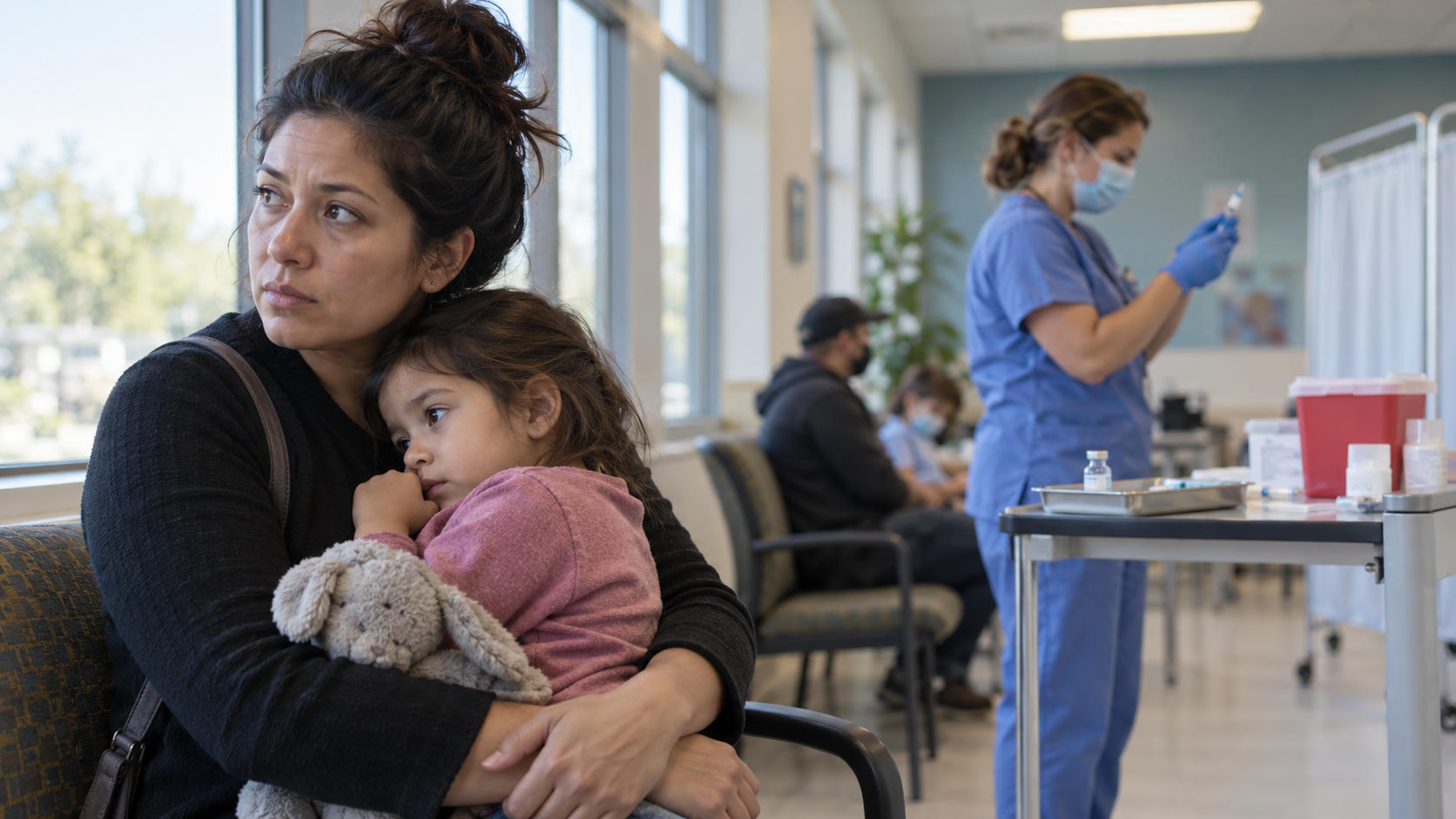
Medina County Measles Case: What Residents Should Know
Medina County Measles Case: What Residents Should Know
Publication date: October 2026
Last updated: October 2026; verify against the latest public-health notice
One confirmed measles case has been reported in Medina County, Ohio. Multiple local-news summaries, including reports from FOX 8 News, The Medina Gazette, and Cleveland.com, describe the case. A separate Akron Beacon Journal summary reports one confirmed case and one probable case.
The available reports do not identify the patient or provide details about age, residence, vaccination status, travel history, symptom timeline, hospitalization, or possible exposure locations. For current case counts, exposure notices, isolation instructions, and vaccination guidance, rely on Medina County Public Health and the Ohio Department of Health.
One confirmed case does not automatically mean Medina County has an outbreak. Health officials must investigate contacts, exposure locations, and links between cases before determining the level of community risk.
What Is Known About the Case
Multiple supplied news summaries report one confirmed measles case in Medina County. Cleveland.com described it as the county’s first confirmed measles case of 2026, while the Akron Beacon Journal summary reported one confirmed case and one probable case. These classifications may change as testing and contact investigations continue.
A confirmed case generally means that a patient met applicable clinical, laboratory, or epidemiological criteria. A probable case has not necessarily received the same final confirmation. Public-health classifications may include suspected, probable, confirmed, and ruled-out cases.
The available reports do not establish the patient’s identity, age, residence, vaccination status, travel history, symptoms, hospitalization status, or exposure locations. Readers should not infer these details from incomplete reports or social-media claims.
Because one supplied summary identifies October 9, 2026, all dates and case counts should be verified against the original reporting and current government notices before publication or sharing.
Why Measles Matters
Measles is a highly contagious viral disease. It spreads when an infected person coughs, sneezes, or breathes near others. The virus can remain infectious in an indoor area for a period after the infected person leaves, according to the Centers for Disease Control and Prevention.
Shared indoor spaces, including schools, childcare facilities, workplaces, waiting rooms, and public transportation, may become relevant during an exposure investigation. However, a location should not be treated as an official exposure site unless a public-health agency identifies the specific place and time.
People without measles immunity face the greatest risk after exposure. Groups requiring particular caution include:
- Infants who are too young for routine vaccination
- Unvaccinated children and adults
- Pregnant people without documented immunity
- People with weakened immune systems
- People taking certain immune-suppressing medicines
Previous vaccination, documented laboratory immunity, or previous measles infection may affect protection. People who cannot find their records should ask a healthcare provider or public-health agency how to verify immunity.
Symptoms to Watch For
Early measles symptoms commonly include:
- Fever
- Cough
- Runny nose
- Red or watery eyes
A widespread red rash usually begins on the face or hairline and spreads downward across the body. Some people also develop small spots inside the mouth called Koplik spots.
Symptoms can resemble other infections, and a rash alone cannot confirm measles. Complications may include pneumonia, dehydration, ear infections, and inflammation of the brain. Infants, young children, pregnant people, and people with weakened immune systems may face greater risks.
Call a healthcare provider before visiting a clinic, urgent-care center, or emergency department if measles is possible. Advance notice helps the facility protect other patients and staff. Provide the date and location of possible exposure, current symptoms, vaccination history if known, age, pregnancy status when relevant, and any immune conditions or immune-suppressing medicines.
Seek emergency care for severe breathing problems, altered consciousness, severe dehydration, or other urgent symptoms. Call ahead whenever possible and follow individualized medical instructions.
What to Do After Possible Exposure
Check official notices
Monitor updates from:
- Medina County Public Health
- Ohio Department of Health
- Your healthcare provider
- Your school, childcare provider, workplace, or healthcare facility
The supplied reports do not list exposure locations. No location should be considered an official exposure site unless an authorized health agency identifies it.
Call before seeking care
People who may have been exposed should contact a healthcare provider or public-health department promptly. Do not arrive unannounced at a clinic or emergency department if measles is suspected. Calling first allows the facility to arrange an appropriate entry route, appointment time, testing process, or isolation measure.
Limit contact if symptoms develop
If symptoms develop after possible exposure, stay home and avoid public places until receiving medical guidance. Avoid contact with infants, pregnant people, people with weakened immune systems, and unvaccinated individuals.
Do not attend school, work, childcare, social events, or healthcare appointments without first calling for instructions. Follow any isolation requirements issued by public-health officials.
Ask about post-exposure options
A healthcare provider or public-health official may determine whether post-exposure vaccination or immune globulin is appropriate. Timing, age, pregnancy status, immune status, and medical history affect available options. Contact a provider promptly rather than waiting for symptoms.
Vaccination and Protection
The measles, mumps, and rubella vaccine, commonly called the MMR vaccine, is the standard preventive measure. Most children receive a two-dose series under routine vaccination guidance. See the CDC measles vaccination guidance.
Recommendations may differ for infants, international travelers, people in outbreak settings, adults without evidence of immunity, and people with specific medical conditions. A healthcare provider or public-health agency can determine the appropriate recommendation.
Residents can check vaccination status through:
- Pediatrician or primary-care records
- School or childcare records
- State immunization records
- Pharmacy records
- Clinic records
Ask a healthcare provider for individualized guidance before vaccination if you are pregnant, have an immune condition, take immune-suppressing medicine, have had a severe reaction to a previous vaccine dose, or have another condition that may affect vaccination decisions.
How Health Officials Investigate
Health departments review symptoms, laboratory testing, vaccination history, and exposure information. They may identify and contact people who shared an exposure setting with the patient and provide instructions about symptom monitoring, testing, vaccination, or isolation.
Officials may publish an exposure location and time period when doing so helps identify people who may have encountered the virus. The absence of a public exposure list does not prove that no exposures occurred. Officials may be contacting people directly, continuing the investigation, or determining that a public notice is unnecessary.
Privacy rules can limit the personal information released publicly. The absence of a patient’s name does not indicate that the investigation is incomplete.
Case totals may change as testing and contact investigations continue. Use the latest official update, including its visible “last updated” date or time.
What Residents Should Do Now
- Review vaccination records for every eligible household member.
- Contact a healthcare provider if records are missing, incomplete, or unclear.
- Monitor for fever, cough, runny nose, red or watery eyes, mouth spots, and a spreading rash after possible exposure.
- Call a healthcare provider before visiting in person if measles is possible.
- Follow official exposure, monitoring, testing, and isolation instructions.
- Avoid unnecessary contact with vulnerable people if exposure is suspected.
- Rely on public-health agencies and healthcare providers rather than unsourced social-media posts.
- Do not share a patient’s identity or speculate about vaccination status.
What Has Not Been Confirmed
The supplied reports do not establish:
- The patient’s identity
- The patient’s age or exact residence
- Vaccination status
- Travel history
- Exposure locations
- Symptom timeline
- Hospitalization status
- Whether additional cases are linked to the confirmed case
Sources 2, 4, 6, 8, and 10 contain no relevant measles information and should not be used as evidence. Source 9 concerns an art exhibition at a Medina library and is unrelated to the health report.
Frequently Asked Questions
Is there a confirmed measles case in Medina County?
Yes. Multiple supplied local-news summaries report one confirmed measles case. One report also mentions a probable case. Check Medina County Public Health or the Ohio Department of Health for the current count.
What are the symptoms of measles?
Common symptoms include fever, cough, runny nose, red or watery eyes, and a red rash that often begins on the face and spreads downward. Small spots inside the mouth may also occur.
What should I do if I was exposed?
Monitor for symptoms, review your vaccination history, and contact a healthcare provider or public-health department promptly. Call ahead before visiting a medical facility and follow all monitoring or isolation instructions.
How can I protect my family?
Confirm that eligible family members are up to date on measles vaccination, keep records accessible, monitor official exposure notices, and avoid contact with vulnerable people if exposure is suspected.
Does one confirmed case mean there is an outbreak?
Not necessarily. Health officials determine whether an outbreak exists based on case links, transmission, and applicable public-health criteria.
Where can residents find reliable updates?
Check Medina County Public Health, the Ohio Department of Health, and the Centers for Disease Control and Prevention. Use a healthcare provider for personal medical advice.
Conclusion
One confirmed measles case has been reported in Medina County, and one report identifies a probable case. The classifications and case count may change as testing and public-health investigations continue.
Residents should verify vaccination records, monitor for symptoms after possible exposure, and call a healthcare provider before visiting in person if measles is suspected. Follow Medina County Public Health and Ohio Department of Health updates for current exposure notices and guidance.