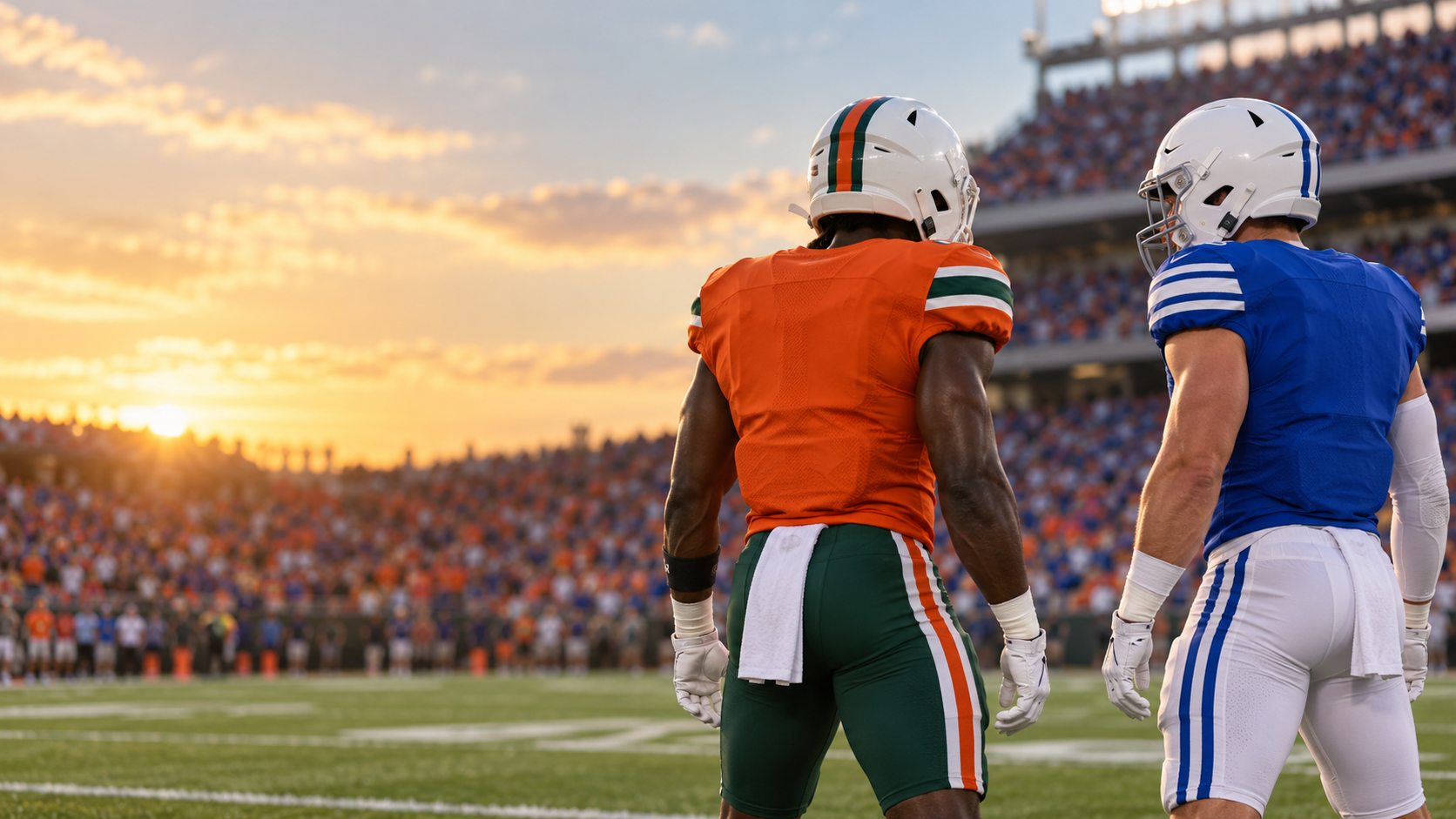
J.J. McCarthy Forces John Harbaugh to Reconsider His Role
J.J. McCarthy Forces John Harbaugh to Reconsider His Role After Giants–Saints Thriller
The New Orleans Saints defeated the New York Giants 34–27, but the final score did not tell the entire story. Momentum shifted repeatedly, the pressure intensified late, and J.J. McCarthy’s explosive fourth-quarter performance became one of the game’s defining developments. Source 5
The late surge did not erase the Giants’ loss. It did, however, create a new question for John Harbaugh: What should McCarthy’s role be now?
The coaching staff could preserve its existing quarterback plan, increase McCarthy’s responsibilities, name him the primary backup, or design a limited package that puts him on the field in specific situations. Each option carries potential benefits and risks.
The phrase “They can trust me” captures the broader issue, although the supplied reports do not independently confirm it as a direct quotation. McCarthy’s fourth-quarter performance gave him an opportunity to make that argument through his play. One strong quarter cannot settle a quarterback evaluation, but it can force a coaching staff to reconsider how quickly a young player should receive meaningful responsibility.
The Giants–Saints Game Created a Difficult Evaluation
New Orleans Escaped With a 34–27 Win
The official result remains straightforward: New Orleans beat New York 34–27. Yahoo Sports’ game report includes the final score, recap, box score and statistics. Source 5
The result matters because McCarthy’s performance came in defeat rather than victory. The Giants did not complete a comeback, and the fourth-quarter surge did not change the outcome. It did change the tone of the postgame discussion.
A quarterback can produce meaningful evidence in a losing effort. Coaches evaluate decisions, accuracy, response to pressure and command of the offense rather than the final score alone. The 34–27 result shows that New York remained within reach late, while McCarthy’s performance provided a reason to examine his development more closely.
A Back-and-Forth Game Increased the Pressure
The matchup had the shape of a yo-yo game, with momentum shifting from one side to the other. In that kind of contest, every possession becomes more important as the clock moves toward the fourth quarter.
Late-game quarterback play receives greater attention because defenses have adjusted, offensive possessions carry greater value and mistakes become more costly. A quarterback must process pressure quickly, maintain accuracy and make aggressive decisions without abandoning structure.
That environment gave McCarthy a meaningful test. The fourth quarter was not a controlled practice situation or a low-pressure opportunity. It required him to operate while the game remained competitive and the margin for error narrowed.
The test was not conclusive, but it was significant. It showed the coaching staff what McCarthy could do when the game demanded urgency.
The Loss Does Not Erase the Positive Evaluation
The Giants’ defeat and McCarthy’s individual performance should be evaluated separately. The loss identifies the team’s immediate result. The fourth quarter offers evidence about one quarterback’s potential and readiness.
A complete review must include more than explosive plays. Harbaugh and his staff should examine McCarthy’s decision-making throughout the game, accuracy, pocket movement, progression speed and response to pressure. They must determine whether the late production reflected sustainable improvement or a short burst created by the game situation.
That distinction will shape the next decision. McCarthy’s performance may justify increased responsibility, but it does not automatically establish a new depth chart.
McCarthy Strengthened His Case in the Fourth Quarter
Explosive Plays Created Immediate Momentum
McCarthy’s fourth quarter became the game’s defining development because it showed a quarterback capable of creating urgency when the Giants needed points. The available summaries do not provide verified passing yardage, touchdown totals or a play-by-play breakdown, so those details should not be invented.
The broader evaluation is still clear. An explosive late quarter can reveal several valuable traits:
- A willingness to attack downfield.
- A faster response to defensive pressure.
- Confidence in tight-window throws.
- The ability to create momentum when the offense needs it.
- The capacity to remain aggressive in a changing game.
Those traits matter because quarterback development cannot be measured only by physical talent. A player must convert opportunities when defensive adjustments make each decision more difficult.
McCarthy’s late performance gave him evidence that he can operate with greater urgency and confidence. It also gave the coaching staff a reason to increase his game-plan responsibilities in practice and future matchups.
Late-Game Execution Matters
Fourth-quarter performance carries special value in quarterback evaluations. It tests composure, communication and decision-making under pressure. It also reveals whether a quarterback can recover from earlier setbacks rather than allowing mistakes to affect later possessions.
Potential earns developmental patience. Execution in high-leverage moments earns additional opportunities.
That does not mean every late-game surge should trigger a promotion. It means coaches should investigate why the quarterback succeeded. Did McCarthy recognize coverage more quickly? Did he move through progressions with greater discipline? Did the offensive design create favorable matchups? Did he manage pressure better than he had earlier in the game?
The answers matter more than the excitement surrounding the quarter itself.
McCarthy’s performance strengthened his case for a more serious evaluation. It did not prove that he should immediately take over the offense or become the unquestioned primary backup.
One Strong Quarter Is Evidence, Not a Final Verdict
The strongest argument for patience is sample size. One quarter can reveal a player’s ability, but multiple games reveal his consistency.
Harbaugh must determine whether McCarthy can reproduce the same accuracy and decision-making against different opponents. The staff must also study whether defensive adjustments caused him problems before the fourth quarter and whether the late success came from a particular matchup.
Several questions should guide the review:
- Did McCarthy make correct decisions throughout the game?
- Did he protect the football while attacking aggressively?
- Did he handle pressure better as the game progressed?
- Can he execute the entire offensive system rather than isolated concepts?
- Can he maintain his composure without the urgency of a late deficit?
A strong evaluation recognizes both sides. McCarthy showed enough to demand a closer look, but not necessarily enough to justify an automatic overhaul.
“They Can Trust Me” Is the Larger Message
Trust Comes From Repeated Decisions
The phrase “They can trust me” works as the central theme because quarterback trust is built through repeatable actions. The supplied reports frame McCarthy’s performance as important, but they do not independently verify that exact statement as a direct quote.
Trust does not come only from explosive throws. It comes from making the correct decision repeatedly, especially when the obvious choice is not the most aggressive one.
For McCarthy, trust would require him to:
- Protect the football.
- Make the correct read.
- Stay within the offensive structure.
- Communicate clearly in the huddle.
- Recover after negative plays.
- Adjust protections when defensive pressure changes.
- Understand the situation before attempting a difficult throw.
A quarterback can attract attention with one spectacular play. Playing time depends on whether the coaching staff believes he will make sound decisions across an entire game.
The Late Response Showed Competitive Confidence
McCarthy’s fourth-quarter response demonstrated confidence in a chaotic game. He did not simply manage the situation; he produced the kind of energy that made his role a central topic after the final whistle.
Confidence matters because young quarterbacks can become cautious after mistakes. A player who continues to attack while retaining discipline gives the offense greater flexibility. He can challenge defenses vertically, extend possessions and create opportunities that would not exist with purely conservative play.
The risk is that aggression without control can produce turnovers and broken drives. Harbaugh must determine whether McCarthy’s late confidence was paired with responsible decision-making.
The Saints still won 34–27. McCarthy did not complete the comeback. His contribution should therefore be described accurately: he created late momentum and strengthened his argument for greater responsibility, but he did not change the result.
The Locker-Room Effect Requires Evidence
A young quarterback can build credibility when teammates see clear command, decisive execution and resilience under pressure. Late-game energy can influence how players view a developing quarterback, particularly if he communicates effectively and responds constructively to difficult plays.
The locker-room effect should not be assumed from one performance. Verified comments from teammates, coaches or players would be needed to establish how the group viewed McCarthy’s performance.
Still, the on-field message matters. A quarterback who shows he can function under pressure gives teammates a reason to believe he can contribute in more meaningful situations. The next step is proving that credibility through preparation and consistency.
Harbaugh’s Decision Is About Role, Not Only Talent
The decision facing Harbaugh is not simply whether McCarthy has talent. The question is how much responsibility he can handle without disrupting the team’s offensive structure.
Keep McCarthy in a Developmental Role
Harbaugh could maintain the existing plan and continue developing McCarthy behind the current starter or primary option.
This approach would limit unnecessary pressure, provide more practice experience, avoid an overreaction to one quarter and preserve continuity within the quarterback room. It would also give coaches more time to evaluate McCarthy’s habits and preparation.
The main risk is that his momentum could stall. If a player performs well in a meaningful situation and receives no additional responsibility, the coaching staff may lose an opportunity to test his progress.
Make McCarthy the Primary Backup
The supplied AOL.com summary says McCarthy could serve as the Giants’ primary backup quarterback against Washington. That report describes a possibility, not a confirmed roster decision. Source 3
This may be the most measured response to McCarthy’s performance. Naming him the primary backup would recognize his progress without immediately making him the starter.
The role would require more than standing on the sideline. McCarthy would need to prepare for the complete game plan, take increased practice repetitions and remain ready to enter at any point. He would also assume more responsibility for sideline communication and defensive recognition.
Create a Defined Package
Harbaugh could use McCarthy in selected situations without naming him the full-time starter or primary backup. A defined package might include short-yardage situations, red-zone formations, designed movement throws or plays that require a different athletic profile.
This approach could help the coaching staff gather additional evidence by placing McCarthy in controlled situations and giving the offense another tactical option.
The risks are substantial. A limited package can disrupt offensive rhythm, create uncertainty for the established quarterback and make McCarthy’s development dependent on occasional snaps. If the package lacks a clear purpose, it may create more confusion than value.
Give McCarthy a Starting Opportunity
The most aggressive option would be to give McCarthy a genuine opportunity to operate as the starter. That decision would require much more than one impressive quarter.
The staff would need evidence from practice, film review and multiple game situations. It would need a clear roster need and confidence that McCarthy can execute the full offensive system against defensive adjustments.
The reward would be a faster evaluation of his long-term ceiling. The risk would be excessive pressure and an overreaction to a small sample. Starting duties expose a quarterback to more complex defensive plans, greater scrutiny and the consequences of mistakes over an entire game.
McCarthy may eventually deserve that opportunity, but the Giants should not treat one quarter as conclusive proof.
What Harbaugh Should Evaluate Next
Full-Game Consistency
The staff must review McCarthy’s work before the fourth quarter. A late surge matters, but it should be compared with his earlier decisions, accuracy and command. The central question is whether the fourth quarter represented improvement or an isolated burst.
Command of the Offensive System
Harbaugh should examine McCarthy’s pre-snap recognition, communication with receivers and linemen, protection adjustments and ability to identify coverage.
A quarterback who can make explosive throws but cannot operate the complete system remains limited. A quarterback who understands the structure can earn responsibility even when every play does not produce a big gain.
Ball Security and Risk Management
Trust depends on avoiding preventable mistakes. The coaching staff should review turnovers, near-turnovers and throws that placed the offense in unnecessary danger.
Aggression is valuable only when paired with situational awareness. McCarthy must show that he understands when to challenge a defense and when to protect the possession.
Response to Pressure
The fourth quarter offers an opportunity to study pocket movement, timing and throwing decisions under pressure. Harbaugh must determine whether McCarthy created plays because he managed pressure effectively or because the defense provided favorable opportunities.
Practice and Preparation
Game performance is one part of the evaluation. Coaches also consider meeting-room preparation, practice habits, consistency and communication.
The next decision should come from a broad body of evidence. The Giants can recognize McCarthy’s fourth-quarter success without allowing one performance to dominate every other evaluation factor.
The Washington Matchup Could Become the Next Test
If the report about McCarthy potentially serving as the primary backup against Washington is accurate, the matchup could become an important checkpoint. Source 3
That role would show whether the coaching staff sees McCarthy as ready for broader responsibility. It would also give him another opportunity to prepare for a full game plan and respond to defensive changes.
The key questions would be straightforward:
- Can McCarthy sustain his pace without fourth-quarter urgency?
- Can he remain accurate throughout a complete game?
- Can he handle pressure from different defensive looks?
- Can he communicate effectively before and after the snap?
- Can he protect the football while remaining aggressive?
The Washington matchup should be treated as an evaluation opportunity, not a guaranteed promotion. A strong performance would strengthen McCarthy’s case. A difficult outing would not erase the Giants–Saints fourth quarter, but it would provide important context.
Conclusion: Momentum Must Be Balanced With Patience
J.J. McCarthy’s explosive fourth quarter changed the conversation after the Giants’ 34–27 loss to the New Orleans Saints. The performance gave John Harbaugh a reason to consider increased responsibility, whether through a primary backup role, a defined package or more demanding practice assignments.
It did not automatically justify a complete change in the quarterback hierarchy.
McCarthy has shown enough to demand a closer look. He must now show that his late-game execution can become a dependable part of his identity. Trust will come from repeated decisions, full-game consistency, preparation and command of the offensive system.
The next opportunity will determine whether the fourth-quarter spark was a moment or the beginning of a larger role.
Frequently Asked Questions
Did the Giants defeat the Saints?
No. The New Orleans Saints defeated the New York Giants 34–27, according to the supplied Yahoo Sports game report. Source 5
Why did J.J. McCarthy attract attention?
McCarthy produced an explosive fourth quarter during a back-and-forth game. The late performance strengthened the argument that he deserves a larger role or a more serious evaluation.
Is McCarthy confirmed as the Giants’ primary backup?
No. The supplied reporting does not confirm that decision. The AOL.com summary says he could serve as the primary backup against Washington, but it does not establish that the role became official. Source 3
What decision does John Harbaugh face?
Harbaugh must decide whether to keep McCarthy in a developmental role, make him the primary backup, use him in a defined package or consider a larger starting opportunity.
Can one strong quarter change a quarterback’s role?
It can influence the evaluation, particularly when the performance comes in a high-pressure situation. Coaches still need evidence of consistency, ball security, preparation and full-game command.
What must McCarthy prove next?
He must show that his late-game execution is repeatable against different defensive looks, throughout an entire game and within the full offensive system.