iPhone Duo Animation: Why I Would Keep the Z Fold 8
The iPhone Duo’s Unfolding Animation Creates FOMO, but Not for Me
Apple’s reported iPhone Duo is generating interest before its official launch. The excitement comes from more than its rumored hardware. Early coverage highlights an unfolding experience that appears smooth, deliberate, and highly polished.
That presentation may give some Galaxy Z Fold 8 owners FOMO. It does not give me enough reason to switch.
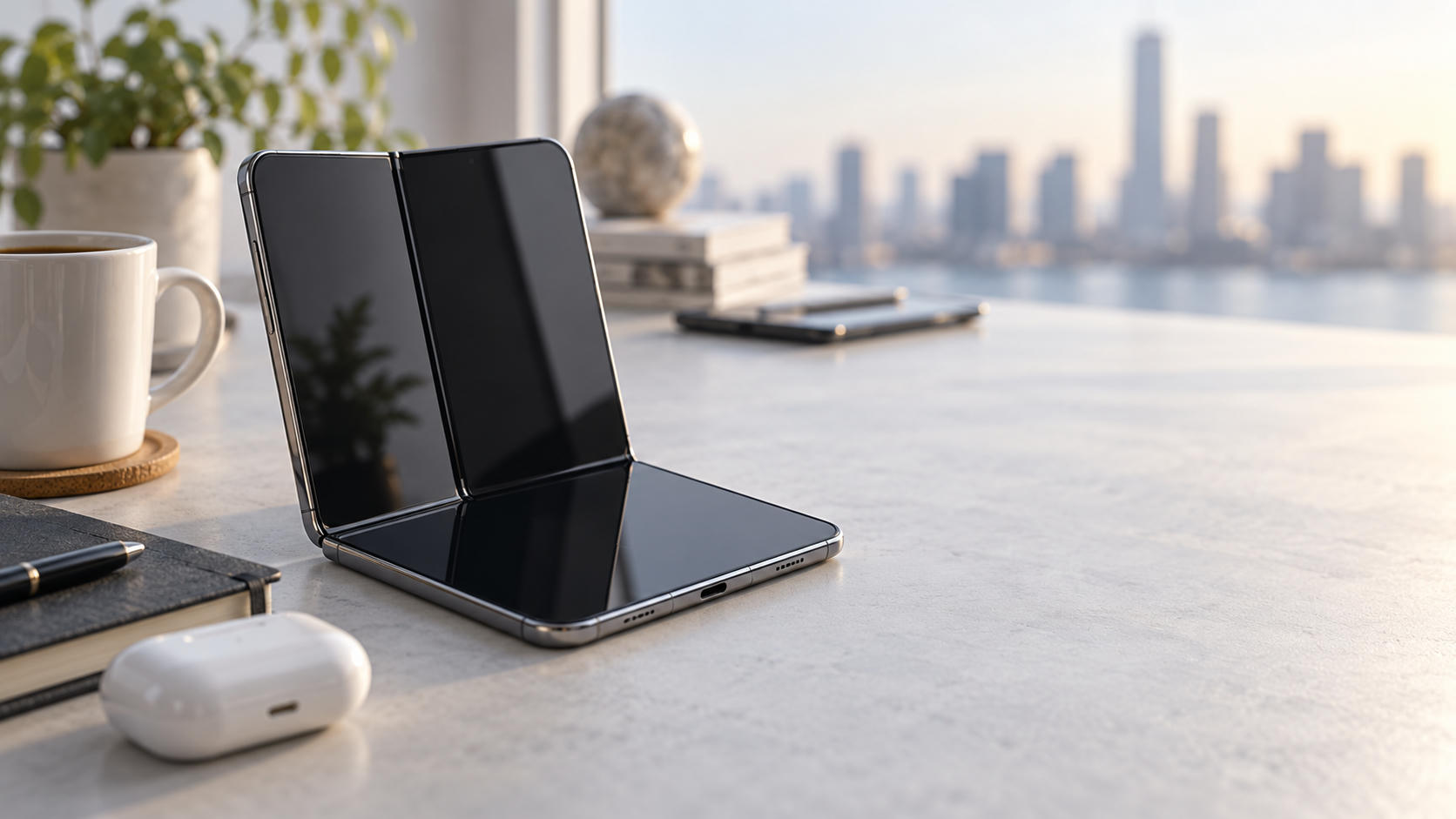
The iPhone Duo is reportedly a horizontally folding, passport-style smartphone. According to CNET coverage, it would fold across its horizontal axis and open into a larger display, offering a different interpretation of the foldable phone from Samsung’s book-style Galaxy Z Fold design. Source 7
The iPhone Duo unfolding animation could shape how people perceive Apple’s foldable phone. Fluid motion, app continuity, and a cleaner inner display can make a device feel more complete. Over time, however, hardware utility, software behavior, camera quality, durability, and ecosystem integration matter more than a transition lasting only a few seconds.
Why the iPhone Duo’s Animation Looks Appealing
A good foldable animation makes the phone feel like one continuous object rather than two screens connected by a hinge. Content can scale naturally, controls can move into place, and the interface can retain its context as the device opens.
Several details create that effect:
- Fluid motion without sudden jumps
- Consistent scaling between displays
- Seamless app transitions
- Predictable gestures
- A clear relationship between closed and open layouts
Apple may be especially effective at presenting folding as an extension of the iPhone experience. Familiar typography, gestures, animation timing, and app continuity could make the transition feel less experimental.
The finished software will determine whether the animation is merely attractive or genuinely useful. For now, these expectations remain based on reports rather than confirmed specifications.
Presentation Can Create FOMO
A short demonstration can compress an entire product experience into a few impressive seconds. A polished video of the iPhone Duo opening may make the Galaxy Z Fold 8 seem less exciting, even if Samsung’s device offers the more practical workflow.
That is where Galaxy Z Fold 8 FOMO begins. Owners may see a newer phone that looks cleaner, smoother, and more carefully choreographed. They may wonder whether Apple has solved an interaction problem Samsung has treated as routine.
FOMO, however, often comes from presentation rather than measurable daily improvement. A dramatic opening sequence does not prove that the iPhone Duo will multitask better, last longer, take better photos, offer greater durability, support more foldable applications, or provide better value.
Wanting to experience a polished animation is different from needing the device that displays it.
Why Galaxy Z Fold 8 Owners May Feel Left Behind
Samsung’s Galaxy Z Fold line has spent years establishing what a large foldable can do. The Galaxy Z Fold 8 offers a large inner display, multitasking capabilities, and a workflow that existing owners already understand.
CNET’s related coverage describes the writer becoming highly impressed with the Galaxy Z Fold 8 through extensive use. Source 5
That kind of use creates attachment. The phone becomes a tool for reading, writing, messaging, watching video, and managing applications. Its value comes from repetition.
Apple’s reported approach may feel fresher because it is entering the category with a different design emphasis. Samsung focuses on an established foldable workflow, while Apple may focus on the relationship between hardware, animation, and the wider iPhone ecosystem.
That is refinement versus reinvention. Neither approach automatically wins.
Apple’s participation could also increase public awareness, developer attention, competition, and pressure for better foldable hardware and software. The best result for buyers may be stronger competition rather than a universal winner.
FOMO is not the same as buyer’s remorse. A Fold 8 owner can admire the iPhone Duo’s animation without regretting the Galaxy Z Fold 8. Apple’s software may look more polished in a demonstration while Samsung’s device remains better suited to an established workflow.
Why the Animation Does Not Convince Me to Switch
Foldables are judged by repeated actions:
- Opening the device
- Reading documents
- Editing content
- Managing multiple applications
- Watching video
- Taking photos
- Responding to messages
- Moving between phone and tablet-style layouts
The unfolding animation is visible for seconds. The device’s workflow is visible throughout the day.
The important question is whether the animation accompanies a better overall experience. Does the iPhone Duo improve productivity, multitasking, battery life, cameras, or software support? If not, the animation remains presentation rather than transformation.
The Galaxy Z Fold 8 already offers something difficult for a new device to replicate: an established place in its owner’s routine. Current users may already have familiar gestures, optimized applications, accessories, camera habits, and reliable ways to use the inner display.
Novelty creates attention. Familiarity creates efficiency. For an existing Fold 8 owner, efficiency matters more.
Switching Platforms Has Real Costs
Moving from Samsung to Apple involves more than transferring contacts. It may require:
- Moving files and photos
- Replacing cases and accessories
- Relearning gestures and settings
- Adjusting to Apple’s software conventions
- Changing watch and tablet integrations
- Reconsidering cloud storage and file-sharing habits
- Rebuilding messaging and computer workflows
The iPhone Duo would need to offer a clear overall advantage before a Fold 8 owner should accept those costs. A smoother opening animation is not enough.
The Passport-Style Design Could Still Matter
The reported iPhone Duo would fold horizontally in a passport-style design. Closed, it could remain closer to a conventional smartphone shape; open, it would provide a larger display.
That differs from the book-style Galaxy Z Fold design, which opens like a small book and uses a narrow exterior cover display. A passport-style foldable could offer more natural one-handed use, a familiar aspect ratio, and a clearer separation between phone and tablet modes.
The physical design may ultimately matter more than the animation. Buyers should evaluate closed thickness, weight, hinge feel, crease visibility, screen proportions, outer-display usability, battery capacity, durability, and repairability.
A beautiful animation cannot compensate for a device that feels bulky, awkward, fragile, or difficult to use when closed.
The design could appeal strongly to traditional iPhone users who already own a Mac, iPad, Apple Watch, AirPods, or Apple cloud services. That does not make the iPhone Duo a necessary upgrade for Fold 8 owners. It may make it the most logical first foldable for some iPhone users.
The Under-Screen Camera May Matter More Than the Animation
CNET’s coverage also examines the reported under-screen camera, emphasizing its nearly invisible appearance and possible trade-offs. Source 9
A concealed camera could make the inner display look cleaner for fullscreen video, reading, gaming, video calls, and productivity. However, the key questions concern selfie quality, low-light performance, video quality, face authentication, and display clarity around the camera.
An under-screen camera may improve aesthetics while producing weaker selfies or video calls than a conventional camera. Users who frequently use front-facing cameras may prefer image quality; those who mainly read or watch video may prefer an uninterrupted display.
Independent testing should determine the trade-off.
iPhone Duo vs. Galaxy Z Fold 8: What Matters
The comparison should focus on outcomes rather than screen size alone. Buyers should evaluate:
- Multitasking and app continuity
- Main-camera, zoom, and low-light performance
- Video stabilization and front-camera quality
- Foldable application support
- Widgets, notifications, keyboard, and stylus workflows
- Battery life and charging
- Hinge and display durability
- Repairability and software support
- Compatibility with computers, tablets, watches, earbuds, and cloud services
Smooth animation is only one part of software quality. Samsung has experience shaping Android for foldable screens. Apple may benefit from controlling its hardware and software together, but that advantage will depend on actual application support.
Final Verdict
The iPhone Duo’s unfolding animation is polished, memorable, and likely to influence how people judge Apple’s foldable phone. Its reported passport-style design could attract traditional iPhone users, while its under-screen camera could create a cleaner inner display. Both features require real-world testing.
For this perspective, the Galaxy Z Fold 8 remains the stronger daily device. It provides an established foldable workflow, familiar multitasking, and a practical reason to use its larger screen.
FOMO begins with presentation. A switch requires meaningful advantages in usability, software, cameras, durability, battery life, and ecosystem value. Apple’s entry could raise expectations across the foldable market without making existing Galaxy Z Fold 8 ownership feel outdated.
FAQ
Is the iPhone Duo better than the Galaxy Z Fold 8?
No definitive answer is possible from the available reports. The iPhone Duo may suit users who prioritize Apple’s ecosystem and design language, while the Galaxy Z Fold 8 may remain stronger for established foldable productivity. Independent testing should determine camera, battery, durability, and software performance.
Why might Galaxy Z Fold 8 owners feel FOMO?
The iPhone Duo’s unfolding animation may look smoother and more polished. Apple’s participation could also make foldables feel more mainstream, while the reported passport-style design and cleaner inner display may attract users seeking a different experience.
Is the animation enough reason to switch?
No. Buyers should compare multitasking, camera quality, battery life, durability, application support, pricing, and ecosystem compatibility.
What is the reported iPhone Duo design?
The supplied coverage describes it as a horizontally folding, passport-style smartphone. Final specifications, dimensions, pricing, and availability remain unconfirmed until Apple releases official information.
What is the advantage of an under-screen camera?
It can reduce visible interruptions on the inner display, creating a more immersive experience for video, reading, gaming, and productivity. The potential compromise is lower selfie or video-call quality.
Should current iPhone users wait for the iPhone Duo?
Waiting may make sense for iPhone users who want a larger foldable screen within Apple’s ecosystem. They should first consider confirmed pricing, availability, reviews, camera samples, battery results, and durability testing.