Florida Dengue Surge Raises U.S. Health Concerns
Florida Dengue Surge Raises U.S. Health Concerns
Reports of a dengue fever surge in Florida are drawing attention to a mosquito-borne disease traditionally associated with tropical and subtropical regions. The reports suggest that dengue could become a more significant public health concern in the United States Source 1 Source 2.
The available reports do not verify specific case totals, dates, affected counties, hospitalization rates, deaths, or an official statewide outbreak declaration. Current figures should be confirmed through the Florida Department of Health and the Centers for Disease Control and Prevention (CDC).
What Is Dengue Fever?
Dengue is a viral infection caused by one of four related virus types, known as serotypes. It spreads mainly through the bite of an infected Aedes aegypti or Aedes albopictus mosquito. These mosquitoes become infected after biting someone whose blood contains dengue virus and can later transmit the virus to other people.
Dengue does not usually spread through casual contact, shared air, or touching an infected person. Rare transmission through blood exposure or from a pregnant person to a fetus can occur, but mosquitoes account for most infections.
Dengue is common in many parts of Central and South America, the Caribbean, Southeast Asia, the Pacific, and other tropical or subtropical regions. The CDC reports that it is common in many countries outside the continental United States where Aedes mosquitoes are established.
Dengue Compared With Other Mosquito-Borne Diseases
Symptoms can overlap among several mosquito-borne infections:
- West Nile virus: Mainly spread by Culex mosquitoes; severe illness can affect the nervous system.
- Chikungunya: Spread by Aedes mosquitoes and often associated with severe joint pain.
- Zika virus: Often causes mild illness but can pose serious risks during pregnancy.
- Malaria: A parasitic disease spread mainly by Anopheles mosquitoes.
Medical evaluation, exposure history, and laboratory testing may be needed to identify the cause of fever, headache, body pain, rash, or fatigue.
Why Dengue Serotypes Matter
Infection with one dengue serotype generally provides long-term protection against that same type but does not provide complete protection against the other three. A later infection with a different serotype may increase the risk of severe dengue, although a second infection is not automatically severe. Age, general health, pregnancy, immune response, previous infection, and timely access to care also affect outcomes.
What the Florida Reports Establish
Two social media posts share NBC News reporting about a dengue surge in Florida and describe it as evidence of a growing U.S. threat Source 1 Source 2. These posts are secondary sources and do not replace official surveillance data.
The supplied reports do not establish:
- The exact number of cases
- The dates covered by the reported surge
- The affected Florida counties
- Hospitalization or death rates
- Whether infections were acquired locally or during travel
- Whether officials declared a statewide outbreak
- The mosquito-control measures being used
Public health agencies distinguish between suspected, probable, and confirmed cases. They also separate travel-associated infections from locally acquired infections. The responsible interpretation is limited: the reports identify a potential public health concern, while the scale and characteristics of the surge require confirmation from official sources.
Why Florida Is Vulnerable
Florida’s warm climate can support mosquito activity during much of the year. Transmission also depends on mosquito abundance, virus introduction, human movement, standing water, housing conditions, public health response, and other environmental factors.
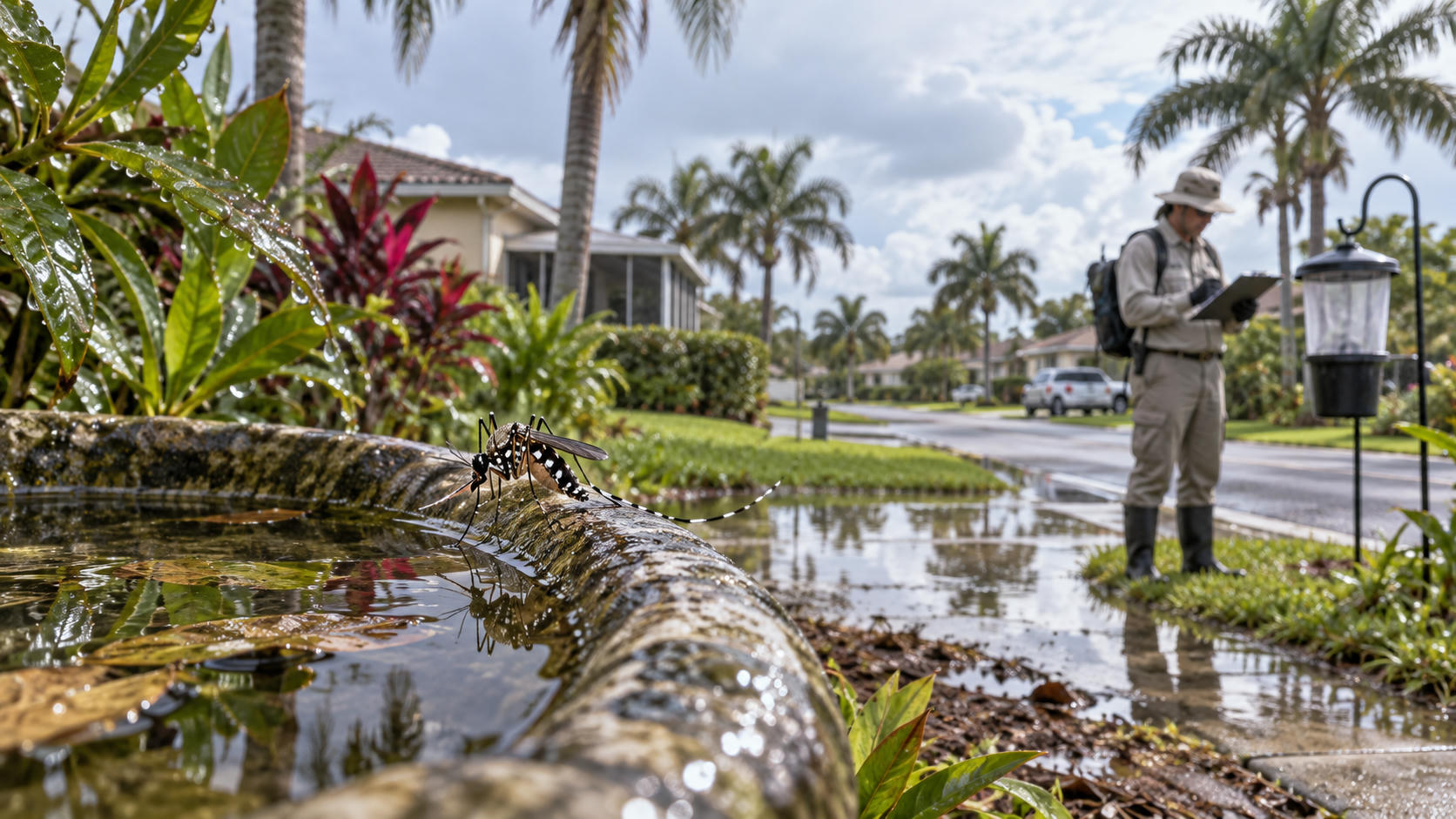
Aedes mosquitoes can breed in small amounts of standing water. Common breeding sites include:
- Buckets and outdoor containers
- Flowerpot saucers
- Old tires
- Clogged gutters
- Children’s toys
- Pet bowls
- Pool covers
- Rain barrels
- Outdoor furniture
Some Aedes eggs can survive dry conditions and hatch when water returns. Weekly inspection, cleaning, covering, or removal of containers can reduce mosquito production around homes.
Travel and Local Transmission
Many dengue infections diagnosed in the United States are associated with travel to places where dengue transmission is common. A traveler may return while the virus is circulating in the bloodstream. If a local mosquito bites that person, it may acquire the virus and later transmit it to others.
Travel-associated and locally acquired infections are different surveillance categories. Local transmission indicates that infected mosquitoes and suitable conditions exist in the community, but one locally acquired case does not necessarily mean widespread transmission. Officials need laboratory testing, travel histories, additional case investigations, and mosquito surveillance to determine the scale of spread.
Warmer conditions, changing rainfall, storms, flooding, and shifts in mosquito habitat may influence dengue risk. Climate change is not the sole explanation for any particular Florida surge; travel, mosquito ecology, urban development, housing, public health resources, and reporting practices also matter.
How Dengue Spreads
The usual transmission cycle is:
- An infected mosquito bites a person.
- The virus multiplies in the person’s bloodstream.
- Another mosquito bites the infected person.
- The mosquito becomes infected.
- The virus develops inside the mosquito.
- The infected mosquito transmits the virus through later bites.
People with dengue may help sustain transmission even when symptoms are mild or absent. Anyone with suspected or confirmed dengue should therefore avoid mosquito bites while ill.
Symptoms and Warning Signs
Symptoms often begin several days after infection. Common symptoms include:
- High fever
- Severe headache
- Pain behind the eyes
- Muscle, joint, or bone pain
- Nausea and vomiting
- Rash
Some people have mild symptoms or no symptoms. Symptoms may resemble influenza, COVID-19, chikungunya, Zika, and other infections. Anyone with fever and relevant travel or mosquito exposure should tell a healthcare professional where they have been and when symptoms began.
Warning Signs of Severe Dengue
Seek urgent medical attention for:
- Severe abdominal pain
- Persistent vomiting
- Nose or gum bleeding
- Blood in vomit or stool
- Extreme weakness
- Restlessness or unusual drowsiness
- Breathing difficulty
- Cold or pale skin
Severe symptoms can appear after the fever begins to improve. A falling temperature does not always mean the illness is ending.
Infants, young children, older adults, pregnant people, people with chronic conditions, people with previous dengue infection, and people who cannot maintain hydration may require particularly close monitoring. Severe dengue can affect anyone, however.
Diagnosis and Treatment
Diagnosis may involve symptom review, travel and mosquito-exposure history, physical examination, blood testing, and assessment of dehydration or warning signs. The most appropriate test can depend on how long symptoms have been present.
There is no routine specific antiviral treatment for dengue. Care generally focuses on rest, adequate fluids, fever management under medical guidance, monitoring, and follow-up when symptoms change.
People with suspected dengue should not take aspirin or nonsteroidal anti-inflammatory drugs such as ibuprofen until a clinician rules out dengue, because these medicines can increase bleeding concerns. Acetaminophen may be appropriate when used according to label instructions or a clinician’s guidance.
Severe cases may require hospitalization, intravenous fluids, blood tests, and close monitoring for bleeding, shock, breathing problems, or organ complications.
How to Reduce Dengue Risk in Florida
Eliminate Standing Water
Empty, scrub, cover, or dispose of containers that hold water. Check plant saucers, pool covers, rain barrels, outdoor furniture, pet bowls, toys, tires, gutters, drainage areas, and trash or recycling containers each week.
Prevent Mosquito Bites
- Use an Environmental Protection Agency-registered insect repellent.
- Wear long sleeves and long pants.
- Install and repair window and door screens.
- Stay in air-conditioned or screened spaces.
- Follow product instructions for repellent use.
Aedes mosquitoes can bite during the day as well as at night, so protection should continue throughout the day.
Protect People Who Are Sick
People with suspected or confirmed dengue should use repellent, wear protective clothing, rest indoors, and stay in screened or air-conditioned spaces when possible. This protects the sick person and reduces the chance that local mosquitoes will acquire and transmit the virus.
Public Health Response
Health departments may use laboratory testing, patient interviews, travel-history reviews, location mapping, mosquito surveillance, property inspections, larvicide, targeted adult mosquito control, and public education. These measures help distinguish imported cases from locally acquired infections and identify areas where intervention is most urgent.
Clear public communication should explain where cases have been identified, whether infections are travel-associated or locally acquired, which symptoms require medical care, how residents can prevent bites, and where to find updated information. Residents should rely on official Florida and federal health updates rather than unsupported figures or reposted claims.
What the Trend Could Mean for the United States
A Florida dengue surge could increase awareness among clinicians, travelers, schools, employers, local health departments, and communities. It does not mean dengue will spread uniformly across the country. Risk varies with mosquito species, climate, travel patterns, housing, local transmission, and public health capacity.
Clinicians may need to consider dengue when patients have compatible symptoms and a relevant travel or mosquito-exposure history. Early recognition supports hydration, monitoring, testing, and appropriate treatment while helping prevent inappropriate medication use.
Prevention requires combined action: household water management, personal insect protection, mosquito surveillance, targeted control, clinical awareness, accurate reporting, and public education.
Conclusion
The reported dengue surge in Florida highlights the virus’s potential importance in the United States. The available reports do not verify case totals or provide enough detail to determine the full scale of transmission, but they identify a concern that warrants careful surveillance.
Residents should remove standing water, use mosquito repellent, wear protective clothing, and keep people with suspected dengue away from mosquitoes during illness. Anyone with severe abdominal pain, persistent vomiting, bleeding, breathing difficulty, extreme weakness, confusion, unusual drowsiness, or cold and pale skin should seek urgent medical care.
Frequently Asked Questions
Is dengue spreading in Florida?
The supplied NBC News summaries describe a dengue surge in Florida Source 1 Source 2. The extent, location, and current case totals require confirmation from Florida and federal health agencies. Officials also distinguish travel-associated infections from locally acquired cases.
How does dengue spread?
Dengue spreads mainly through the bite of an infected Aedes mosquito. It does not usually spread through casual contact. An infected person can contribute to transmission when mosquitoes bite while the virus is present in the bloodstream.
What are the first symptoms?
Common symptoms include fever, severe headache, pain behind the eyes, muscle and joint pain, nausea, vomiting, and rash. Symptoms overlap with other infections, so medical advice and testing may be necessary.
When is emergency care needed?
Seek urgent care for severe abdominal pain, persistent vomiting, bleeding, breathing difficulty, extreme weakness, confusion, unusual drowsiness, or cold and pale skin. Severe dengue can develop as fever improves.
How can people prevent dengue at home?
Remove standing water, use an EPA-registered insect repellent, wear protective clothing, and use window and door screens. People with suspected or confirmed dengue should avoid mosquito bites while ill.
Could dengue become a larger U.S. threat?
Risk may increase where suitable mosquitoes, warm conditions, travel-related virus introductions, and local transmission overlap. Surveillance, mosquito control, clinical awareness, and household prevention can reduce transmission.
Artikel Terkait
-
 More Screen Time Is Linked to Poorer Child Development, Study Shows
-
 Blood Sugar Spikes: When They Are Normal and When They Matter
-
 Birth Order Does Not Predict Personality: What Does
-
 Pennsylvania Measles Outbreak: What Residents Need to Know
-
 3 Science-Backed Ways to Help Clear Brain Waste
-
 Florida Dengue Outbreak Reported as Largest in Decades