Florida Dengue Outbreak: Symptoms, Risks, and Prevention
Florida Dengue Outbreak: Symptoms, Risks, and Prevention
Florida is reportedly experiencing the largest dengue outbreak in the continental United States in decades, according to reporting cited by The Hill and related source summaries.
The available reporting does not establish a verified case total, affected counties, hospitalization figures, death count, outbreak start date, or current control measures. Those details should be confirmed through the Florida Department of Health, the Centers for Disease Control and Prevention (CDC), and local county health departments. Surveillance totals may change as laboratories report additional infections and agencies update their records.
What Is Dengue?
Dengue is a viral infection caused by four related dengue viruses. Infected mosquitoes transmit the virus when they bite people. The mosquito species most commonly associated with dengue transmission are Aedes aegypti and Aedes albopictus.
Dengue does not typically spread through casual contact, conversation, or touching an infected person. The primary route is the bite of an infected mosquito. Illness can range from asymptomatic infection to severe dengue, which may cause bleeding, shock, organ problems, and death.
How Dengue Can Spread in Florida
Dengue cases in the United States may be travel-associated or locally acquired. A traveler can become infected in a region where dengue commonly circulates and return to Florida while the virus remains in the bloodstream. A mosquito can then acquire the virus by biting that person and transmit it to others.
The transmission cycle is:
- An infected mosquito bites a person with dengue.
- The mosquito acquires the virus.
- The virus develops inside the mosquito.
- The infected mosquito bites another person.
- The second person becomes infected.
A reported Florida case does not automatically prove that infection occurred locally. Case classification requires epidemiological and laboratory assessment. Current distinctions between imported and locally acquired infections should be checked with the Florida Department of Health or CDC.
What “Largest in Decades” Means
The phrase indicates unusually high reported activity compared with recent historical patterns. It does not, by itself, establish the outbreak’s severity or geographic reach.
These measurements should remain separate:
- Reported infections: Cases recorded by health authorities.
- Locally acquired infections: Cases linked to transmission within a U.S. community.
- Travel-associated infections: Cases acquired outside the United States.
- Geographic reach: Counties or communities reporting infections.
- Clinical severity: Hospitalizations or cases of severe dengue.
- Transmission status: Whether mosquitoes are currently spreading the virus in an area.
The supplied reporting does not verify the total number of cases, affected locations, outbreak start date, hospitalizations, deaths, imported and locally acquired case proportions, ongoing transmission, or mosquito-control measures. Every statistic should include its reporting date, geographic scope, and issuing agency.
Dengue Symptoms
Symptoms commonly begin several days after infection, although timing varies. Some people have mild illness or no symptoms.
Common symptoms include:
- Sudden fever.
- Severe headache.
- Pain behind the eyes.
- Muscle, joint, or bone pain.
- Nausea or vomiting.
- Rash.
These symptoms overlap with influenza, COVID-19, and other illnesses. People should tell a healthcare professional when symptoms began, where they recently traveled, whether they had mosquito exposure, and which medicines they have taken.
Warning Signs of Severe Dengue
Severe dengue can develop after the initial fever, sometimes as the fever begins to improve. Warning signs include:
- Severe abdominal pain or tenderness.
- Persistent or repeated vomiting.
- Bleeding from the nose or gums.
- Vomiting blood.
- Blood in the stool.
- Extreme weakness or unusual tiredness.
- Restlessness or irritability.
- Rapid breathing.
- Pale, cold skin.
These symptoms require urgent medical attention. Severe dengue can worsen quickly because of fluid loss, bleeding, or shock.
Diagnosis and Treatment
Clinicians may consider symptoms, physical examination findings, travel history, mosquito exposure, local transmission information, and blood-test results. The timing of testing matters because different tests are useful at different stages of illness. A negative result does not always rule out dengue.
There is no routine specific antiviral treatment for dengue. Care generally involves rest, fluids, symptom management, and monitoring for warning signs. Severe illness may require hospitalization, intravenous fluids, or other medical support.
People with suspected dengue should avoid aspirin and nonsteroidal anti-inflammatory drugs, including ibuprofen, unless a healthcare professional says they are safe. These medicines can increase bleeding risk in some situations. Acetaminophen may be recommended for fever or pain, but patients should follow label directions and professional advice.
How Florida Residents Can Reduce Risk
Prevent Mosquito Bites
- Use an Environmental Protection Agency-registered insect repellent.
- Wear long sleeves and long pants when practical.
- Stay in screened or air-conditioned areas.
- Use mosquito netting when appropriate.
- Repair damaged window and door screens.
- Follow product-label instructions.
Protection remains important during the day because Aedes mosquitoes can bite during daylight hours as well as around dawn and dusk. Adults should apply repellent to children as directed and avoid applying it to a child’s hands, eyes, mouth, cuts, or irritated skin.
Remove Standing Water
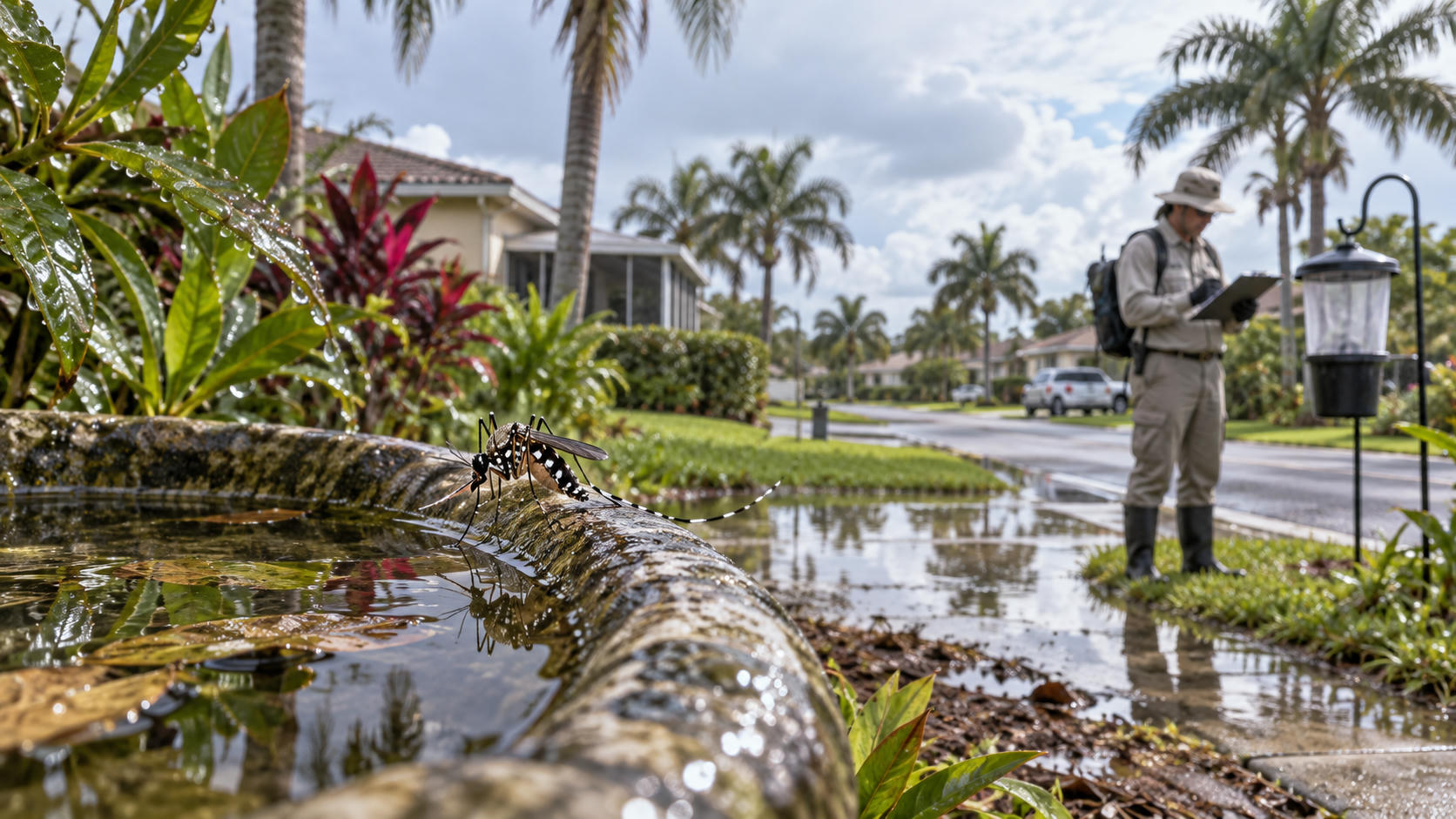
Aedes mosquitoes can breed in small amounts of stagnant water. Regularly empty, scrub, cover, or discard containers that collect rainwater, including:
- Buckets.
- Plant saucers.
- Tires.
- Pet bowls.
- Children’s toys.
- Outdoor furniture.
- Trash and recycling containers.
- Unused pools or water features.
- Clogged gutters.
Cover water-storage containers tightly. Clean and treat containers that cannot be emptied according to local guidance. Continue prevention after rainfall and throughout warm weather.
Protect Others While Sick
A person with dengue can infect mosquitoes that bite them during the infectious period. Those mosquitoes may later transmit the virus to other people. People with suspected or confirmed dengue should use repellent, wear protective clothing, stay in screened or air-conditioned rooms, use mosquito netting when needed, and remove standing water around their homes.
Public-Health Response
Health departments may investigate cases through laboratory testing, patient interviews, travel-history reviews, and mosquito-exposure assessments. Officials may map cases, distinguish imported infections from local transmission, and monitor for additional infections.
Depending on local conditions, mosquito-control authorities may use public education, standing-water removal, larvicide, adult mosquito control, targeted spraying, and additional surveillance. Measures vary by location, so residents should follow notices from their county health department and mosquito-control district.
Surveillance figures can change because of reporting delays, laboratory confirmation, case reclassification, and duplicate-record corrections. Reliable reports should identify the agency, geographic area, reporting period, update date, and whether cases were imported or locally acquired.
Who May Face Higher Risk?
Prompt medical assessment is especially important for:
- Infants and young children.
- Older adults.
- Pregnant people.
- People with a previous dengue infection.
- People with chronic medical conditions.
- People who cannot maintain adequate fluid intake.
A later infection with another dengue virus type may increase the risk of severe disease. People should discuss personal concerns with a healthcare professional.
What Residents Should Do Now
- Check updates from the Florida Department of Health and the local county health department.
- Use mosquito repellent and protective clothing.
- Stay in screened or air-conditioned areas when possible.
- Remove standing water around homes, workplaces, and businesses.
- Contact a healthcare professional about dengue-like symptoms.
- Seek urgent care for severe abdominal pain, repeated vomiting, bleeding, rapid breathing, pale or cold skin, or extreme weakness.
- Prevent mosquito bites while sick.
- Avoid undated social-media posts and unverified case totals.
- Follow county-specific mosquito-control instructions.
Key Takeaways
- Florida is reportedly experiencing the largest dengue outbreak in the continental United States in decades.
- The supplied reporting does not verify case numbers, affected locations, hospitalizations, deaths, or current interventions.
- Dengue is transmitted primarily by infected Aedes mosquitoes.
- Fever, headache, pain behind the eyes, body aches, nausea, vomiting, and rash are common symptoms.
- Severe abdominal pain, persistent vomiting, bleeding, rapid breathing, pale or cold skin, and extreme weakness require urgent medical attention.
- Repellent use and standing-water removal can reduce risk.
- Official updates from the Florida Department of Health, CDC, and local health departments should guide decisions.
FAQ
Is dengue spreading in Florida?
The supplied reporting describes a significant Florida outbreak and calls it the largest in the continental United States in decades. Current case totals and affected locations require confirmation from the Florida Department of Health or CDC.
How does dengue spread?
Infected Aedes mosquitoes spread dengue through bites. Casual contact, conversation, and being near an infected person do not typically transmit the virus.
What are the first symptoms of dengue?
Early symptoms may include fever, severe headache, pain behind the eyes, muscle or joint pain, nausea, vomiting, and rash. Medical advice is important after relevant travel or mosquito exposure.
When is dengue an emergency?
Seek urgent medical attention for severe abdominal pain, repeated vomiting, bleeding, rapid breathing, pale or cold skin, extreme weakness, or unusual restlessness. Severe dengue may develop as fever improves.
How can people prevent dengue in Florida?
Use an EPA-registered insect repellent, wear protective clothing, stay in screened or air-conditioned areas, and remove standing water. People with suspected or confirmed dengue should prevent mosquito bites while sick.
Is there a vaccine or specific treatment for dengue?
Treatment generally focuses on fluids, rest, symptom management, and monitoring. Severe cases may require hospitalization. Vaccine eligibility and availability depend on factors such as location, age, previous infection, and current public-health guidance.
Artikel Terkait
-
 More Screen Time Is Linked to Poorer Child Development, Study Shows
-
 Blood Sugar Spikes: When They Are Normal and When They Matter
-
 Birth Order Does Not Predict Personality: What Does
-
 Pennsylvania Measles Outbreak: What Residents Need to Know
-
 3 Science-Backed Ways to Help Clear Brain Waste
-
 Florida Dengue Outbreak Reported as Largest in Decades