Falcon 9 Launches 27 Starlink Satellites From California
Falcon 9 Launches 27 Starlink Satellites From California
Mission Overview
A SpaceX Falcon 9 rocket launched 27 Starlink satellites from Vandenberg Space Force Base in California on October 27, 2026, according to Spaceflight Now.Source 1
The mission added another group of spacecraft to SpaceX’s low Earth orbit broadband constellation. It also highlighted three continuing trends in the commercial launch industry: Starlink’s expansion, Vandenberg’s high launch tempo, and the repeated use of Falcon 9 first stages.
A separate report identified the booster as B1082 and described the flight as its 26th mission.Source 9 However, the available reporting does not independently confirm every operational detail, including the exact launch time, landing result, orbital parameters, or a specific record established by the flight.
Launch Site: Vandenberg Space Force Base
Vandenberg Space Force Base is SpaceX’s primary West Coast launch site. Located on California’s central coast, it provides access to trajectories that travel south over the Pacific Ocean. These paths are well suited to polar and high-inclination orbits used by many Earth-observation, government, science, and broadband satellite missions.
Vandenberg complements SpaceX’s major launch facilities in Florida. Florida missions commonly use eastward trajectories over the Atlantic, while California provides a separate launch corridor. SpaceX can select a site based on the target orbit, payload requirements, range availability, and mission schedule.
Starlink spacecraft do not all require the same orbital profile. Satellites can be deployed into different orbital planes and later maneuvered into their operational positions. Vandenberg’s access to southern launch paths makes it an important part of SpaceX’s constellation strategy.
The base also supports national-security missions, commercial satellite deployments, scientific spacecraft, and Earth-observation payloads. Its expanding schedule demonstrates the importance of a military-operated facility to the U.S. commercial space industry.
Payload: 27 Starlink Satellites
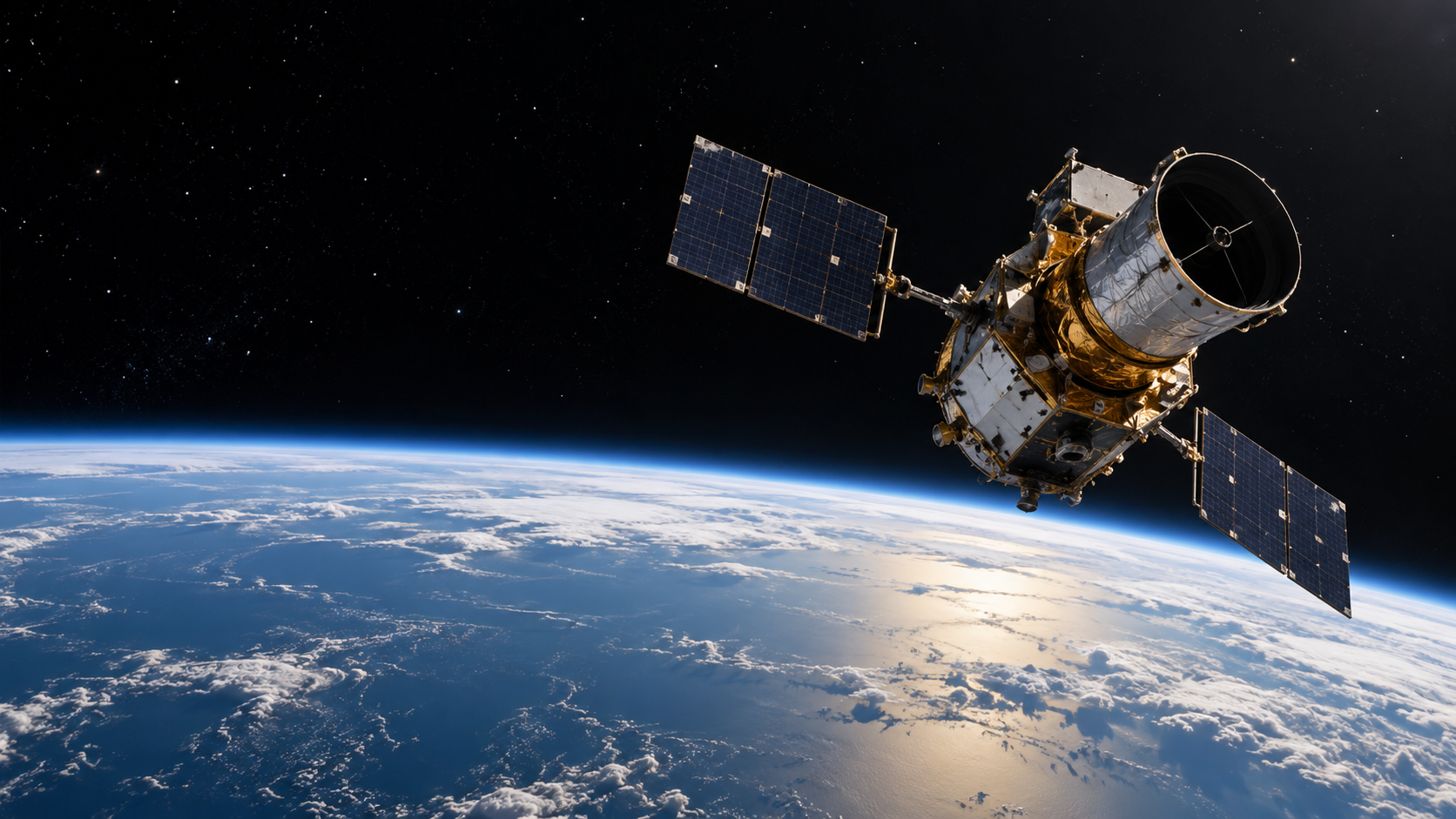
The Falcon 9 carried 27 Starlink satellites. The spacecraft are designed to join SpaceX’s low Earth orbit broadband network, which uses a large distributed constellation rather than a small number of high-altitude communications satellites.
After the second stage places the payload into its planned orbit, the satellites separate from the launch vehicle in a controlled sequence. Each spacecraft then establishes communications with ground controllers, deploys its solar arrays, checks its systems, and uses onboard propulsion to adjust its orbit.
Satellites may initially operate below their final service altitude. This allows SpaceX to complete testing and orbital adjustments before integrating them into the active network. The process can include communications checks, propulsion tests, software updates, navigation validation, and inter-satellite-link testing.
The number of satellites on a mission does not alone determine service quality. Network performance also depends on orbital-plane placement, satellite spacing, ground-station access, user demand, regulatory approvals, routing capacity, and the condition of other spacecraft in the constellation.
How the Falcon 9 Mission Works
Falcon 9 uses a two-stage architecture. The first stage provides the thrust needed to lift the rocket from the launch pad and accelerate it through the dense lower atmosphere. The second stage continues the ascent and places the payload into orbit.
The main phases include liftoff, atmospheric ascent, first-stage shutdown, stage separation, second-stage ignition, orbital insertion, and payload deployment. Depending on the mission profile, the first stage performs boost-back, atmospheric-entry, and landing maneuvers.
The available reports do not independently confirm the landing result for this launch. That detail should not be stated as fact without a mission-specific record.
After first-stage separation, the second stage carries the satellites toward their target orbit. It may perform one or more burns to achieve the required trajectory. Once released, the spacecraft begin their own flight operations.
Satellite separation does not mean that consumer service begins immediately. The spacecraft must communicate with ground controllers, confirm that their systems are functioning, raise or adjust their orbits, and complete network integration.
The post-deployment process generally includes:
- Establishing command and telemetry links.
- Deploying solar arrays and confirming power generation.
- Checking propulsion, navigation, communications, and thermal systems.
- Raising or adjusting the orbital altitude.
- Testing links between satellites and ground stations.
- Completing regulatory and operational integration.
- Assigning each spacecraft to its role within the constellation.
Why Low Earth Orbit Matters
Compared with geostationary satellites positioned thousands of kilometers above Earth, low Earth orbit allows shorter signal paths between users, satellites, and ground infrastructure. This can reduce latency for video calls, online gaming, cloud applications, remote work, and other interactive services.
The approach also creates trade-offs. Low Earth orbit satellites move rapidly across the sky, so user terminals must track spacecraft and manage handoffs. Continuous service requires many satellites in multiple orbital planes. Spacecraft have limited operational lifetimes and eventually must be replaced.
Regular launches are therefore central to the Starlink business model. New missions can add capacity, replace aging satellites, support network upgrades, and improve coverage in areas with growing demand.
Falcon 9 Booster B1082’s Reported 26th Flight
The reported mission involved Falcon 9 booster B1082 on its 26th flight, according to a report titled “Starlink 15-16: 27 Satellites, B1082’s 26th Flight [2026].”Source 9 The booster identity and flight count should be checked against SpaceX or another mission-specific record before being treated as fully confirmed.
A 26th flight would represent a significant reuse milestone. Falcon 9’s reusable first-stage architecture reduces the need to manufacture a new booster for every launch. Reuse can support a higher launch cadence, reduce manufacturing pressure, and provide engineers with operational data from repeated missions.
Flight count alone does not establish the condition or performance of every component. Boosters undergo inspections and maintenance between missions, and individual parts can experience different levels of wear. The significance of the milestone lies in the broader demonstration that a first stage can support repeated orbital missions under a controlled refurbishment program.
After recovery, a booster is transported to a SpaceX processing facility. Engineers inspect major systems, including engines, propellant tanks, landing gear, avionics, flight computers, grid fins, and thermal-protection components. Worn or damaged parts can be replaced or refurbished, and additional testing may be performed when required.
No specific refurbishment details for B1082 should be added without a direct source.
Vandenberg’s Busy 2026 Schedule
Vandenberg Space Force Base reportedly supported its 71st launch of 2026 on October 24, according to the available source summary.Source 5
This figure places the Starlink mission within a broader sequence of launches and illustrates the importance of California to U.S. launch infrastructure. The available information does not establish that the October 24 event was the same mission as the October 27 Starlink launch. The records should remain separate unless an official source confirms their relationship.
A busy launch schedule increases demands on launch-pad availability, range coordination, weather monitoring, recovery planning, and local air and maritime traffic management. Reusable launch vehicles help manage that demand by allowing a booster to support multiple missions without requiring a new first stage for every flight.
Record-Setting Context
The Desert Sun described the event as a record-setting flight from California.Source 3 However, the supplied material does not establish the specific record.
Possible records could involve the booster’s flight count, the number of launches from Vandenberg in a calendar year, the number of Starlink satellites launched from the West Coast, the shortest interval between missions, or the site’s highest annual launch total. The exact claim requires confirmation from the underlying report or an official source.
The narrower confirmed claims are:
- A Falcon 9 launched 27 Starlink satellites from California.
- The reported launch date was October 27, 2026.
- A separate report identified B1082 as the booster and described its 26th flight.
- Vandenberg reportedly supported its 71st launch of 2026 on October 24.
- The specific record associated with the October 27 mission remains unverified in the supplied material.
What the Launch Adds to Starlink
Each successfully deployed satellite can contribute to network capacity after completing testing and reaching its assigned orbital position. Additional spacecraft can help SpaceX serve more users, improve regional capacity, increase resilience, and replace satellites that are aging or unavailable.
The constellation supports homes and businesses as well as maritime, aviation, rural, and remote users. The effect on an individual customer depends on location, local demand, network configuration, ground-station access, service plans, and regulatory authorization.
A launch does not guarantee an immediate change in download speeds or availability. Network improvements may appear gradually as satellites complete commissioning and are distributed across the required orbital planes.
Starlink also depends on continuous handoffs between moving spacecraft. The constellation must maintain sufficient density and spacing to provide reliable coverage. SpaceX launches new satellites to expand capacity, improve coverage, replace spacecraft near the end of their service lives, support newer network designs, and maintain resilience when satellites fail or are removed.
Environmental and Regulatory Considerations
Rocket launches have environmental and operational effects, including propellant consumption, engine emissions, noise, local transportation activity, and temporary restrictions around the launch range. Recovery and booster transportation also require personnel, vehicles, and support infrastructure.
These general effects should not be presented as measurements of this specific mission without a mission-specific environmental assessment or operational report.
Large satellite constellations also require responsible orbital management. Operators must track spacecraft, plan collision-avoidance maneuvers, coordinate with other satellite owners, and dispose of satellites at the end of their useful lives. Atmospheric reentry planning and space situational awareness become increasingly important as the number of objects in orbit grows.
Launch operations and satellite communications are subject to licensing, safety, spectrum, and orbital requirements involving government agencies, range authorities, regulators, and international partners.
Why the Mission Matters
For SpaceX, the launch demonstrates the company’s continuing ability to deploy Starlink spacecraft from the West Coast. It supports constellation expansion and replenishment while highlighting the role of reusable Falcon 9 hardware.
If B1082’s reported flight count is confirmed, the mission also represents a notable example of repeated first-stage use. That capability supports SpaceX’s launch cadence and provides greater flexibility when planning future Starlink missions.
For Vandenberg, the launch adds another commercial mission to an active 2026 schedule. It reinforces the base’s role as a high-frequency U.S. launch site supporting both military and commercial space activity.
For satellite-internet users, the 27 spacecraft add potential capacity to the Starlink system. The benefit will depend on successful commissioning, orbital adjustments, communications testing, and network integration. Users should not expect an automatic or immediate service change after deployment.
Key Facts
- Rocket: Falcon 9
- Payload: 27 Starlink satellites
- Launch site: Vandenberg Space Force Base, California
- Launch region: U.S. West Coast
- Reported launch date: October 27, 2026
- Reported booster: B1082
- Reported booster flight number: 26th flight
- Primary mission purpose: Deploy satellites for the Starlink low Earth orbit broadband constellation
- Details requiring confirmation: Exact launch time, landing result, orbital parameters, and the specific record established by the mission
Conclusion
SpaceX’s Falcon 9 launch from Vandenberg Space Force Base placed 27 Starlink satellites on their way into the company’s low Earth orbit broadband constellation. The mission continued Starlink’s expansion and reinforced the importance of California’s West Coast launch corridor.
The reported involvement of booster B1082 also illustrates the central role of Falcon 9 reuse. Repeated first-stage flights help SpaceX support a high launch cadence, although each booster’s condition and performance must be assessed through inspections and mission records.
Vandenberg’s reported 71st launch-support milestone for 2026 provides broader context for an increasingly active launch schedule. The mission’s ultimate value will depend on more than liftoff and separation. The satellites must complete orbital raising, system checks, communications testing, and network integration before they can contribute fully to Starlink service.
Frequently Asked Questions
How many Starlink satellites did Falcon 9 launch?
The Falcon 9 launched 27 Starlink satellites, according to the available launch reporting.Source 1
Where did the launch take place?
The launch took place at Vandenberg Space Force Base in California, making it a West Coast Falcon 9 mission.
When did Falcon 9 launch the 27 Starlink satellites?
The launch was reported on October 27, 2026. The exact liftoff time requires confirmation from the final mission report.
Which Falcon 9 booster flew the mission?
The supplied Source 9 report identifies the booster as B1082 and describes the mission as its 26th flight.Source 9 That detail should be checked against SpaceX or another mission-specific record.
Why does SpaceX launch Starlink satellites from Vandenberg?
Vandenberg supports trajectories suited to low Earth orbit and polar or high-inclination missions. Its Pacific location also gives SpaceX a separate launch corridor from its Florida facilities.
When will the satellites provide Starlink service?
The satellites will not provide full service immediately after separation. They must complete health checks, adjust their orbits, test communications, and integrate into the Starlink network before becoming operational.