Dengue Fever in Florida: Risks, Symptoms, and Prevention
Dengue Fever in Florida: Risks, Symptoms, and Prevention
Reports of a dengue fever surge in Florida have renewed concern about the virus’s growing public-health importance in the United States. Florida has conditions that can support dengue transmission, including warm weather, large urban populations, frequent international travel, and established populations of Aedes aegypti and Aedes albopictus mosquitoes.
The concern deserves attention, but headlines require context. An increase in reported dengue cases does not automatically mean widespread community transmission across Florida or the United States. Cases may be travel-associated, locally acquired, suspected, or laboratory-confirmed. Those distinctions are essential when officials assess risk.
Dengue is mainly spread by infected Aedes mosquitoes. Most infections are mild or asymptomatic, but some progress to severe dengue, which can cause dangerous bleeding, shock, or organ damage. Residents can reduce risk by preventing mosquito bites, removing standing water, and seeking medical care when warning signs appear.
What Is Dengue Fever?
The Virus Behind Dengue
Dengue is caused by four closely related virus serotypes. Infection with one serotype generally provides long-term protection against that serotype but does not guarantee protection against the other three.
A later infection with a different serotype may increase the risk of severe dengue, although serious illness can occur after a first infection. Disease severity varies according to age, immune response, pregnancy, underlying health conditions, and access to timely medical care. World Health Organization
Dengue is common in many tropical and subtropical regions. The United States records both travel-associated cases and occasional locally acquired infections, particularly where competent mosquito vectors are present.
How Dengue Spreads
Dengue transmission follows a mosquito-human cycle:
- An Aedes mosquito bites a person whose blood contains dengue virus.
- The virus multiplies inside the mosquito.
- The infected mosquito bites another person and transmits the virus.
Dengue is not normally spread through casual contact, coughing, sneezing, or sharing food. It differs from respiratory infections such as influenza and COVID-19.
Uncommon transmission routes include transmission from a pregnant person to a baby and exposure through infected blood or organs. Mosquito transmission remains the primary route. Centers for Disease Control and Prevention
Why Florida Faces Greater Dengue Concern
Florida’s Climate Supports Dengue-Carrying Mosquitoes
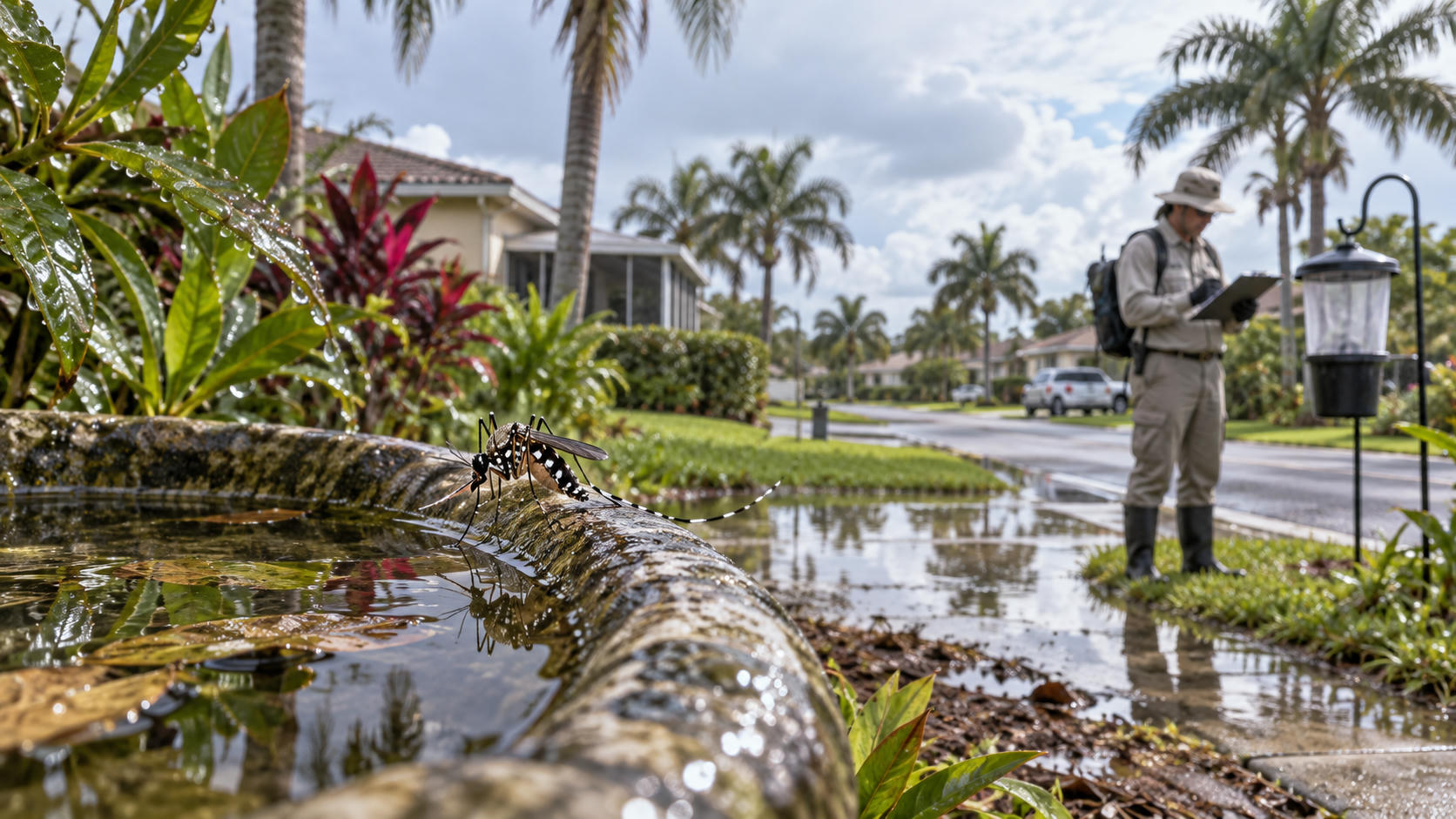
Florida’s warm, humid conditions can help Aedes mosquitoes survive, reproduce, and remain active for long periods. Rainfall can create small collections of standing water where mosquitoes lay eggs.
Common breeding sites include:
- Buckets and outdoor containers
- Clogged gutters
- Plant saucers
- Discarded tires
- Children’s toys
- Uncovered rain barrels
- Pet bowls
- Outdoor equipment
- Puddles and containers left after storms
Even a small amount of stagnant water can support mosquito larvae. Some Aedes mosquitoes live close to homes and prefer to bite people rather than animals, making household prevention important.
Travel Can Introduce the Virus
Many dengue infections diagnosed in the United States are associated with travel to areas where dengue is widespread. A traveler who becomes infected can return to Florida while the virus is circulating in the bloodstream.
If an infected traveler is bitten by a local competent mosquito, that mosquito may later transmit dengue to another person. Local transmission therefore requires more than an imported infection. It also requires active, capable mosquito vectors and opportunities for mosquito-human contact.
Not every Florida dengue case results from local transmission. Health agencies distinguish travel-associated cases from locally acquired cases when investigating an outbreak or cluster. CDC dengue data and statistics
Factors That Increase Exposure Risk
Risk can increase with:
- International tourism and travel
- Population growth
- Outdoor work and recreation
- Heavy rainfall, storms, and flooding
- Urban and suburban development
- Mosquito populations near homes
- Movement between regions experiencing dengue outbreaks
Risk varies by county, season, mosquito activity, rainfall, travel patterns, and local mosquito-control efforts. The presence of Aedes mosquitoes does not guarantee sustained dengue transmission. Surveillance data must show whether cases are imported, locally acquired, or part of a broader outbreak.
What the Available Reports Show—and Do Not Show
Several supplied social media posts repeat the claim that a dengue fever surge in Florida signals a broader threat to the United States. Posts associated with @luthermarcus3, @BasiaBasha, @Moonbootica, @civex, and @hebrew_yisrael amplify a similar warning. Post 1 Post 2 Post 3 Post 4 Post 5
One post uses the political statement “Trump did this.” The supplied material does not establish a verified causal connection between a specific policy and reported dengue activity. Political claims should not replace epidemiological evidence, case investigations, or official surveillance.
Other supplied entries contain only “1000+” or “5000+.” They do not identify what the figures measure, the reporting period, the affected location, whether the numbers represent cases or another metric, whether infections were suspected or confirmed, or whether cases were travel-associated or locally acquired.
Those figures should not be presented as confirmed Florida dengue totals. Current statistics should be checked against the Florida Department of Health, the CDC, and county health department updates. Until official data verify the scale and location of a trend, use terms such as “reported increase,” “public-health concern,” or “available posts claim.”
Dengue Symptoms
Common Symptoms
Symptoms commonly begin several days after an infected mosquito bite, although timing varies. Some infections cause mild illness, while others cause no symptoms.
Common symptoms include:
- Sudden fever
- Severe headache
- Pain behind the eyes
- Muscle, joint, or bone pain
- Nausea
- Vomiting
- Rash
People with fever and recent travel to a dengue-risk area should contact a healthcare professional. They should mention recent travel, mosquito exposure, the date symptoms began, and any previous dengue infection.
Warning Signs of Severe Dengue
Warning signs often appear as the fever begins to decline, commonly within the next 24 to 48 hours. A falling fever does not always mean the illness is improving.
Seek urgent medical care for:
- Severe abdominal pain
- Persistent or repeated vomiting
- Bleeding from the nose or gums
- Blood in vomit or stool
- Extreme weakness or restlessness
- Rapid breathing
- Pale, cold skin
- Severe dehydration
- Confusion or unusual drowsiness
Severe dengue can cause shock, serious bleeding, or organ impairment and can worsen quickly. CDC dengue symptoms
People with possible dengue should avoid aspirin and ibuprofen until a healthcare professional rules out the infection because these medicines can increase bleeding risk. Acetaminophen is commonly recommended for fever and pain, but patients should follow medical advice and medication instructions.
Who Faces the Greatest Risk?
A previous dengue infection may increase the risk of severe illness during a later infection with a different serotype. Pregnant people, infants, older adults, and people with immune disorders, kidney disease, liver disease, diabetes, or other chronic conditions may require closer monitoring.
Membership in one of these groups does not make severe illness inevitable. It does make early medical advice especially important when compatible symptoms develop.
How Florida Residents Can Prevent Dengue
Prevent Mosquito Bites
Residents can reduce exposure by:
- Applying Environmental Protection Agency-registered insect repellent
- Wearing long-sleeved shirts and long pants
- Choosing clothing treated with permethrin when appropriate
- Using screens on windows and doors
- Staying in air-conditioned or screened spaces
- Using bed nets when screens or air conditioning are unavailable
Aedes mosquitoes can bite during the day as well as at night. Protection should continue during daylight hours, especially around homes, workplaces, and outdoor gathering areas. CDC mosquito prevention
Remove Breeding Sites
After rain, residents should:
- Empty water from buckets, toys, pots, and containers
- Scrub containers to remove mosquito eggs
- Clean gutters and drains
- Cover water-storage containers
- Replace pet-bowl water regularly
- Dispose of unused tires and outdoor debris
- Maintain and properly treat pools
- Store equipment where it cannot collect rainwater
Standing water should be checked repeatedly because rainfall can recreate breeding sites.
Reduce Transmission When Sick
People with dengue should prevent additional mosquito bites during the first days of illness, when mosquitoes can acquire the virus from the bloodstream. Patients should use repellent, stay in screened or air-conditioned rooms, use bed nets when needed, and limit outdoor exposure.
How Public-Health Agencies Respond
Health departments monitor reported infections and investigate possible local transmission. Reliable surveillance depends on consistent testing, case definitions, laboratory confirmation, and reporting.
Officials distinguish among:
- Travel-associated cases: infections acquired outside the United States
- Locally acquired cases: infections acquired in the local area
- Imported cases: infections brought into a region by a traveler
- Suspected cases: illnesses that fit the clinical picture but lack complete confirmation
- Laboratory-confirmed cases: infections supported by approved testing
Mosquito-control programs may use standing-water removal, larval-source reduction, mosquito trapping, public education, targeted insecticide applications, and treatment of known breeding areas. These measures work best when agencies and residents act together.
Effective public-health updates should provide confirmed case counts, geographic details, reporting dates, transmission status, information about travel-associated and locally acquired cases, symptoms, warning signs, and prevention instructions. Transparent communication limits both complacency and unnecessary alarm.
Could Dengue Become a Larger U.S. Threat?
Dengue transmission can occur in parts of the United States when infected people and competent mosquitoes overlap. However, the presence of dengue-carrying mosquitoes does not guarantee sustained local transmission.
Transmission depends on mosquito abundance, temperature, rainfall, the number of infected travelers, housing conditions, human behavior, and the speed of case detection. Risk can vary sharply between counties and seasons.
Warmer conditions may lengthen mosquito activity or make some areas more suitable for mosquito survival, but climate is only one factor. Travel, rainfall, urbanization, housing quality, mosquito-control capacity, healthcare access, and testing also shape dengue patterns. It is inaccurate to attribute every increase in dengue to climate change alone.
International dengue outbreaks can increase the number of infected travelers entering the United States. Imported infections and local outbreaks require different responses, including patient care, mosquito-bite prevention, expanded investigations, mosquito control, and targeted public alerts.
What Readers Should Watch For
Follow updates from:
- The Florida Department of Health
- The Centers for Disease Control and Prevention
- Local county health departments
- Official mosquito-control districts
When evaluating a dengue report, ask:
- Is the number confirmed?
- What dates does it cover?
- Does it refer to Florida, the United States, or another region?
- Are the cases travel-associated or locally acquired?
- Does the report cite official surveillance data?
- Does it distinguish suspected cases from laboratory-confirmed cases?
The practical response remains clear: prevent mosquito bites, remove standing water, and seek medical advice for concerning symptoms.
Conclusion
Dengue activity in Florida deserves public-health attention because the state has suitable mosquito habitats, frequent international travel, and conditions that can support local transmission. The supplied social media posts show concern, but they do not independently verify case totals, dates, locations, or national trends.
The most useful actions are to check official health updates, use mosquito repellent, wear protective clothing, remove standing water, prevent mosquito bites while sick, recognize warning signs, and seek care after fever with relevant travel or mosquito exposure.
Dengue requires surveillance and prevention. Claims about its scale should be based on verified public-health data, not unexplained figures or repeated headlines.
FAQ
Is dengue fever spreading in Florida?
Dengue cases can occur in Florida, including travel-associated infections and occasional locally acquired transmission. Current case totals and transmission status must be confirmed through updated Florida Department of Health and CDC information.
How does dengue spread?
Dengue spreads mainly through the bite of an infected Aedes mosquito. It is not usually transmitted through casual person-to-person contact.
What are the first symptoms of dengue?
Common symptoms include sudden fever, severe headache, pain behind the eyes, muscle and joint pain, nausea, vomiting, and rash. Some people have mild or no symptoms.
When is dengue an emergency?
Seek urgent care for severe abdominal pain, repeated vomiting, unusual bleeding, blood in vomit or stool, extreme weakness, rapid breathing, confusion, or cold, pale skin. Severe dengue can worsen quickly, especially after the fever begins to decline.
How can people prevent dengue in Florida?
Use EPA-registered insect repellent, wear protective clothing, use screens, and remove standing water around homes. People with dengue should avoid mosquito bites while sick to reduce the risk of infecting local mosquitoes.
Do the reported “1000+” and “5000+” figures confirm Florida dengue cases?
No. The supplied sources do not explain what those figures measure, when they were recorded, or where they came from. Treat them as unverified until supported by official surveillance data.
Artikel Terkait
-
 More Screen Time Is Linked to Poorer Child Development, Study Shows
-
 Blood Sugar Spikes: When They Are Normal and When They Matter
-
 Birth Order Does Not Predict Personality: What Does
-
 Pennsylvania Measles Outbreak: What Residents Need to Know
-
 3 Science-Backed Ways to Help Clear Brain Waste
-
 Florida Dengue Outbreak Reported as Largest in Decades