Apple’s Reported Touchscreen MacBook Pro Lineup Shift
Apple’s Reported Touchscreen MacBook Pro Lineup Shift
Apple may be preparing its biggest MacBook Pro design change in years. A report claims the company could discontinue most non-touch MacBook Pro models while retaining a core 14-inch version Source 1.
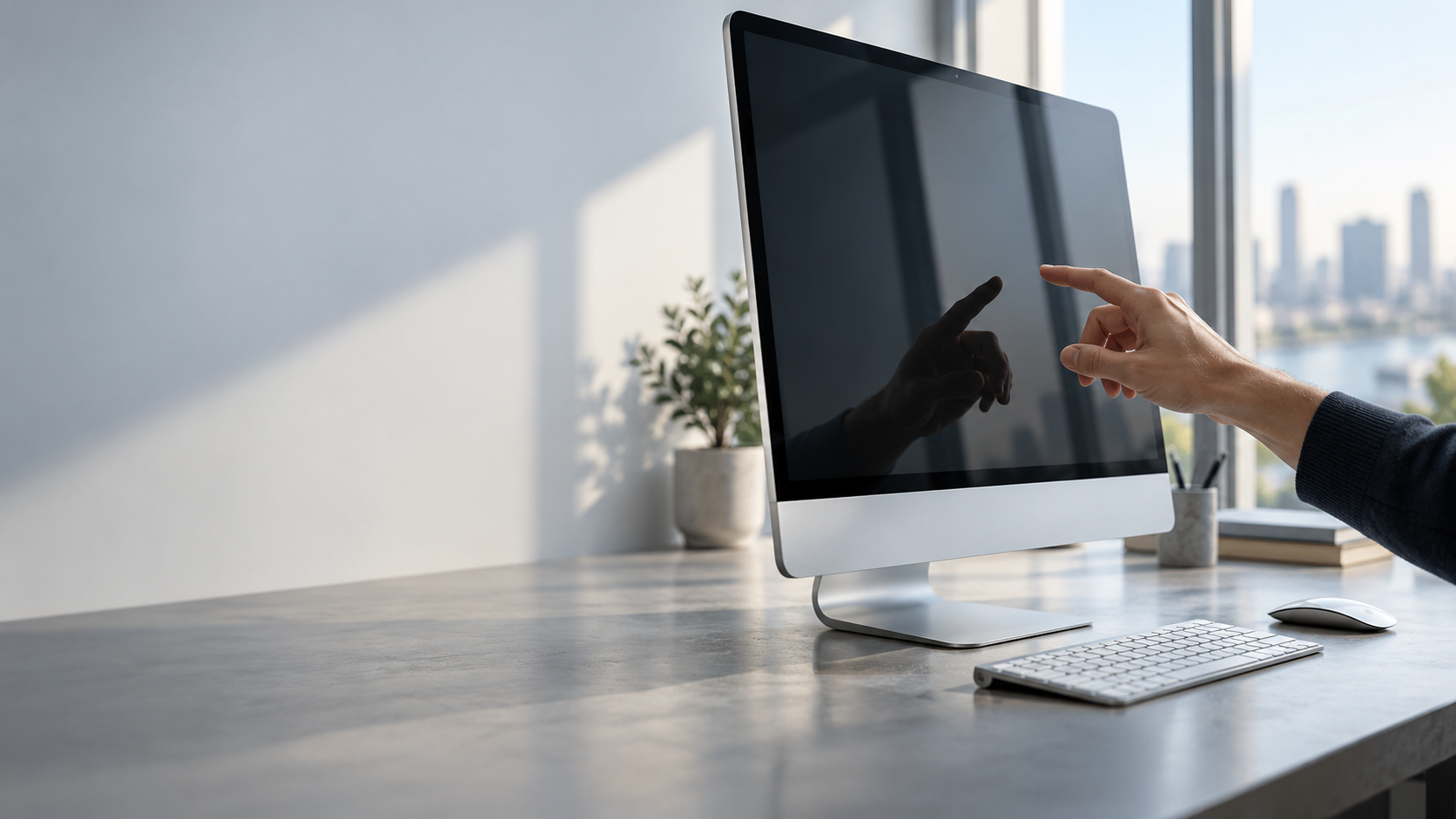
The reported strategy would support Apple’s rumored move toward a touchscreen MacBook Pro with an OLED display. It could simplify the premium laptop range, but it might also reduce customer choice and create a significant price gap between the standard 14-inch model and future premium versions.
Apple has not confirmed the lineup change, touchscreen display, OLED panel, pricing, or release schedule. Current reports indicate a possible direction rather than a finalized product strategy.
What Apple May Change
Most Non-Touch Models Could Be Discontinued
The central claim is that Apple may eliminate non-touch MacBook Pro models other than the core 14-inch version Source 1.
The report does not identify the exact screen sizes, processor tiers, memory configurations, or storage options that could be affected. Specific current models should not be described as canceled without further evidence.
A smaller range could make Apple’s product lineup easier to understand and create a clearer distinction between a conventional 14-inch MacBook Pro and premium touchscreen OLED models. The trade-off would be fewer options for customers who want a larger non-touch display or a specific performance configuration.
The Core 14-Inch Model Could Remain
The reported surviving model could serve as:
- A lower-cost entry point to the Pro range.
- A conventional option for keyboard-and-trackpad workflows.
- A professional laptop for users who gain little from touch input.
- A non-touch alternative to premium touchscreen models.
Its chip, display, ports, memory, storage, battery life, and price remain unknown in the context of the report. If Apple positions it as the standard Pro laptop, it could become especially important to buyers who want macOS performance without paying for first-generation touchscreen hardware.
The Rumored Touchscreen OLED MacBook Pro
Computerworld is reported to have described a touchscreen MacBook Pro with an OLED display and a price of $2,899 Source 3.
That figure is not a confirmed retail price. The report does not establish a release date, screen size, processor, battery estimate, touch technology, operating-system changes, or configuration details.
Potential OLED Benefits
OLED panels can produce deeper blacks and higher contrast because individual pixels can switch off. Those characteristics could benefit video editors, photographers, designers, and users who regularly view HDR content.
Potential benefits include:
- Stronger contrast for visual design and video editing.
- More convincing dark scenes in HDR content.
- Improved image quality for movies and photography.
- A more premium display experience than a conventional LCD panel.
OLED could also increase manufacturing and repair costs. Static interface elements may create long-term burn-in concerns, although panel design and software protections can reduce the risk. Battery life would depend on brightness, refresh rate, panel efficiency, and Apple’s display management.
How Touch Could Work on macOS
Touch input could support creative applications, drawing tools, image editing, annotations, presentations, and media controls. It could also allow users to perform occasional tasks without moving their hands from the keyboard area.
Apple would need to ensure that macOS controls are comfortable to use with fingers. A touchscreen alone would not create an iPad-like experience because many desktop controls and professional applications are designed primarily for pointer input.
Possible designs include:
- A standard clamshell MacBook with a touchscreen.
- A laptop with a hinge that permits limited screen repositioning.
- A hybrid design with broader tablet-style flexibility.
No available source confirms a convertible hinge, detachable display, or Apple Pencil support. Touch capability and stylus support are separate features.
Pricing Reports Conflict
The reported $2,899 price comes from coverage of the rumored touchscreen OLED MacBook Pro Source 3. A separate New York Post report claims the laptop could cost as much as $15,000 Source 9.
The figures may represent different configurations, but neither is official. The higher estimate could refer to a fully configured system, a specialized configuration, or an unreliable rumor. Pricing could vary according to processor, memory, storage, display size, regional taxes, accessories, and support plans.
Buyers should rely on Apple’s product pages, newsroom announcements, and regional stores for confirmed pricing.
What the Change Could Mean for Buyers
Traditional MacBook Pro Users
The reported 14-inch exception could preserve a conventional keyboard-and-trackpad workflow for coding, writing, office work, audio production, and other professional tasks. However, customers who want a larger non-touch display could face fewer options or need to use an external monitor.
Those with an immediate need should evaluate current availability, discounts, trade-in offers, and warranty coverage instead of delaying a purchase based solely on an unconfirmed rumor.
Buyers Interested in Touch
A touchscreen MacBook Pro could appeal to users who want direct manipulation in creative applications, easier presentations, or closer integration between Mac and iPad workflows. Early-generation hardware could also bring higher pricing, limited touch optimization, inconsistent application support, greater repair costs, uncertain battery performance, and a first-generation physical design.
Buyers whose main reason for upgrading is touch input should wait for official specifications and independent reviews.
Professional Users
Developers, video editors, photographers, designers, and music producers should evaluate workflow performance rather than display novelty. Important factors include application compatibility, sustained processor and graphics performance, external-display support, port selection, battery life, thermal behavior, keyboard and trackpad quality, accessibility, and repair options.
Touch may improve drawing, annotation, timeline control, and presentations. It may add little value to software built around keyboard shortcuts, pointer precision, or external control surfaces.
Students and General Users
A touchscreen OLED MacBook Pro could exceed the needs and budget of many students and general users. Buyers should compare it with current MacBook Air and MacBook Pro models and with Windows touchscreen laptops.
Software compatibility, battery life, keyboard quality, display requirements, portability, and total cost matter more than display novelty alone.
Why Apple Might Reduce the Non-Touch Lineup
A smaller range could reduce overlap between MacBook Pro models and create clearer tiers:
- A conventional 14-inch MacBook Pro.
- Premium touchscreen OLED MacBook Pro models.
Touch and OLED would provide visible differences that Apple could use to justify higher prices. The risk is a substantial gap between the standard model and premium versions, forcing buyers to spend more for a larger screen, OLED, or touch input.
Apple could also be responding to competitive pressure. Touchscreens are common on premium Windows laptops, while Apple could differentiate through OLED quality, macOS integration, Apple silicon performance, battery efficiency, and industrial design.
A touchscreen MacBook Pro could further narrow the distinction between Apple’s laptop and tablet categories. That convergence might help users move between touch-based iPad work and keyboard-based Mac work, but it could also create product-cannibalization concerns.
What Remains Unknown
The reports do not confirm:
- A release date.
- The display size or design.
- A convertible hinge or detachable screen.
- The Apple silicon generation.
- Memory and storage options.
- Graphics performance.
- Ports and wireless connectivity.
- Battery capacity or charging technology.
- macOS touch optimizations.
- Apple Pencil support.
- Regional pricing.
Apple could delay, revise, or cancel the product before announcing it.
Should You Buy a MacBook Pro Now?
Buy a current MacBook Pro if its performance, ports, keyboard, software support, and non-touch workflow meet your needs today. An immediate work or school requirement should outweigh an unconfirmed rumor.
Wait if touch input and OLED image quality are essential. Waiting allows buyers to verify the design, price, battery life, software support, application compatibility, and independent review results.
Windows touchscreen laptops may provide touch input immediately and at a lower price. Compare display quality, pen support, processor performance, battery life, build quality, operating-system compatibility, warranty coverage, repair options, and total ownership cost.
Verdict
Apple may be preparing to discontinue most non-touch MacBook Pro models while retaining a core 14-inch version Source 1. A touchscreen OLED model could become the premium successor, but the product remains unconfirmed.
Reported prices range from $2,899 to $15,000, and neither figure is official. Current buyers should choose from products Apple sells and supports today. Buyers who specifically want touch and OLED should wait for an announcement, complete specifications, independent reviews, and confirmed regional pricing.
Frequently Asked Questions
Is Apple discontinuing all non-touch MacBook Pro models?
Reports claim Apple may discontinue most non-touch models while retaining a core 14-inch MacBook Pro. Apple has not confirmed the change.
Will the next MacBook Pro have a touchscreen?
Reports describe a future touchscreen MacBook Pro with a possible OLED display. Apple has not confirmed its design, features, or release date.
How much will the touchscreen MacBook Pro cost?
One report cites $2,899, while another claims the price could reach $15,000. Neither figure is an official Apple price.
Will it support Apple Pencil?
Available reports do not confirm Apple Pencil support. A touchscreen does not automatically include stylus compatibility.
Should I buy a MacBook Pro now or wait?
Buy now if a current model meets immediate requirements. Wait if touchscreen functionality and OLED image quality are essential to the purchase.
What are the alternatives?
Alternatives include current MacBook models for users who prefer macOS and Windows touchscreen laptops for buyers who need touch input now. Compare performance, display quality, software compatibility, battery life, warranty support, and price.