Apple’s Oct. 28 Event May Introduce a Touchscreen MacBook Pro
Apple’s Oct. 28 Event May Introduce a Touchscreen MacBook Pro
Apple has announced a special event scheduled for Oct. 28, promoted with the phrase “Pro and tell.” The wording has fueled speculation that Apple could unveil a major professional product, including a possible touchscreen MacBook Pro.
Reports from Bloomberg, Yahoo Finance, Reuters, and other outlets associate the event with a potential touchscreen laptop. However, the available reports provide limited information. Apple has confirmed the event and its promotional language, but it has not confirmed the product name, specifications, price, release date, or Apple Pencil support in the supplied material.
One Reuters summary identifies Los Angeles as the reported location and describes the event as taking place on Oct. 28, 2026. Other reports do not specify a year. Until Apple publishes complete details, readers should treat the touchscreen MacBook Pro as an expected product rather than a confirmed specification.
What Apple Has Announced
The “Pro and tell” branding suggests a focus on Apple’s professional product portfolio. Possible announcements include:
- New MacBook Pro models.
- Mac desktop hardware.
- Professional displays.
- Creative accessories.
- macOS or professional software updates.
- More than one Pro-branded product.
The available reports broadly agree that Apple has announced an Oct. 28 event and that a touchscreen MacBook Pro may be featured. They do not provide complete product specifications or a direct official confirmation of the laptop.
The reports also do not establish a confirmed start time, livestream URL, product list, preorder schedule, or shipping information. Apple’s official event page should provide the final timing and viewing details.
Why a Touchscreen MacBook Pro Would Matter
MacBooks have traditionally centered on a physical keyboard, trackpad, and conventional display. macOS has primarily been designed for pointer, keyboard, and window-based interaction. The iPad, by contrast, is built around touch gestures and optional accessories such as the Apple Pencil and keyboard attachments.
A touchscreen MacBook Pro would bring these product philosophies closer together while preserving macOS, desktop applications, multitasking, external-display support, file management, and sustained performance. It would not necessarily turn the MacBook Pro into an iPad.
Potential benefits for professional users include:
- Direct manipulation of creative tools.
- Faster access to editing controls.
- More natural interaction with design and illustration applications.
- Easier presentations and collaborative reviews.
- Greater continuity between Mac and iPad workflows.
- Improved accessibility for users who benefit from touch input.
The experience would depend heavily on software support. A touchscreen would have limited value if professional applications retained small controls and pointer-first layouts.
Possible drawbacks include fingerprints, glare, arm fatigue, higher manufacturing costs, additional battery consumption, and more demanding thermal management. A vertically positioned laptop display is also less comfortable for prolonged touch interaction than a tablet.
Possible Design and Input Options
The available reports do not confirm the design of the rumored laptop. Possible approaches include:
- A conventional MacBook Pro with a touch-sensitive display.
- A laptop with a more flexible hinge for occasional tablet-style use.
- A convertible design.
- A standard MacBook Pro with additional touch-focused software features.
A detachable or foldable design remains speculation. The reports do not confirm screen sizes, panel technology, hinge construction, aspect ratio, or display durability.
Apple Pencil support could expand the product’s appeal for illustration, photo editing, note-taking, digital signatures, 3D design, diagram creation, and document markup. However, the supplied reports do not confirm Apple Pencil compatibility or any other stylus support.
A compelling stylus experience would require pressure sensitivity, tilt recognition, palm rejection, and accurate cursor placement. Apple may also need to adjust macOS with larger touch targets, expanded gesture support, improved window management, and touch-enabled controls.
Features to Watch For
A Pro-focused event could include performance updates such as new Apple silicon, faster CPU and GPU performance, improved neural processing, better sustained performance, and more efficient battery use. These details remain unconfirmed.
The display will be especially important to professional buyers. Relevant specifications may include:
- Brightness.
- Color accuracy.
- Refresh rate.
- HDR support.
- ProMotion technology.
- Viewing angles.
- Surface coating.
- Touch latency.
Buyers may also watch for Thunderbolt connectivity, HDMI output, SD card support, headphone connectivity, external-display support, and faster wireless networking. A new display or hinge could affect the laptop’s thickness, port placement, cooling system, and internal layout.
Touch hardware could affect battery life and thermal performance, particularly if Apple uses a brighter or higher-refresh-rate display. Important details will include real-world battery life, charging speed, fan noise, sustained performance, standby efficiency, and display power management.
Effect on Apple’s Product Line
A touchscreen MacBook Pro would increase overlap with the iPad Pro, but the products could retain distinct roles. The MacBook Pro would likely emphasize macOS, desktop-class applications, an integrated keyboard, a trackpad, laptop-oriented ports, sustained performance, and traditional multitasking. The iPad Pro would continue to emphasize touch-first interaction, tablet portability, stylus support, and flexible viewing positions.
Apple may initially limit touchscreen technology to the MacBook Pro. A staged rollout would allow the company to assess customer adoption, developer support, battery impact, manufacturing costs, effects on iPad sales, and feedback from creative professionals.
No supplied report confirms a touchscreen MacBook Air. Expansion to other Mac models remains speculation.
Developers will also determine whether the feature succeeds. Creative software, video and audio applications, productivity tools, browsers, games, education software, and accessibility tools may need interfaces that support both precise pointer input and direct touch.
What Remains Unknown
The reports do not confirm the official product name, availability, preorder timing, shipping dates, regional availability, retail availability, model sizes, or whether the product will replace existing MacBook Pro models.
They also do not provide display sizes, resolution, touch technology, processor model, memory configurations, storage options, camera specifications, battery capacity, weight, dimensions, hinge design, or stylus compatibility.
Pricing is unknown. Buyers should watch for the starting price, configuration upgrades, AppleCare coverage, accessories, trade-in offers, and education pricing. The final price will determine whether a touchscreen MacBook Pro offers enough value compared with purchasing a conventional MacBook Pro and an iPad Pro separately.
The “Pro and tell” slogan may refer to multiple products, including MacBook Pro models, Mac desktops, professional displays, accessories, or software. No additional product is confirmed in the supplied reports.
How to Watch the Event
Apple’s official website should provide the definitive event schedule, livestream information, and regional access details. Apple’s official video channels may also carry the presentation.
Viewers should look for confirmation of:
- Touch input.
- Display size and technology.
- macOS support.
- Apple Pencil compatibility.
- Processor details.
- Battery performance.
- Pricing.
- Preorder timing.
- Shipping dates.
The event’s wording may also clarify how Apple positions the product in relation to the iPad Pro.
What Mac Buyers Should Do
Buyers who want touchscreen functionality, expect a major display or processor update, or can delay an upgrade should wait for the announcement. The event could affect the value, discounts, and resale prices of current MacBook Pro models.
Waiting may not be necessary for buyers who need a laptop immediately, do not want touch input, prioritize current discounts, or prefer a traditional keyboard-and-trackpad workflow. An unconfirmed feature should not determine a purchase without official specifications and independent testing.
After the announcement, buyers should ask whether touch improves their intended workflow, whether macOS feels natural with touch interaction, whether Apple Pencil support is included, whether the display affects battery life, and whether professional applications support the new input model.
Conclusion
Apple has announced an Oct. 28 event promoted as “Pro and tell.” Multiple reports expect the presentation to include a touchscreen MacBook Pro, but the supplied information does not confirm its specifications, price, availability, display design, or Apple Pencil support.
The announcement could change the relationship between the MacBook Pro and iPad Pro and influence future Mac hardware, macOS interface design, and professional software development. For now, the touchscreen MacBook Pro remains an expected product, not a fully confirmed specification. Buyers should wait for Apple’s official presentation and product documentation before making decisions.
Frequently Asked Questions
Is Apple launching a touchscreen MacBook Pro on Oct. 28?
Reports expect Apple’s Oct. 28 event to focus on a touchscreen MacBook Pro, but the supplied information does not provide complete official product confirmation.
What is Apple’s “Pro and tell” event?
“Pro and tell” is the promotional phrase associated with Apple’s Oct. 28 event. It suggests a focus on professional products, but the available reports do not provide a complete product list.
Where will the event take place?
A Reuters summary identifies Los Angeles as the reported location. Apple’s official event page should provide definitive location and viewing information.
Will the touchscreen MacBook Pro support Apple Pencil?
The available reports do not confirm Apple Pencil or stylus support. Apple would need to specify compatible accessories and software in its official materials.
How could it differ from an iPad Pro?
A touchscreen MacBook Pro would likely retain macOS, a built-in keyboard, a trackpad, and laptop-focused software. The iPad Pro remains designed around touch and tablet use.
Should buyers wait before purchasing a MacBook Pro?
Buyers who want touchscreen functionality or can delay an upgrade should wait for the event. Buyers who need a Mac immediately or do not value touch input may still consider current models.
Artikel Terkait
-
 Apple Reportedly Advances Some iPhone Duo Delivery Dates
-
 Google TV Highlights Its “New” Features in a Fullscreen Gallery
-
 iPhone Duo Battery Could Beat Galaxy Z Fold 8
-
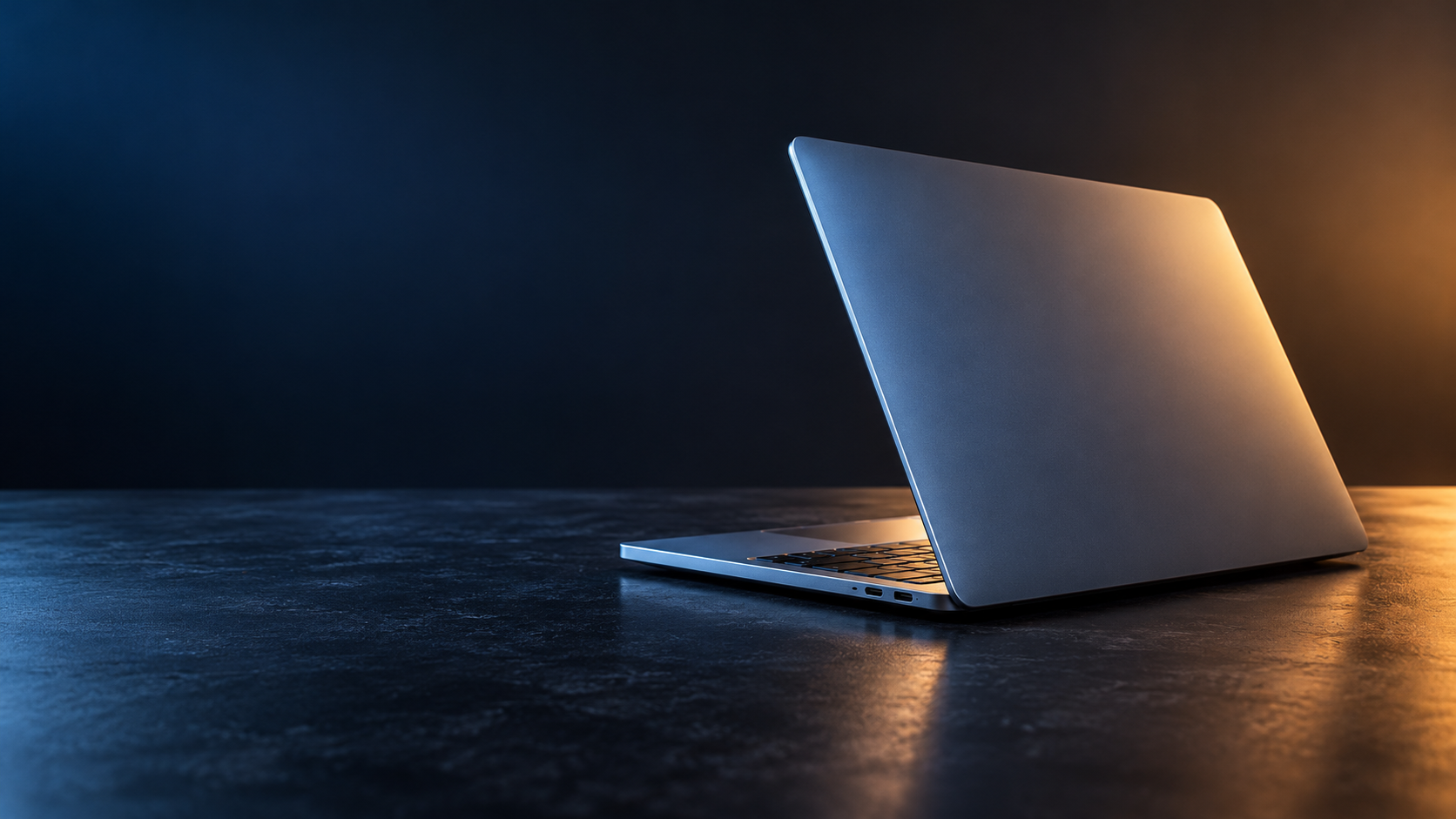 Apple MacBook Pro Event on October 28: What to Expect
-
 Samsung Galaxy S27 May Launch in January 2027
-
 Apple Wallet Car Keys May Add Lucid, Xiaomi, and GWM Tank