Apple’s iPhone Duo Launch Puts Retail Strategy First
Apple’s iPhone Duo Launch Puts Retail Strategy First
Introduction: Apple’s Retail Strategy Goes Beyond Selling a New iPhone
Apple’s reported iPhone Duo launch is accompanied by an unusually broad retail push. According to PhoneArena, the company is preparing an extensive strategy that combines promotional activity with a wide range of in-store tactics Source 1.
The available report does not identify every element of the campaign. It confirms the breadth of Apple’s retail effort, but not a verified list of displays, demonstrations, employee programs, discounts, or launch-day events. Those details should therefore be treated as possible components rather than established facts.
The broader issue is how Apple explains two closely related products. A major iPhone launch affects store traffic, upgrade decisions, accessory sales, and customers’ understanding of the entire product lineup. Shoppers need a clear explanation of each model’s differences and value.
Apple Stores provide a controlled environment for that explanation. Customers can compare devices, ask questions, review purchase options, and receive help with trade-ins or setup. The iPhone Duo launch will test whether Apple can turn a broad retail campaign into a simple buying journey.
What the iPhone Duo Launch Reportedly Involves
Apple Is Using an Extensive Retail Push
PhoneArena reports that Apple is deploying an extensive retail strategy for the iPhone Duo launch, using a wide range of promotional and in-store tactics Source 1.
That description supports one clear conclusion: Apple is not relying solely on a product announcement or standard shelf presentation. The company appears to be treating the launch as a larger retail event designed to attract attention and guide customers toward a purchase.
The phrase “everything but the kitchen sink” describes the apparent scale of the campaign, not a confirmed inventory of individual tactics. The supplied report does not specify whether Apple is using new display designs, demonstration areas, employee training, promotional signage, trade-in messaging, comparison charts, or launch-day events.
Those are familiar elements of a major smartphone campaign, but they should not be presented as confirmed without additional reporting. The available evidence supports cautious language: Apple is reportedly using a broad combination of promotional and in-store methods.
Why a Two-Product Launch May Need More Retail Support
A paired iPhone launch gives customers more choice, but it also creates more questions. Shoppers must understand how the two models differ, which one fits their needs, and whether either device offers enough improvement over their current phone.
The comparison may involve design, screen size, camera capabilities, materials, weight, software features, storage options, and price. None of those specifications should be assigned to the iPhone Duo without confirmation. The broader retail challenge remains the same regardless of the final specifications.
Online product pages can list differences, but physical stores allow customers to experience them directly. A shopper can hold both devices, compare their dimensions, examine the screens, test the camera interface, and decide which design feels more comfortable.
Two products also create a segmentation challenge. One model may appeal to customers who want a smaller or simpler device, while the other may target buyers seeking a larger display, more advanced features, or a longer-term upgrade. Apple needs to explain those distinctions without making the lineup appear unnecessarily complicated.
How Apple’s Retail Playbook Could Work
Store Displays Turn the Launch Into a Physical Event
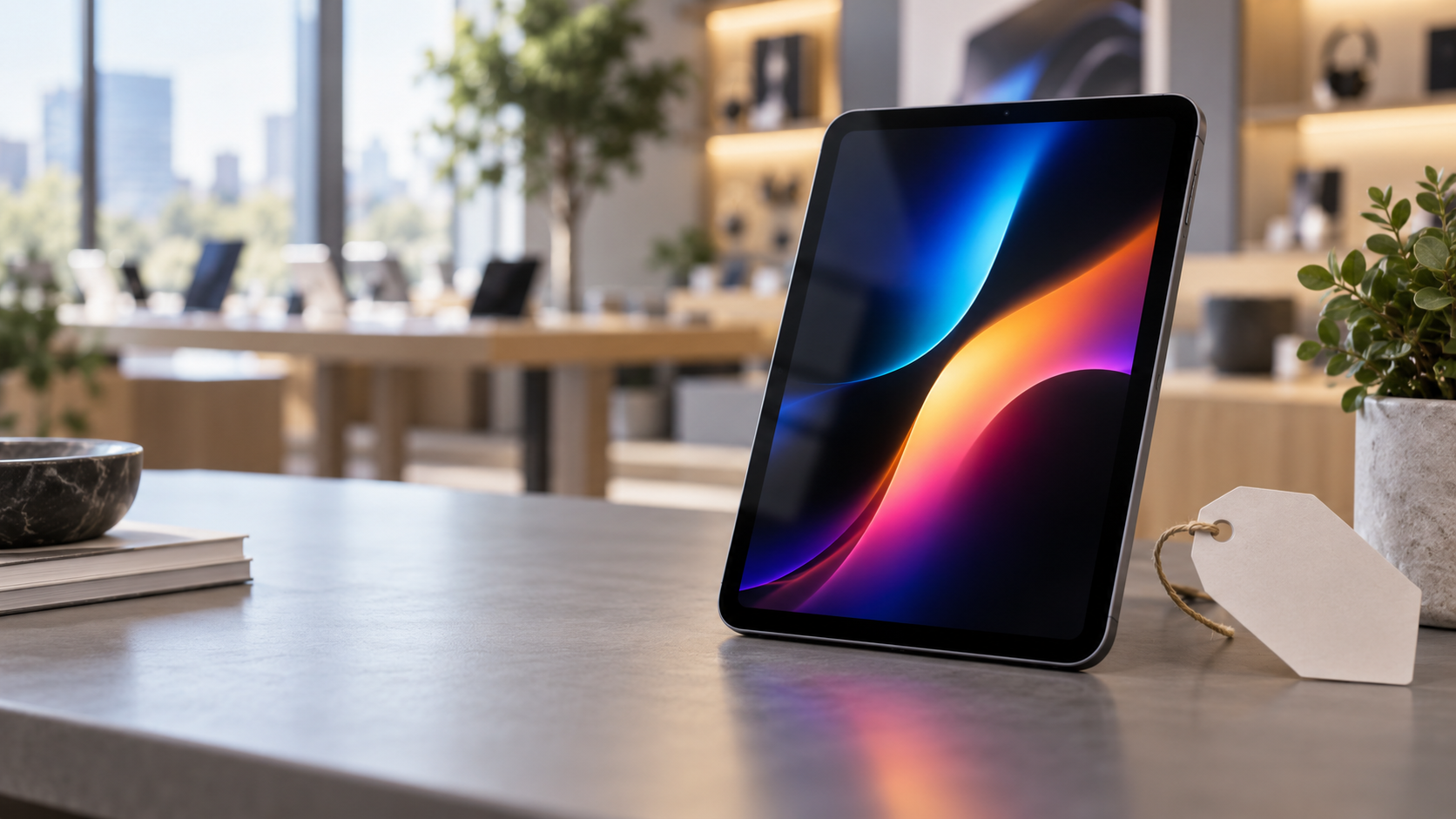
Prominent displays can make the iPhone Duo visible as soon as customers enter an Apple Store. Their purpose would be to establish the new devices as the store’s central attraction, direct visitors toward product tables, and encourage side-by-side comparisons.
Physical stores remain relevant even as online shopping grows. Digital stores provide specifications, reviews, photos, and pricing. Physical stores add scale, texture, weight, screen visibility, and immediate access to assistance.
The available reporting does not confirm the exact design or placement of Apple’s iPhone Duo displays. It indicates only that the company is using an extensive retail strategy Source 1. Exact store layouts require separate confirmation.
Hands-On Demonstrations Can Convert Curiosity Into Purchases
Allowing shoppers to handle both phones can turn an abstract comparison into a practical decision. Customers can assess which model feels more comfortable, whether a larger or smaller design suits their routines, and whether the camera or display offers a noticeable improvement.
These questions often matter more than a specification sheet. A phone may look attractive online but feel too heavy in the hand. A larger screen may improve reading and video viewing but be less convenient to carry.
Guided demonstrations could help Apple focus attention on practical differences. Staff members might show how a feature works, compare the devices directly, or explain how an upgrade changes common tasks. However, the supplied PhoneArena summary does not confirm that specific demonstrations are available Source 1.
Staff Training Helps Apple Control the Message
Employees need a concise explanation of two related products. Without consistent guidance, customers may hear different answers depending on whom they ask.
Training would likely focus on matching customer needs to the appropriate model, explaining upgrade benefits, and clarifying financing, trade-ins, accessories, compatibility, and data transfer. These points represent strategic analysis, not confirmed details about Apple’s internal launch plans.
The most effective sales conversation would begin with the customer’s priorities, such as camera use, battery expectations, screen preferences, budget, or phone size. The employee could then explain which model best fits those priorities.
Promotions and Trade-Ins Can Lower the Upgrade Barrier
Price remains a major obstacle for smartphone upgrades. Promotional messaging can make a new iPhone appear more attainable by showing the effect of a trade-in, financing plan, carrier incentive, or accessory package.
Possible tools include trade-in credits, carrier discounts, installment payments, limited-time promotions, and bundled accessories. The supplied reporting does not confirm that any specific offer forms part of the iPhone Duo launch, so these examples remain hypothetical.
Apple Stores can make financial options easier to understand through direct conversations. Employees can explain eligibility, monthly payments, trade-in conditions, and carrier requirements. A transparent offer can reduce hesitation, while a complicated one can create distrust.
Why Apple May Be Expanding Its Retail Presence
The iPhone Is Entering a More Competitive Upgrade Market
Many customers keep smartphones for longer periods, making each upgrade cycle more important. Apple must give owners a convincing reason to replace a device that still performs well.
Retail stores can make incremental improvements feel tangible. A customer may not immediately appreciate a faster processor, improved camera processing, or a refined software feature from an online description. Handling the new phone and testing it against an older model can make the difference more visible.
Apple is also competing for attention against Android flagship phones, foldable devices, lower-cost models, and refurbished phones. A major retail presence can help the iPhone stand out in a market with many alternatives.
The supplied sources do not prove that Apple is responding to weak sales or losing market share. The more limited conclusion is that retail presentation remains a useful way to reinforce the value of a premium smartphone.
Apple May Need to Clarify Its Broader Product Road Map
PhoneArena has reported expectations for the iPhone Air 2, including possible timing, pricing, and upgrades, with the device reportedly anticipated for 2027 Source 3.
The publication has also discussed expectations for the iPhone 18e, including a possible release date, estimated price, and likely upgrades Source 9.
Those reports concern separate products and do not confirm Apple’s official road map. Their reported timing, pricing, and specifications remain expectations rather than established facts.
They do illustrate Apple’s communication challenge. As more model names and form factors circulate, customers may need help understanding where each device fits. A strong retail presentation for the iPhone Duo could establish a clear position for the new models before additional products make the lineup more crowded.
Foldable iPhone Expectations Raise the Stakes for Product Presentation
Wirecutter reportedly says Apple has unveiled a folding iPhone and gives a favorable initial assessment of its design and appearance Source 5.
The supplied summary does not provide specifications, pricing, release timing, or availability. It also does not establish a connection between that folding iPhone and the iPhone Duo launch.
The report still matters as context because foldable-phone coverage raises expectations for design innovation. If customers compare conventional iPhones with substantially different form factors, physical demonstrations become more valuable. A store can show how a device opens, closes, fits in a pocket, and changes the way people use a screen.
The iPhone Duo and the reported folding iPhone should remain separate subjects unless a source directly connects them. The broader lesson is that Apple’s retail presentation must explain both individual products and the logic of a changing lineup.
What the Retail Push Could Mean for Shoppers
Customers May Get a More Guided Buying Experience
A well-organized launch can make shopping easier. Customers may compare models more quickly, find financing information more clearly, receive direct answers about setup and data transfer, and complete a trade-in with less uncertainty.
That convenience is one of Apple’s strongest reasons for operating physical stores. The same location can combine product discovery, sales, technical help, and post-purchase support.
An aggressive retail campaign can also increase pressure to buy immediately. Prominent displays and limited-time messages may encourage customers to act before comparing total costs or deciding whether an upgrade is necessary.
The quality of the experience will depend on execution. Staffing, inventory, product availability, clear labeling, and consistent explanations all matter. A campaign that looks impressive but leaves customers waiting or confused will weaken the launch.
The Main Risk Is Overwhelming Customers
“Everything but the kitchen sink” works only when the campaign remains easy to navigate. Too many displays, offers, and messages can create friction instead of enthusiasm.
Similar product names may make the models difficult to distinguish. Storage tiers can change the final price. Carrier discounts may include conditions. Trade-in values may vary according to device condition and eligibility.
The test is not how much promotional material Apple can place in a store. The test is whether the campaign helps shoppers make a confident decision.
Customers should be able to answer five questions quickly:
- What separates the two phones?
- Which model fits my needs?
- What is the total cost?
- What does my trade-in reduce?
- What do I gain over my current device?
If the retail experience answers those questions, a broad campaign can be useful. If it only increases visual noise, the extra activity may work against Apple.
What the Campaign Could Mean for Apple
Retail Stores Remain a Strategic Advantage
Apple’s owned retail network gives the company control over product presentation, staff messaging, demonstrations, upgrade conversations, and customer support. That control allows Apple to connect marketing, sales, and service in one environment.
Stores also let Apple demonstrate experience rather than rely only on specifications. Customers can handle a phone, test software, compare cameras, and ask questions before purchasing. The same location can later help with setup, accessories, troubleshooting, and repairs.
The available sources provide no sales data proving that Apple Stores outperform online channels or third-party retailers. The strategic advantage is control: Apple can decide how the product is presented and how its value is explained.
The Launch Will Test Apple’s Ability to Sell a More Complex Lineup
The iPhone Duo retail effort may reflect the challenge of selling several closely related products in a crowded market. Apple’s success will depend on clarity, not spectacle alone.
Observers should assess whether the differences between models are obvious, whether staff can explain the value proposition quickly, and whether pricing and trade-in terms are transparent. Demonstrations should show meaningful daily-use benefits rather than repeat marketing language.
A broad campaign is valuable when every element serves the same purpose: helping customers choose the right device. Displays should attract attention, demonstrations should prove benefits, and promotions should clarify cost. If those elements compete with one another, the campaign loses effectiveness.
Conclusion: A Bigger Retail Push Needs a Clearer Customer Journey
PhoneArena describes a broad Apple retail campaign for the iPhone Duo launch, but the supplied report does not identify every tactic involved Source 1. Claims about exact displays, offers, training programs, demonstrations, or events require separate verification.
The broad strategy makes sense. Two products require clear comparison, and smartphone upgrades need stronger justification when customers keep devices longer. Reports about the iPhone Air 2 and iPhone 18e add lineup complexity, while folding iPhone coverage raises expectations for new form factors Source 3; Source 5.
Apple can use its stores to turn a launch into an interactive buying experience. The campaign will succeed only if its many elements create a clear customer journey. More signage, promotions, and activity are not enough. Shoppers need simple comparisons, honest pricing, useful demonstrations, and time to make a confident choice.
Frequently Asked Questions
What is the iPhone Duo?
The supplied source summary refers to an “iPhone Duo” launch but does not define the exact models or specifications. Until Apple provides more specific naming, it is safest to describe the product as a two-device iPhone launch.
What retail tactics is Apple using for the iPhone Duo launch?
PhoneArena reports that Apple is using an extensive strategy involving a wide range of promotional and in-store tactics Source 1. The supplied summary does not list the individual tactics. Displays, trade-in offers, demonstrations, and launch events should not be treated as confirmed without additional evidence.
Why would Apple need an extensive in-store campaign?
Two related products may require more explanation and comparison. Apple needs to communicate design differences, features, pricing, upgrade value, and purchase options. Stores also allow customers to handle both devices and receive direct assistance.
Is the iPhone Duo connected to the iPhone Air 2 or iPhone 18e?
The supplied sources discuss expectations for the iPhone Air 2 and iPhone 18e separately. They do not establish a confirmed connection to the iPhone Duo launch. Reported timing, pricing, and specifications remain expectations rather than official facts Source 3; Source 9.
Has Apple unveiled a folding iPhone?
The supplied Wirecutter summary reportedly describes Apple as having unveiled a folding iPhone and gives a favorable initial assessment of its design and appearance Source 5. The summary does not provide enough detail to confirm its relationship to the iPhone Duo.
How should shoppers evaluate iPhone Duo launch offers?
Compare the total cost, trade-in value, financing terms, storage options, and carrier requirements. Test both models in person when possible. Focus on meaningful daily-use differences rather than launch displays or promotional urgency.